TL;DR
Ethereum (ETH) has faced downward pressure over the past week, trading near $2,912 in U.S. morning hours on Friday and marking a 12% drop week-over-week. Year-to-date, the cryptocurrency is down 1.7%, reflecting the broader market’s retracement from early 2026 highs. Despite the short-term pullback, analysts highlight factors supporting continued interest and potential gains.
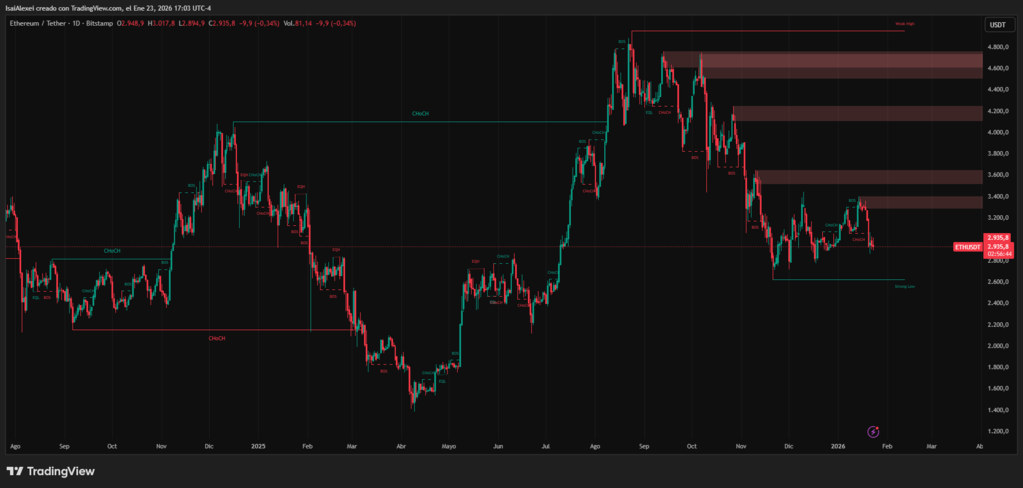
Geoff Kendrick of Standard Chartered pointed to the surge in Ethereum on-chain transactions, which have reached record highs following the December Fusaka upgrade. The update eased capacity limitations that had constrained network activity, allowing more transactions and interaction from developers and users alike. Unlike previous upgrades, the Fusaka enhancement has produced measurable improvements in daily activity, suggesting that network fundamentals are strengthening.
Led by Tom Lee, the firm remains committed to expanding its holdings, signaling confidence in Ethereum’s medium- and long-term prospects. Lee outlined plans for further acquisitions at Bitmine Immersion’s recent annual meeting, reinforcing the narrative of sustained institutional demand.

Macro developments add to the bullish outlook. The resolution of tariff-related uncertainties in Greenland, the rebound of the Japanese bond market after midweek volatility, and rising expectations that Rick Rieder of BlackRock could become the next Federal Reserve chair all support risk assets. According to Kendrick, a Rieder-led Fed would pursue policies that maintain higher economic activity, which could indirectly benefit cryptocurrencies and other risk-sensitive markets.
Given network growth and institutional commitment, Kendrick suggested that holding ETH and Bitmine Immersion shares into the weekend presents a favorable risk/reward scenario. He emphasized that the combination of robust on-chain activity and consistent buying pressure differentiates the current market environment from past volatile episodes.
Despite recent price declines, Ethereum’s underlying network demonstrates strong user engagement. Transaction counts reaching all-time highs indicate that demand for the blockchain’s services is increasing even as market sentiment softens. Combined with continued institutional accumulation, this creates a foundation for potential price stabilization and renewed upward momentum.





