TL;DR:
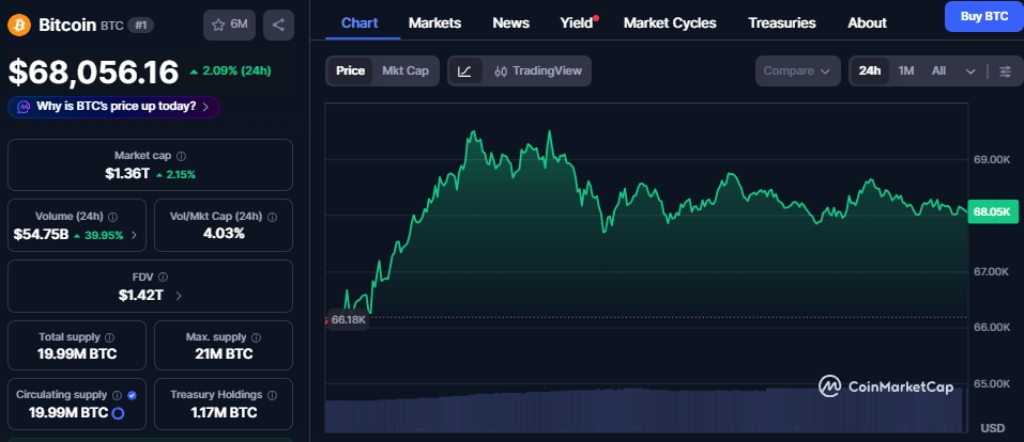
The derivatives market for Bitcoin spent the final hours before February’s monthly expiry in a state of relative calm, although the underlying metrics reveal a complex risk structure. According to AiCoin data, nearly $7.8 billion in BTC options expire this Friday on Deribit, within a combined total with Ethereum exceeding $8.8 billion. BTC’s max pain is set at $75,000, well above the current spot price near $68,000.
The divergence between the max pain level and the spot price determines the intensity of hedging by dealers. When spot moves away from the zones of highest open interest concentration, coverage pressure tends to moderate. Nevertheless, the presence of open call positions around $100,000 keeps sensitivity to upside moves latent.
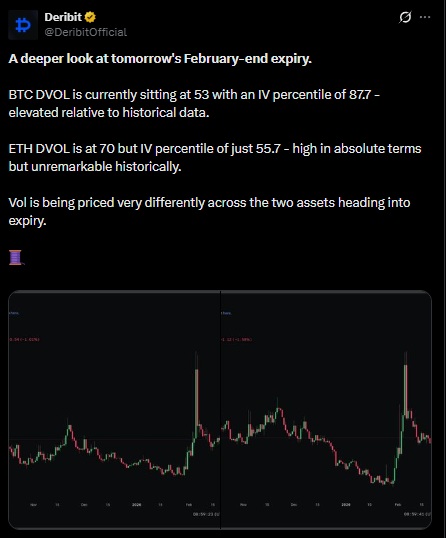
The volatility structure also deserves attention. BTC’s DVOL stands at 53, with an implied volatility percentile of 87.7%, a historically elevated level indicating the market is paying a considerable premium for coverage. In contrast, Ethereum‘s DVOL reaches 70 points, but its percentile stands at just 55.7%, making it striking in absolute terms yet ordinary in relative terms.
According to Deribit, the 25-delta skew collapsed to as low as -30 for both assets in the first days of February, reflecting an extreme demand for puts amid the panic climate. Since then, the recovery has been sustained to current levels of -8/-9, though negativity persists. The market has not fully convinced itself that downside risk is behind it.
After the expiration, historical patterns suggest a readjustment period. The unwinding of hedging releases pressure on spot, while open interest resets and traders migrate positions toward later expiries. Luuk Strijers, CEO of Deribit, previously noted that when more than 25% of open interest expires in the money, volatility tends to increase as positions are closed or rolled.