Gold prices fell sharply on Monday as renewed tensions in the Strait of Hormuz rattled markets and pushed oil prices higher, dragging bullion down nearly 2% at its lowest point.
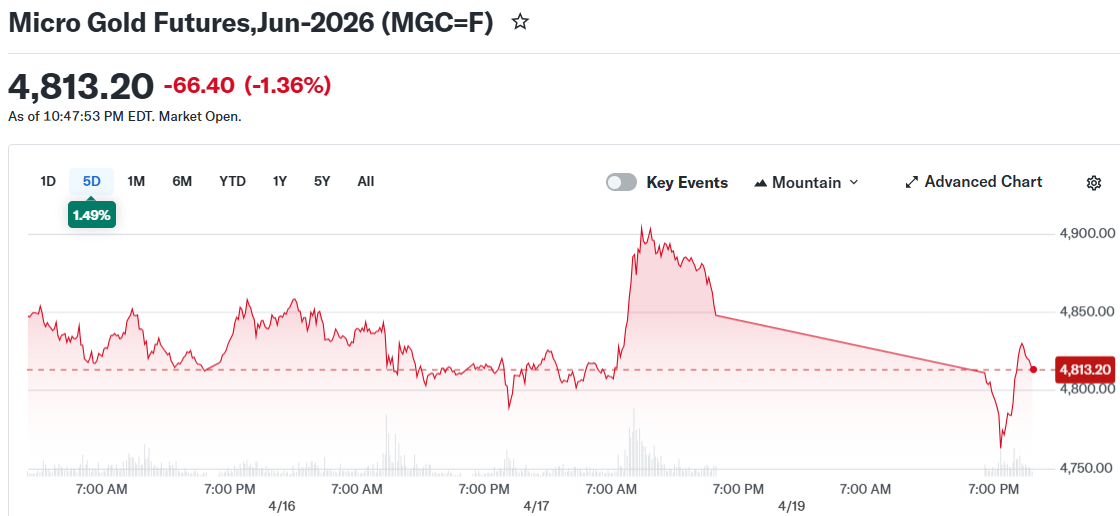
Spot gold fell 0.9% to $4,786 an ounce in Asian trading. Gold futures dropped 1.5% to $4,804 an ounce. Both metals recovered slightly from their session lows but remained under pressure.
President Donald Trump announced over the weekend that the US Navy fired on and seized an Iranian-flagged cargo ship attempting to skirt a naval blockade. Iran warned that ships approaching the Strait of Hormuz would be treated as ceasefire violations.
BREAKING: Iran says it has attacked US military ships with drones in retaliation for the US striking and seizing an Iranian cargo vessel in the Strait of Hormuz, per Tasnim.
— The Kobeissi Letter (@KobeissiLetter) April 19, 2026
Several vessels were forced to turn back from the key waterway just hours after Iran had said it was open on Friday. The reversal raised fresh doubts about the path to peace.
The 14-day ceasefire is set to expire on Tuesday. Trump said he sees a chance for a deal but also renewed threats to target Iranian infrastructure. Iran said there was no clear prospect for productive talks.
Peace negotiations were set to take place in Islamabad, but Iranian media reported Tehran had not committed to attending any future meetings.
Oil prices surged as much as 7% on Monday after slumping in the previous session. Natural gas also climbed. The sharp move higher in energy prices revived concerns about inflation driven by the ongoing supply shock.
A rising dollar added further weight on gold. The Bloomberg Dollar Spot Index rose 0.2%, making gold more expensive for buyers using other currencies.
Gold has now lost around 9% since the Iran war began in late February. The conflict has caused an energy supply shock that has pushed inflation higher and made central banks less likely to cut interest rates, which reduces the appeal of non-yielding assets like gold.
Markets are also watching the US Senate confirmation hearing for Kevin Warsh, Trump’s pick to lead the Federal Reserve, scheduled for Tuesday.
Analysts say any signal that Warsh favors monetary easing could support gold prices. A more cautious stance on inflation could push prices lower.
Strategists at OCBC said they still expect gold’s direction to be driven by broader risk sentiment and how ceasefire talks develop. They recommended buying on dips rather than chasing rallies, with a near-term range of $4,700 to $4,900 an ounce.
Lorenzo Portelli, head of cross asset strategy at Amundi, said the inflationary impact from the energy shock is likely to be temporary rather than lasting.
Silver fell 1.5% to $79.62 an ounce. Silver had outperformed gold the previous week after an industry report flagged a worsening supply deficit in 2026. Platinum and palladium also declined on Monday.
Spot gold was trading at $4,786 as of mid-afternoon Singapore time.
The post Gold Price Takes a Hit as Hormuz Chaos Returns and Peace Talks Stall appeared first on CoinCentral.





