Gold prices slipped on Thursday after touching a two-week high the day before. Futures in New York dropped around 1% to $4,110 a troy ounce in early trading.
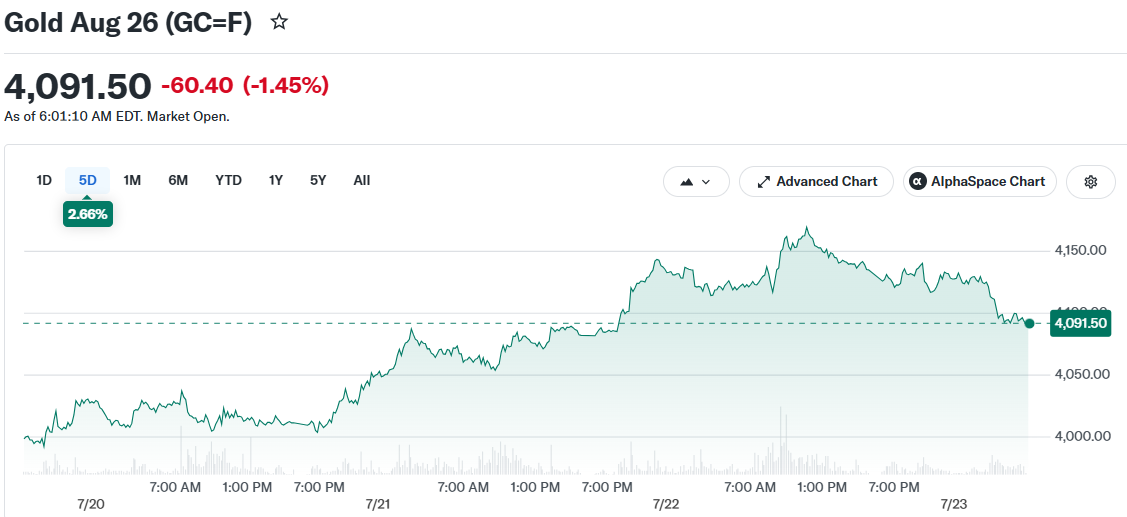
The pullback came after gold rallied roughly 3% over the previous two sessions. Dip-buyers had stepped in despite firmer U.S. yields pushing back on the metal.
Spot gold slipped 0.1% to $4,127.99 an ounce at around 5:31 GMT. Gold futures fell 0.5% to $4,130.62. Silver and platinum both edged higher on the day.
Escalating conflict in the Middle East is keeping inflation concerns alive. The U.S. and Iran showed little sign of returning to negotiations as hostilities continued to grow.
BREAKING: The next phase of the war may be imminent. Israel has reportedly entered its highest state of military readiness after being notified by Washington that the United States is preparing a major expansion of operations against Iran, according to Kan.
The report says U.S.…
— The Iranian Letter (@TheIranianzg3z) July 23, 2026
Attacks on oil tankers in the Red Sea were reported for the first time since the conflict began in late February. Yemen’s Houthi movement claimed responsibility for those attacks.
The Red Sea is a key route for Saudi Arabian crude exports. The disruption helped push oil prices to multi-week highs, which markets are now factoring into the inflation outlook.
Higher oil prices feed into inflation expectations. That matters for gold because it raises the chance that the Federal Reserve keeps interest rates elevated for longer.
Higher rates increase the opportunity cost of holding gold, which pays no yield. That typically weighs on prices.
Traders are now watching next week’s Federal Reserve meeting closely. The central bank is widely expected to hold rates steady this month.
However, markets are pricing in at least one rate hike before the end of the year. Fed Chair Kevin Warsh has given little guidance on the path ahead, adding to uncertainty.
Investors remain split on whether another hike is coming soon. That uncertainty is keeping gold in a holding pattern near current levels.
Despite the pressure from rates, some buyers have been adding to gold positions. ANZ analysts noted that non-commercial net long positions have climbed to their highest level since January.
Inflows into gold-backed exchange-traded funds have also picked up. ANZ said some investors appear to be using gold as a hedge against stretched equity valuations.
The bank noted that dip-buying has helped gold hold up even as energy prices point to a more restrictive policy backdrop.
Gold has stayed above the $4,000 level this week, a price point traders are watching closely. The metal fell sharply from its January record high earlier this year.
The next key level traders are watching is resistance near $4,200. Whether gold can build enough momentum to challenge that level will likely depend on what the Fed signals next week.
The post Gold Dips From Two-Week High as Oil Surge Raises Inflation Fears Ahead of Fed Decision appeared first on CoinCentral.





