Fresh U.S. military strikes on Iran sent gold prices lower on Tuesday, snapping a recent rally in bullion as the dollar steadied and oil climbed back.
Spot gold dropped 0.9% to $4,529.07 an ounce in Asian trading. Gold futures held relatively steady at $4,560.92. Earlier in the day, New York gold futures had briefly ticked up 0.2% to $4,532.30 before pulling back.
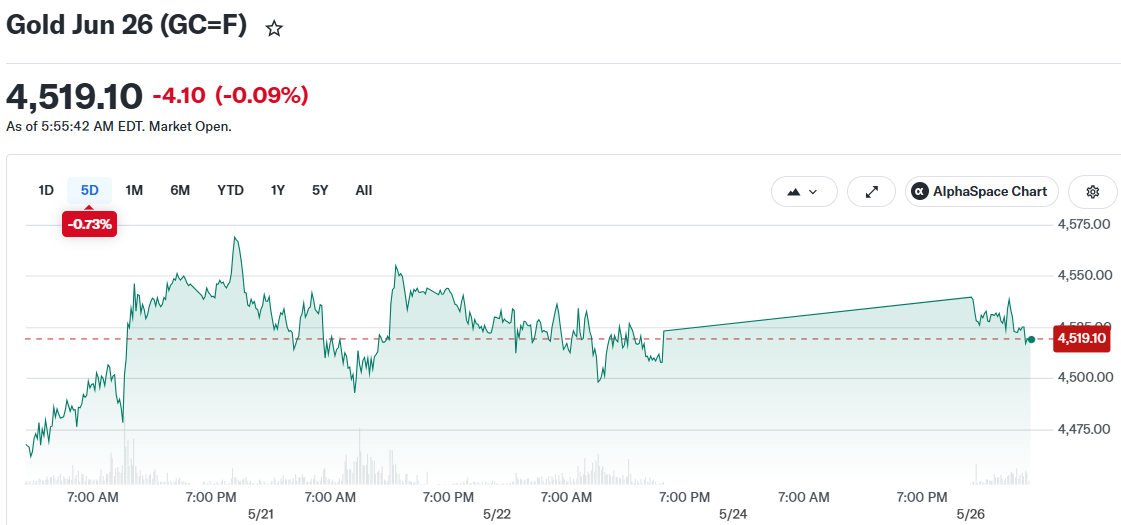
Other precious metals fell in line with gold. Spot silver dropped 2.1% to $76.43 an ounce. Spot platinum slipped 0.7% to $1,951.33.
The selloff came after U.S. military forces struck missile launch sites and mine-laying boats in southern Iran late Monday. U.S. Central Command described the attacks as “self-defence.”
Gold and other metals had gained ground in recent sessions. Reports had suggested the U.S. and Iran were close to a framework deal to reopen the Strait of Hormuz. Monday’s strikes ended that optimism.
Iran’s officials warned that any new attacks on the country’s military will be met with retaliation. That raised the temperature between the two sides after what had been cautious diplomatic progress.
U.S. Secretary of State Marco Rubio added to the uncertainty. He said a deal would “take a few days” and warned the Strait of Hormuz would reopen “one way or another.” Central Command also said the existing ceasefire technically remained in place.
Those mixed signals left traders unsure how to read the situation. The prospect of a near-term peace deal faded quickly.
The dollar steadied after sliding in recent sessions. A stronger dollar typically weighs on gold, which is priced in the U.S. currency.
Oil prices rebounded after a week of declines, following the news of the strikes. Higher oil prices raise concerns about inflation, and inflation fears tend to push central banks toward tighter monetary policy.
That dynamic is bad news for gold. While gold is traditionally seen as an inflation hedge, higher interest rates increase the opportunity cost of holding gold, since the metal pays no yield.
Markets are now pricing in a 40% chance the Federal Reserve will raise interest rates by 25 basis points before the end of the year. That is a notable shift. Markets had, at one point, fully priced in a quarter-point rate hike by the Fed by December.
Other major central banks have also signaled possible rate hikes to counter energy-driven inflation linked to the Iran conflict.
Gold has faced pressure throughout this year from fears that the Iran war would keep energy prices high and push central banks into a more aggressive stance on rates.
The latest round of strikes has not resolved those fears. With the peace deal timeline now unclear, the inflationary pressure from oil remains a live concern for gold investors.
The post Gold Prices Fall After Fresh U.S. Strikes on Iran Boost Dollar and Oil appeared first on CoinCentral.





