Gold prices experienced a turbulent beginning to the week. Following their strongest weekly performance since May, the precious metal reversed direction on Monday as the U.S. dollar staged a comeback.
Spot gold decreased 0.6% to $4,151.66 per ounce during early Monday sessions. Gold futures slipped 0.7% to $4,167.29 per ounce.
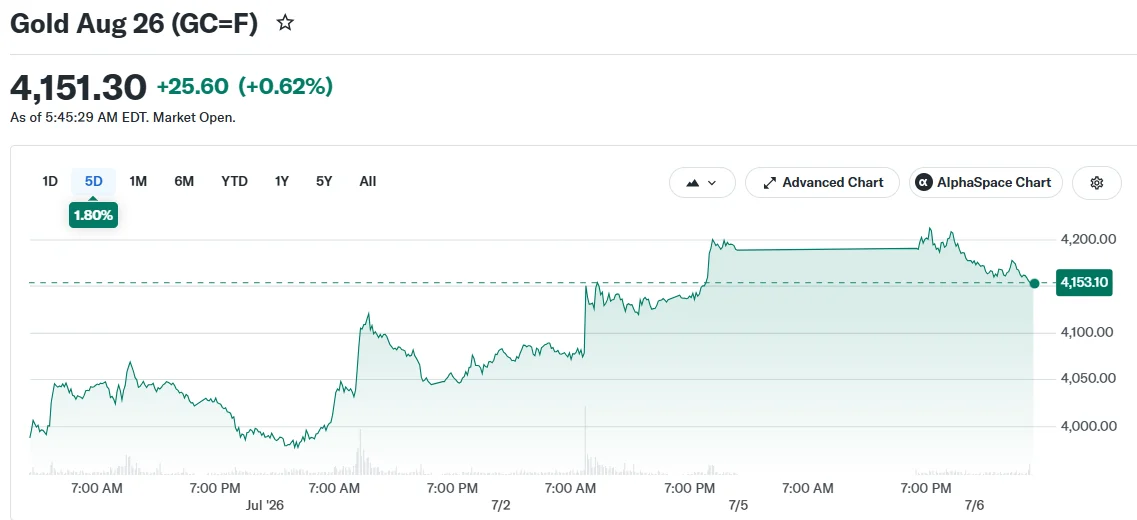
The previous week painted a contrasting picture. Gold rallied over 2%, marking its strongest weekly performance since mid-May, propelled by disappointing U.S. employment data.
The nonfarm payrolls report released Thursday fell short of market forecasts. This development prompted investors to reduce expectations that the Federal Reserve would implement rate increases before year-end.
Gold generates no interest income or dividend payments. As interest rates climb, Treasury securities and bonds become increasingly appealing relative to gold, diminishing investor appetite for the precious metal.
This relationship has pressured gold throughout much of this year, keeping it significantly beneath the record peaks established in January.
Declining oil prices also provided support for gold during the previous week. A reduction in crude prices, stemming from restored transportation through the Strait of Hormuz and increased OPEC+ production, calmed inflation concerns.
Reduced inflation expectations translate to diminished justification for Federal Reserve rate hikes. This scenario typically benefits gold prices.
On Monday, the dollar index advanced 0.1%, rebounding from nearly two-week lows. This dollar strength constrained gold’s performance.
The greenback continues trading near 13-month highs reached in June. Persistent U.S. inflation has maintained market uncertainty regarding future interest rate policy.
Saxo Bank analysts observed that short-term U.S. Treasury yields continue suggesting potential for a rate increase later this year. They indicated that additional softening in these expectations would be necessary to sustain gold price appreciation.
Other precious metals experienced similar declines on Monday. Spot silver decreased 1.1% to $61.74 per ounce. Spot platinum fell 0.4% to $1,635.31 per ounce.
Investors are also monitoring potential inflationary pressures from the artificial intelligence sector and escalating global temperatures, both factors that could drive prices upward.
Federal Reserve officials indicated during their June gathering that persistent inflation might necessitate at least one rate increase this year.
The official record from that June policy meeting will be published this week. Market participants are scrutinizing these minutes for insights into the Fed’s upcoming decisions and their implications for gold.
The post Gold Retreats as U.S. Dollar Rebounds Following Last Week’s Rally appeared first on Blockonomi.





