Goldman Sachs has warned that oil prices could surge to $120 a barrel if attacks on shipping in the Middle East continue to escalate. The bank also said prices could fall back to $80 if the situation calms and exports return to normal levels.
Oil may rally to as much as $120 a barrel if attacks on shipping in the Middle East increase, according to Goldman, which recommended bets on natural gas and diesel as a way to capture gains https://t.co/Ip0QykuoxF
— Bloomberg (@business) September 7, 2026
Daan Struyven, Goldman’s co-head of global commodities research, spoke to Bloomberg TV over the weekend. He said recent events show that the risk of shipping disruptions broadening and intensifying is a real concern.
The conflict centers on the Strait of Hormuz, a key route for global oil exports. The US has struck Iranian tankers in recent days, while Iran has announced a new restricted zone near the waterway.
US naval forces are reported to be maintaining a blockade of Iranian ports. They are also escorting vessels from other oil-producing nations out of the region.
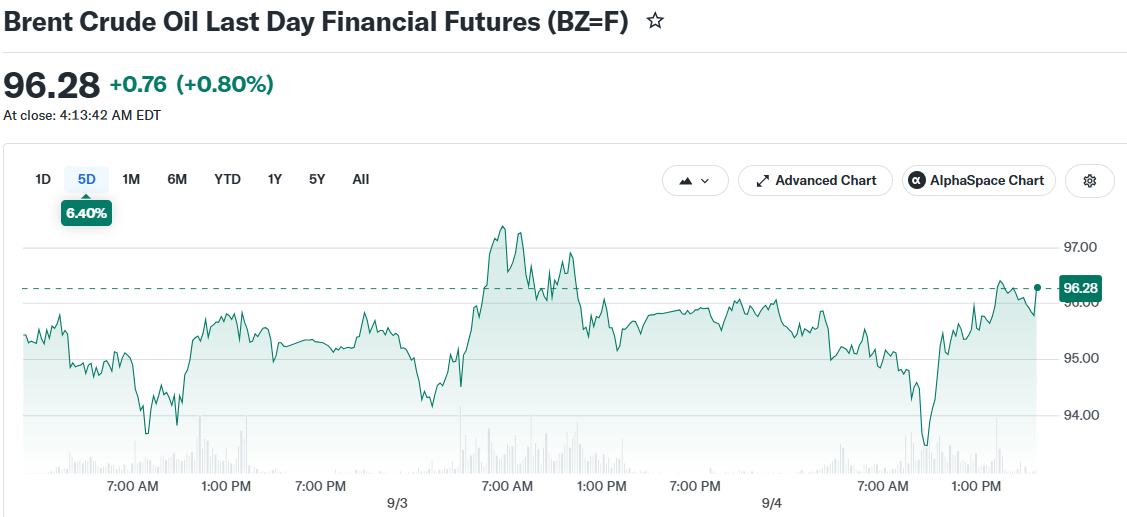
Crude oil has climbed to its highest level since July. Brent crude was trading at $97.55 a barrel, up 1.32%, while West Texas Intermediate stood at $92.64, up 1.28%.
Goldman Sachs is not telling investors to simply buy crude oil. Instead, the bank recommends long positions in global natural gas and refined oil products like diesel.
Struyven said supply shocks in those markets tend to be more severe than in crude. Diesel prices have more than doubled so far this year, and natural gas prices have also risen faster than crude over the same period.
The six-month-plus conflict has pushed up energy prices broadly. But refined products and natural gas have outpaced the move in crude by a wide margin.
Goldman’s strategy reflects the view that investors can capture more upside through those markets than through oil futures alone.
Struyven said China is likely to act as a stabilizing force in the crude oil market. As prices rise, Beijing tends to pull back on imports, which helps cap the upside in crude.
However, Goldman does not see China playing the same moderating role in natural gas or refined products. That makes those markets more exposed to price spikes if the conflict drags on.
The $120 price target represents Goldman’s upside case, not a base forecast. It depends on attacks on shipping continuing to worsen and supply from the region staying disrupted.
For now, oil markets remain on edge. The situation in the Strait of Hormuz continues to develop, and traders are watching closely for any signs of escalation or de-escalation.
The post Oil Could Hit $120 a Barrel as Middle East Shipping Attacks Escalate, Goldman Sachs Warns appeared first on CoinCentral.





