TL;DR:
Hyperliquid carried out the launch of a mobile app in MVP phase. For years, the platform processed billions of dollars in daily volume operating exclusively from the desktop browser. That model has a ceiling that needed to be broken: trading confined to a browser tab does not scale toward the everyday behavior of users.
The decision to qualify the launch as an MVP was intentional. The team notes that it is an early version aimed at testing behaviors and gathering feedback, not a finished product. Since rushed launches tend to generate negative consequences with some frequency, moving cautiously is crucial in the crypto industry. Prioritizing stability over marketing noise is a stance that sets few projects apart within the crypto industry.
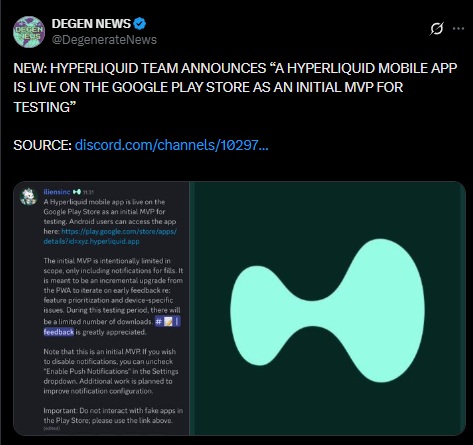
There is also a dimension that goes beyond the convenience of mobile devices. Before the official launch, warnings were already circulating about fake applications impersonating Hyperliquid in mobile stores. Without an official presence, the platform left a void that criminals exploited to trap unsuspecting users. An official app, however nascent, closes that gap and returns to the team control over the first point of contact with its users. The app, in that sense, is also a security tool.

The arrival of the DeFi world in the mobile market also implies a shift in user expectations. Decentralized finance applications have historically prioritized functionality over experience, and that approach worked while the target audience was small and technical. In 2026, the standards are different: smooth interface, biometric login, real-time notifications and frictionless transactions are the norm in any mass-consumer app.
Hyperliquid built its reputation on its execution speed and market depth. Transferring those capabilities to a mobile device without degrading the experience is the real technical challenge this MVP poses. If it solves it, the DEX will cease to be a tool for specialized traders and become something any user can incorporate into their daily routine.





