TL;DR
The sale of nearly 200 million XRP by major wallets coincided with the debut of the new US spot ETF, prompting a moderate price pullback even as institutions increased exposure. The move followed several weeks of regulatory attention and a stricter environment for flows into large-cap crypto assets. Additional reports show that liquidity conditions across Asian and European desks stayed stable, suggesting that the downturn came mainly from large-wallet activity rather than broad investor exit.
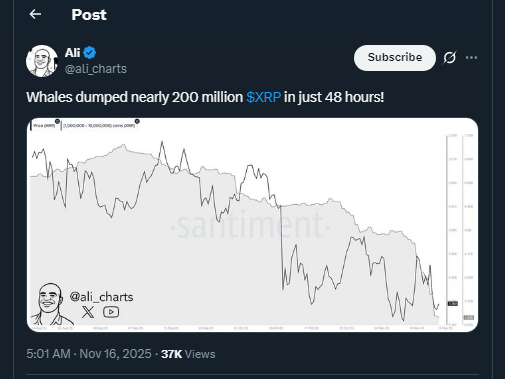
On-chain data shows wallets with more than 1 million XRP reducing positions during the ETF’s opening hours, a pattern often seen when prices reach profit-taking zones. Market analysts note that this behavior does not undermine XRP’s medium-term structure, especially since institutions continue building exposure through in-kind creation mechanisms that leave little trace in public order books.
The ETF launched with assets under management above $250 million, a solid outcome for a first-day listing. Professional traders highlight that these products offer regulated access for managers seeking crypto exposure without handling custody directly. XRP’s role in cross-border settlements remains one of its strongest pillars, attracting funds that prioritize assets with real operational use and demonstrated efficiency.
The ETF debut arrives as US regulators consider adjustments to integrate digital assets into established payment systems. Proposals under review may grant stablecoin issuers and crypto firms more efficient access to settlement infrastructure, reducing dependence on intermediaries. Ripple supports these developments, seeing them as an opportunity to strengthen services linked to RLUSD and broaden adoption across financial institutions.

Analysts argue that if regulatory shifts continue, assets like XRP may benefit from steadier inflows. Whale-driven volatility can affect short-term momentum, yet institutional demand provides an important buffer that helps absorb selling waves. Market strategists also point to expanding partnerships between fintech companies and regional banks as another factor boosting XRP’s long-term utility, especially in regions where speed and cost remain crucial.
In conclusion, the ETF’s launch and market reaction suggest that XRP is reinforcing its position within digital finance, supported by real-world infrastructure, institutional participation and growing corporate alignment.





