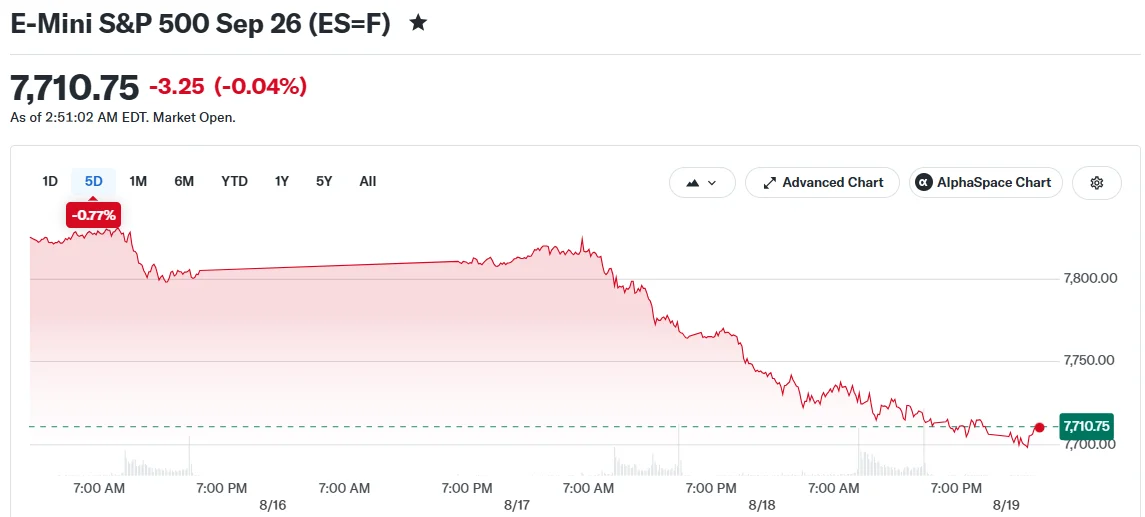
U.S. equity markets registered their third consecutive daily decline on Tuesday, pressured by climbing bond yields and significant weakness across semiconductor stocks. The S&P 500 retreated 0.69% to settle at 7,691.76. The tech-heavy Nasdaq Composite suffered a steeper 1.33% loss, closing at 26,289.71. The Dow Jones Industrial Average declined 116 points, representing a 0.22% decrease.
The semiconductor sector bore the brunt of Tuesday’s selloff. Western Digital plummeted 7%, while Sandisk tumbled 9%. Marvell Technology and Seagate Technology each suffered approximately 8% and 9% losses, respectively.
According to Vital Knowledge analysts, the chip stock downturn stemmed from a combination of investors locking in profits and apprehension regarding substantial debt offerings connected to the artificial intelligence expansion. Doubts about the long-term viability of AI infrastructure investments have been mounting.
U.S. Treasury yield on the 30-year bond touched a new 19-year peak on Tuesday. Japan’s 10-year bond yield surged to a three-decade high. Germany’s 30-year bond yield advanced to levels not seen since 2011. France’s 30-year government bond yield reached its strongest position since 2008.
Climbing oil prices contributed additional market pressure. U.S. crude futures advanced 0.5% on Tuesday, settling at $84.94 per barrel. Stalled diplomatic efforts between Iran and the United States maintained supply uncertainty.
President Trump stated on Tuesday that the United States is not conducting any discussions with Iran and emphasized that the naval blockade “remains in full force and effect.”
Logan Capital Management portfolio manager Bill Fitzpatrick noted that markets have been underestimating the bond yield challenge. He emphasized that the underlying forces pushing yields upward will persist in the near term.
U.S. stock index futures showed little movement on Wednesday morning as traders anticipated the publication of Federal Reserve minutes from the July monetary policy meeting. The central bank maintained its current rate stance at that session, though three committee members voted against the decision, preferring a 25-basis-point increase.
Fed Chair Kevin Warsh provided no specific future guidance, stating only that the Fed will “not waver” in its dedication to achieving the 2% inflation target.
Regarding corporate earnings, Target and Lowe’s are scheduled to release quarterly results. Home Depot delivered second-quarter figures exceeding analyst expectations on Tuesday, benefiting from strong demand for repair and maintenance services.
Semiconductor manufacturer Analog Devices will also announce earnings. The company’s third-quarter revenue projection exceeded analyst estimates in May, indicating sustained demand for its AI-related components.
President Trump declared a three-day suspension of proposed 50% tariffs on Canadian imports, indicating an agreement has been reached pending final documentation. The tariffs would have affected approximately $20 billion worth of Canadian products.
In artificial intelligence sector developments, Anthropic disclosed $11.6 billion in Q2 revenue, more than doubling its previous quarter’s performance and overtaking OpenAI for the first time. OpenAI reported $6.7 billion in revenue during the identical period, representing an 18% quarter-over-quarter increase that disappointed investor projections. Anthropic additionally achieved a modest operating profit.
The post Stock Market Extends Losses as Treasury Yields Reach Decade Highs appeared first on Blockonomi.





