TL;DR:
Mastercard announced the expansion of its settlement capabilities to incorporate stablecoins into its global payments network. The system contemplates the use of USDC from Circle, tokens issued by Paxos —PYUSD, USDG and USDP—, RLUSD from Ripple and SoFiUSD from SoFi, offering support across multiple blockchain networks including Ethereum, Solana, Polygon, Base, Arbitrum, Canton, Tempo and the XRP Ledger.
According to the company’s press release, the move will allow issuers and acquirers to process transactions outside standard banking hours, enabling intraday settlements, as well as settlements on weekends and public holidays. The company noted that these capabilities will be integrated in parallel with existing settlement processes, without replacing them.
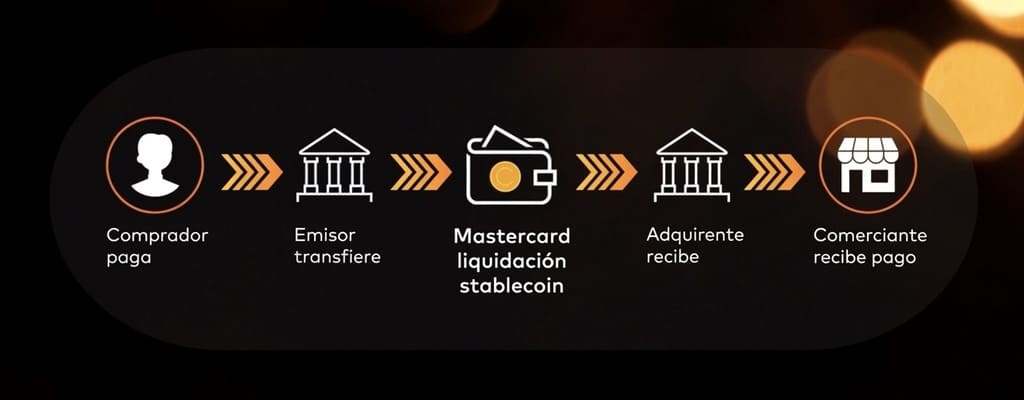
“The next phase of stablecoin adoption is about real-world utility, especially in settlement, where timing and liquidity matter most,” said Raj Dhamodharan, Executive Vice President of Blockchain and Digital Assets at Mastercard.
Among the first institutions expected to adopt this model in the United States and Latin America are ARQ —formerly known as DolarApp—, CBW Bank, Cross River, Lead Bank and Nuvei. The company plans to expand the initiative’s reach throughout 2026.
Mastercard has been executing an increasingly solid strategy in the digital assets market. Last May, the company obtained a BitLicense from the New York State Department of Financial Services, allowing it to operate with tokenized deposits and payment stablecoins in that jurisdiction. In March 2026, it closed a definitive agreement to acquire BVNK, a provider of enterprise stablecoin infrastructure, for up to $1.8 billion.

Mastercard’s approach is far from unique. Visa continues to expand its own stablecoin settlement pilots across various blockchains, while MoneyGram recently launched its token MGUSD on the Stellar network.





