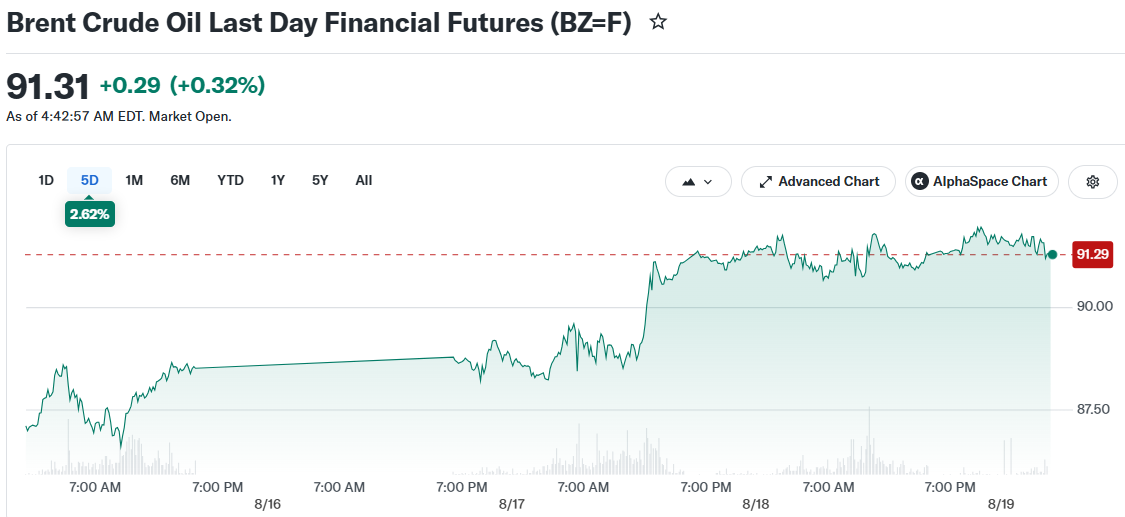
Oil prices climbed for a fourth straight day on Wednesday as conflicting signals from Washington and Tehran kept markets on edge over the Strait of Hormuz.
Brent crude futures rose 0.76% to $91.71 a barrel, while West Texas Intermediate gained 0.8% to $84.73. Both contracts hit their highest levels since July 24 earlier this week.
The tension centres on the Strait of Hormuz, a waterway that carried roughly a fifth of the world’s oil supply before the conflict began. Shipping data shows commercial transit through the strait remains at a fraction of pre-war levels.
A temporary ceasefire between the U.S. and Iran expired Monday. Neither side has signaled any intent to renew it.
U.S. President Donald Trump said Tuesday that no talks with Iran were taking place. He insisted the strait was open to shipping. Iran denied this, saying Hormuz would remain shut until the U.S. met conditions set in a June interim deal.
BREAKING: President Trump says there are no talks or conversations going on or scheduled with Iran. pic.twitter.com/pNqTCLyo5N
— The Kobeissi Letter (@KobeissiLetter) August 18, 2026
A senior Iranian official told Reuters the country was shifting to a “fully offensive” military posture due to the diplomatic deadlock. No fresh strikes were reported Tuesday.
Trump also threatened to bomb Oman over its role in negotiations with Iran, and called on Tehran to comply with U.S. demands.
Iraq moved to find alternative export routes. Its cabinet approved a plan to ship crude through international and local companies via multiple outlets. The contracts run for three months starting September 1.
Two major Chinese shipping companies have stopped sending tankers through Hormuz and the Bab al-Mandeb strait. They are now collecting oil cargoes outside the Gulf.
Data from the American Petroleum Institute showed U.S. crude and distillate inventories fell last week, while gasoline stocks rose.
Analysts polled by Reuters expected crude stocks to have fallen by around 600,000 barrels for the week ending August 14. Official figures from the U.S. Energy Information Administration were due Wednesday.
The U.S. Strategic Petroleum Reserve has also fallen to its lowest level in more than 40 years, a development tied directly to the ongoing conflict with Iran.
Shrinking reserves and disrupted global supply routes have kept oil prices trending upward. Markets are now watching whether any diplomatic movement emerges or whether the standoff extends further into the coming weeks.
The post Oil Prices Rise for Fourth Day as U.S.-Iran Strait of Hormuz Standoff Continues appeared first on CoinCentral.





