TL;DR
OpenSea spent years as the dominant marketplace for NFTs, but the collapse of trading volumes forced a reinvention. The company is now positioning itself as a broader crypto hub focused on liquidity, speed, and interoperability. Collections like Bored Ape Yacht Club and CryptoPunks lost significant market value, and users gravitated toward platforms with wider asset coverage. OpenSea’s solution combines a self-custodial experience with seamless trading across multiple blockchains. Many industry analysts view the shift as overdue, especially after prolonged stagnation across digital collectible platforms.
The platform allows trading any supported asset through decentralized exchanges like Uniswap and Meteora without holding user funds. It charges a 0.9 percent transaction fee, and instead of collecting personal data, flagged accounts are filtered using advanced analytics to maintain compliance. This approach targets traders who value flexibility and control. Several developers have already noted that the interface supports faster routing and improved asset discovery for both casual and advanced users.
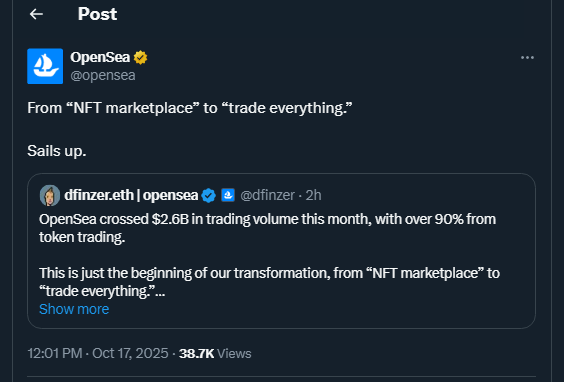
October delivered OpenSea’s busiest stretch in over three years. Token trading dramatically outpaced NFT volumes, highlighting the shift in user demand. This change closed the chapter on Blur, which once attracted users with zero fees. The surge in memecoins and multichain asset activity reshaped user behavior and strengthened OpenSea’s growth path.
CEO Devin Finzer emphasizes that users want a single platform where all their crypto assets can be traded without friction. The focus is no longer on niche collections but on accommodating the full spectrum of digital assets, including gaming items, tokens, and collectibles. Relocating to Miami and trimming the workforce to 60 employees created a leaner structure capable of executing this strategy efficiently.

Next steps include launching a mobile app and issuing an OpenSea token through an independent foundation. The company aims to offer an experience similar to retail investment apps while keeping assets fully self-custodied. OpenSea now positions itself as the hub where real crypto trading happens, rather than where speculation once dominated.