Privacy coins are showing up on investor watchlists again in May. Growing concerns about financial surveillance, stricter exchange rules, and on-chain tracking are pushing some crypto users toward coins that offer more transaction privacy.
Unlike Bitcoin or Ethereum, where transactions are publicly visible on the blockchain, privacy coins are built to hide some or all transaction details. That can include the sender, receiver, and the amount sent.
The sector is controversial. Regulators and exchanges have treated privacy coins with caution, arguing they make compliance harder. But supporters frame it differently — if cash has privacy in the real world, why shouldn’t digital money?
Three coins stand out this month: Monero, Zcash, and Dash. Each takes a different approach to privacy, and each carries its own risk profile.
Monero is the best-known privacy coin. Privacy is built into the network by default — every transaction is private, with no option for a public transfer.
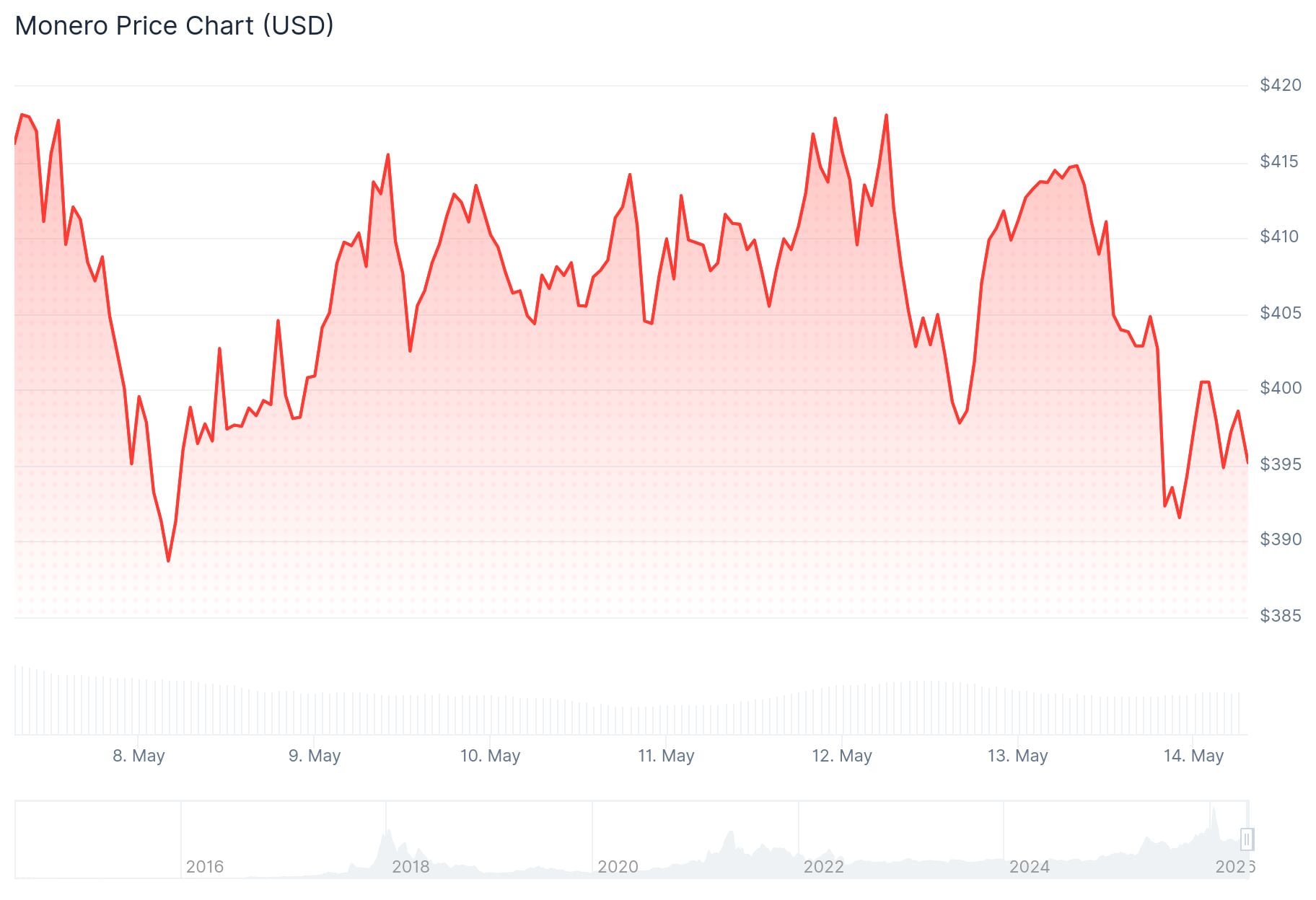
It uses ring signatures, stealth addresses, and confidential transactions to hide the sender, receiver, and amount. That makes it the clearest example of mandatory transaction privacy in crypto.
Monero is not trying to be a smart contract platform or payments network. Its identity is simple: private digital cash.
That focus has built one of the strongest communities in crypto. Demand for private transactions could rise if users become more concerned about surveillance.
The risk is regulatory pressure. Countries including Japan, South Korea, India, and parts of Europe have already restricted privacy coins on regulated exchanges. Monero is typically the first coin regulators target.
Zcash takes a different approach. It allows both transparent and shielded transactions, giving users flexibility rather than enforcing privacy by default.
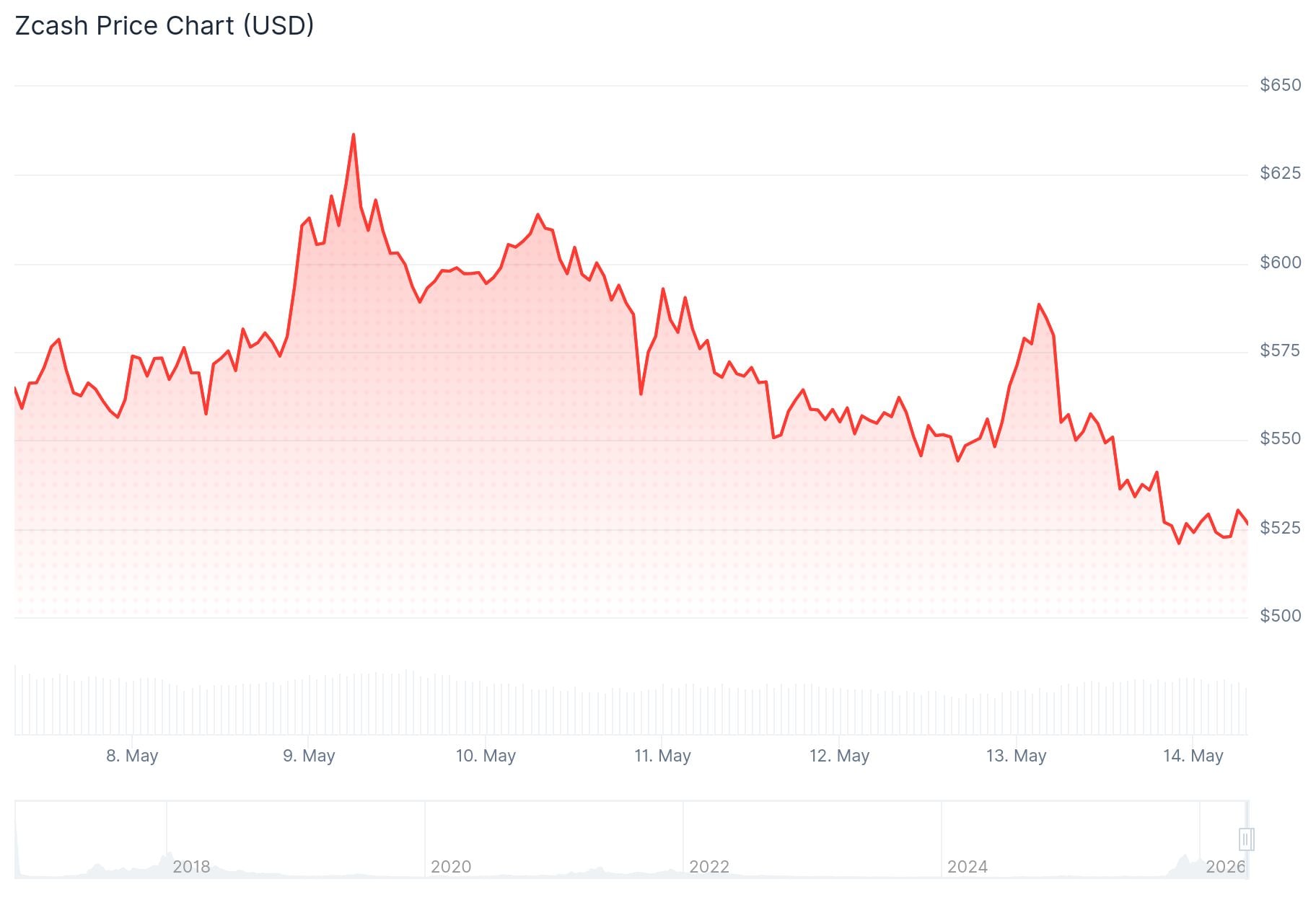
Its privacy technology is based on zero-knowledge proofs, which allow a transaction to be verified without revealing all the details behind it.
In 2026, Zcash has become one of the more watched privacy coins after Multicoin Capital revealed a major position on May 6. The coin hit a fresh 2026 high above $585 shortly after.
That matters because privacy coins have mostly been retail-driven assets. Institutional attention shifts the narrative and suggests some investors see privacy as a broader digital-rights or infrastructure theme.
Zcash may also appeal to investors who want privacy exposure but prefer a coin with optional transparency, making it easier to discuss in regulated settings.
The main risk is adoption. If most users stick to transparent transactions, the privacy advantage weakens in practice.
Dash started as a privacy-focused Bitcoin fork but shifted focus toward fast digital payments. Its PrivateSend feature uses CoinJoin-style mixing, which adds some privacy but is not the same as Monero’s default model or Zcash’s zero-knowledge proof system.
That makes Dash less of a pure privacy coin and more of a payments coin with privacy features on the side.
That positioning can actually help in some markets. Its payments identity is easier for investors to understand, and it has historically attracted users who want faster, cheaper transactions.
Dash was included among the sector’s main movers when privacy tokens outperformed earlier this year, according to CoinDesk.
The risk is that Dash sits between two narratives. It may not be private enough for strict privacy supporters, but its privacy links can still cause issues on regulated exchanges.
Monero is the purest privacy play. Zcash brings zero-knowledge proof technology and growing institutional interest. Dash offers payments utility with some privacy exposure on the side.
The opportunity across all three is the same: if concerns about surveillance and exchange controls grow, privacy coins could attract fresh attention.
The risk is equally clear: regulation. Exchange access for privacy coins can change quickly, and the sector remains one of the most sensitive areas of crypto.
The post Best Privacy Coins to Watch in 2026: Monero, Zcash, and Dash Top the List appeared first on CoinCentral.





