Pump.fun has quietly built one of the most successful businesses on the Solana blockchain. The platform lets anyone create and trade a new cryptocurrency in minutes, no technical skills needed.
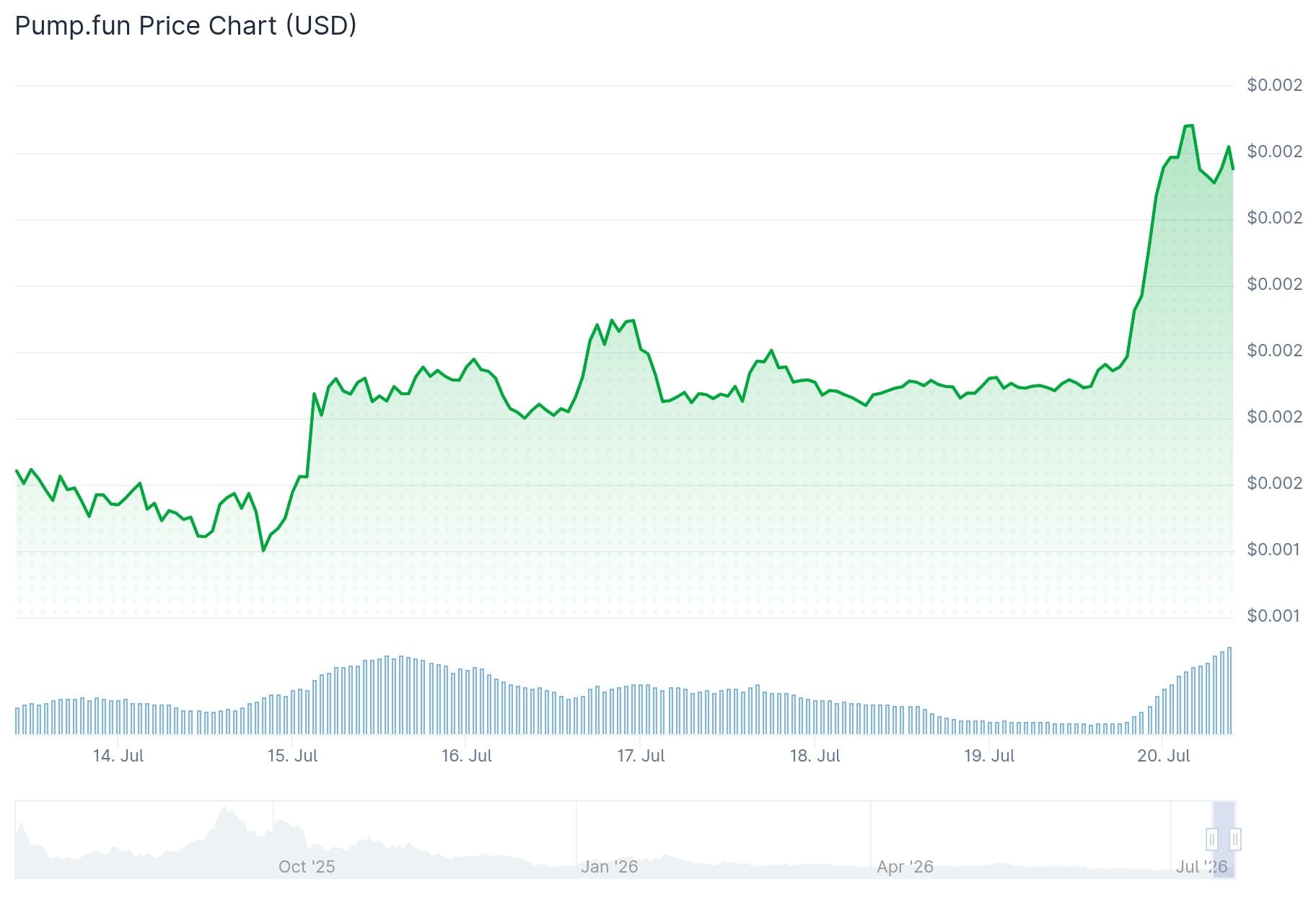
That simple model has pulled in massive trading volume and generated hundreds of millions of dollars in fees. Unlike many crypto projects, Pump.fun has real users, a real product, and real revenue.
Tokens launched on the platform start trading through an automated bonding curve. If a token gains enough traction, it can migrate to PumpSwap, the platform’s own decentralized exchange.
Pump.fun has also added livestreaming, creator rewards, social features, and token competitions. The platform appears to be building toward a creator economy model, where attention can be turned into income.
One of the more concrete aspects of the PUMP investment case is the token buyback system. Pump.fun has used part of its protocol revenue to buy PUMP from the open market.
bought $PUMP here on the reclaim of old support @ .001675
thesis: making 30-40M a month during bear market for onchain, believe that $SOL will dominate retail activity again this cycle and https://t.co/vxui1AnAAw will be most likely beneficiary of this activity if that happens… https://t.co/NOq3z2qiBj pic.twitter.com/MZcRnhYUzU
— Ansem 🐂🀄️ (@blknoiz06) July 19, 2026
Buybacks reduce available supply and create demand, which can support the token’s price. This gives PUMP a more direct link to platform performance than most crypto tokens.
However, PUMP holders have no legal claim to Pump.fun’s profits. The buyback programme is discretionary, and the team can reduce or stop it at any time.
PUMP launched with a maximum supply of one trillion tokens. The core team received 20% and early investors received 13%, meaning insiders hold 33% of total supply combined.
Only a portion of that supply is currently circulating. As those locked tokens unlock, more PUMP could enter the market, putting downward pressure on price.
Investors are better served looking at the fully diluted valuation rather than just the circulating market cap. Buybacks may absorb some of that pressure, but there is no guarantee they will keep pace with unlocks.
Pump.fun also faces legal exposure. Lawsuits have been filed alleging that some tokens sold through the platform were unregistered securities. These are still allegations, but they could lead to fines or restrictions.
The platform’s reputation is also tested regularly by scams, failed projects, and livestreaming incidents linked to offensive content.
Most tokens launched on Pump.fun fail to attract lasting demand. The platform still earns fees regardless, but long-term growth depends on whether it can move beyond short-lived memecoins.
As of now, the token buyback programme remains active and platform revenue continues to be generated across recent quarters.
The post Pump.fun (PUMP) Price: Real Revenue and Buybacks — But Is It Actually Worth Buying Right Now? appeared first on CoinCentral.





