TL;DR
The Solana ecosystem is broadening its stablecoin base beyond the traditional assets of Tether and Circle, reaching a total liquidity of $15.15 billion and sustained growth even during the crypto market correction of 2026.
On-chain data shows a diversification ranging from instruments tied to banking entities to smaller-scale projects with accelerated issuance.
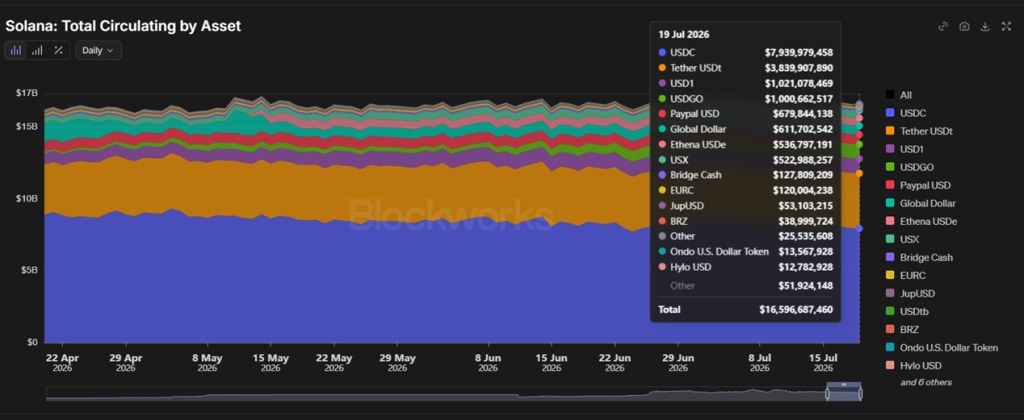
USD1, the native stablecoin of World Liberty Fi, leads the alternative segment within the network. In second place is USDGo, issued by Anchorage Digital, which reached $1 billion in circulation just five months after its launch and expanded its supply by 65% in the past month. Its distributor, OSL, is one of the few entities with full authorization under the European Union’s MiCAR framework. This positions USDGo as an asset aligned with both European regulation and the upcoming Clarity Act in the United States, raising certain doubts about USDT as a settlement instrument in those markets.
The current composition of the stablecoin market on the Solana network shows that USDC retains 58.2% of the total locked value, USDT holds around 27%, and PyUSD ranks third with 4.9%. Global Dollar (USDG) was the most actively issued asset over the past two months and climbed to 4.6% of total stablecoins on the chain. Since January 2025, the aggregate supply of smaller-scale alternative stablecoins has grown fifteenfold.

The Jupiter aggregator leads fee generation on the Solana network, followed by the most active DEXs and DeFi protocols. In July, real-world assets (RWA) and financial markets concentrate the largest share of liquidity, while speculative activity sustains application revenues.
Solana already records more than 300,000 users of tokenized RWAs and accumulates $1.75 billion in tokenized equities. According to Artemis data, the network captured $288 million in new flows over the past three months: applications generated $4.6 million in fees and $2.24 million in revenue.





