Gold prices climbed on Tuesday as investors watched diplomatic efforts to ease tensions in the Middle East, with hopes that a resolution could reduce oil-driven inflation and influence the Federal Reserve’s rate decisions.
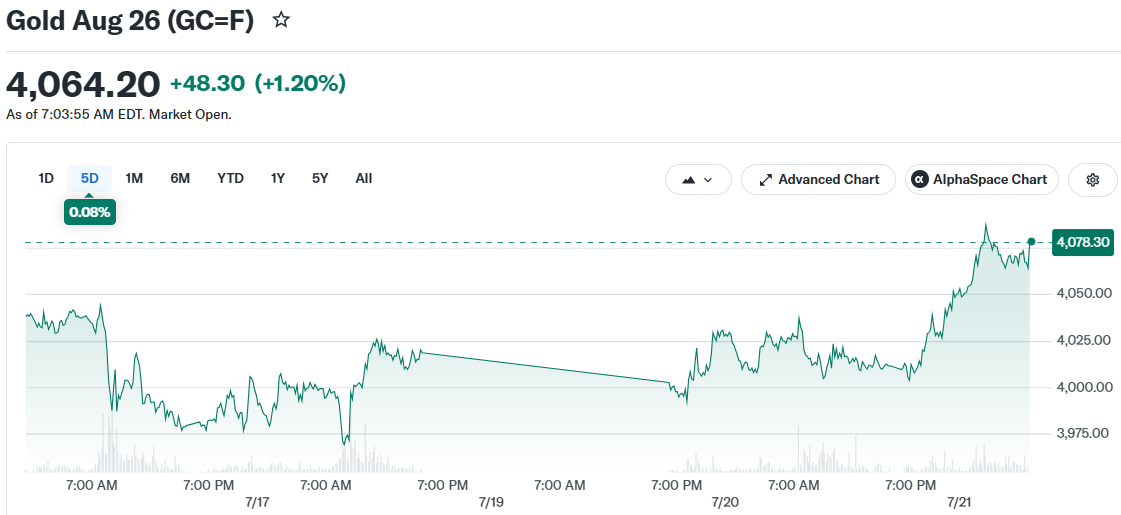
Spot gold rose 1.5% to $4,067.55 per ounce. Gold futures also gained, climbing 1.4% to $4,072.45.
A senior Iranian official told Reuters that mediators have proposed a 10-day ceasefire. The move is aimed at keeping an interim deal alive and creating room for wider talks.
But fresh strikes between the two sides show little sign of stopping. That has raised fears about the Strait of Hormuz, a key shipping lane through which a fifth of the world’s oil and liquefied natural gas passed before the war began in late February.
Iran-backed Houthis in Yemen have also threatened to blockade Saudi ships, which could open a new front in the conflict.
Markets are worried that disrupted oil flows will push inflation higher, forcing central banks to raise rates. The Federal Reserve is expected to hold rates at its meeting next week. But CME FedWatch data shows about a 54% chance of a quarter-point hike in September.
Higher rates are generally negative for gold, which pays no yield. When borrowing costs rise, the opportunity cost of holding gold increases.
“Higher real-rate expectations have pressured gold, while visible investment flows remain inconsistent,” said Dominic Schnider, Head Global FX and Commodity at UBS Global Wealth Management.
Gold is down 22% since the Iran war started on February 28. This came as a surprise to some investors, since geopolitical crises have historically supported gold prices.
The likely reason is that markets are pricing in Fed rate hikes to fight oil-driven inflation, which reduces the appeal of non-yielding assets like gold.
Despite the price drop, some analysts say the dip could be a buying opportunity. Gold’s 12-month gain still sits at 21%, slightly ahead of the S&P 500.
Central bank demand for gold has stayed strong since Russia invaded Ukraine in 2022. The trend reflects a desire by some countries to reduce reliance on the US dollar.
Poland was the largest net buyer of gold in the first half of 2026, according to the World Gold Council. Turkey, however, sold 81 metric tons worth roughly $10.6 billion in the same period.
New Fed Chair Kevin Warsh has so far offered little clarity on the rate path. His task forces on inflation and AI productivity may not report back until year-end, leaving markets guessing.
Silver also gained on Tuesday, rising 4.4% to $58.92 per ounce. Platinum climbed 1.9% to $1,632.80.
The post Gold Price Rises as Iran Ceasefire Talks Ease Inflation and Fed Rate Fears appeared first on CoinCentral.





