TLDR:
The international assistance system is about to undergo a paradigm shift thanks to cutting-edge financial technology. Within the framework of the World Economic Forum in Davos, Circle announced a strategic collaboration with UN agencies to manage humanitarian aid with blockchain.
This new initiative seeks to transform an ecosystem that mobilizes $38 billion annually but continues to rely on obsolete banking infrastructures. Through the integration of stablecoins and distributed networks, it is estimated that organizations will be able to save 20% in transfer and conversion costs.
The alliance follows the success of pilot programs conducted since 2022, where UNHCR used USDC to send funds to displaced persons in Ukraine. Thanks to this track record, 15 international agencies, including the UNDP and the IOM, have joined this digital solutions hub.
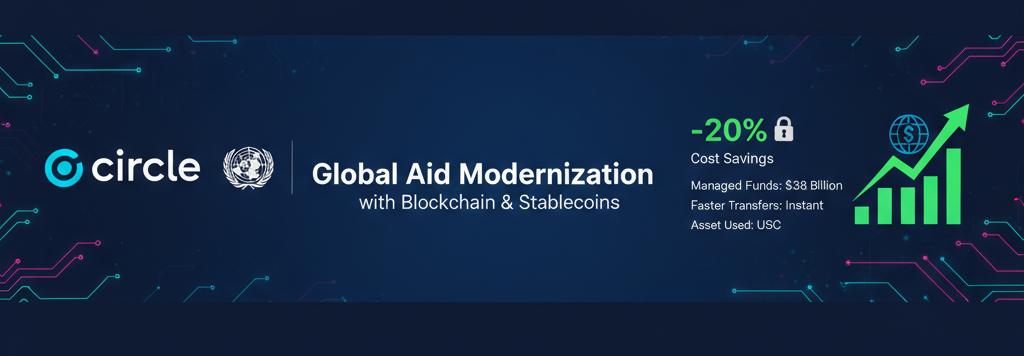
The transition generates significant benefits, including the elimination of delays caused by traditional correspondent banking. By using humanitarian aid with blockchain, cross-border transfers become nearly instantaneous, ensuring that support reaches those in need without unnecessary intermediaries.
Furthermore, programmable disbursements allow for the automation of a large portion of the operational and reporting processes currently performed manually. This not only reduces the administrative burden on NGOs but also raises accountability levels for global donors.
In summary, the use of regulated digital assets protects the financial sovereignty of beneficiaries in crisis zones. With the support of the Circle Foundation, the UN positions itself at the technological forefront, demonstrating that efficiency and security are fundamental pillars for the future of global assistance.





