TL;DR:
The year 2026 is proving to be an inflection point in the regulatory maturity of the crypto industry. According to a report by Chainalysis, approximately 47% of organizations onboarded this year operate with alert standards that would have placed any firm in the top 10% most stringent in the sector as recently as 2020.
This progress demonstrates that a profound transformation has taken place in how platforms approach regulatory compliance, driven by both more demanding regulations and growing threats from malicious actors. In 2025 alone, hackers linked to North Korea were responsible for estimated losses of $2 billion across various digital assets.
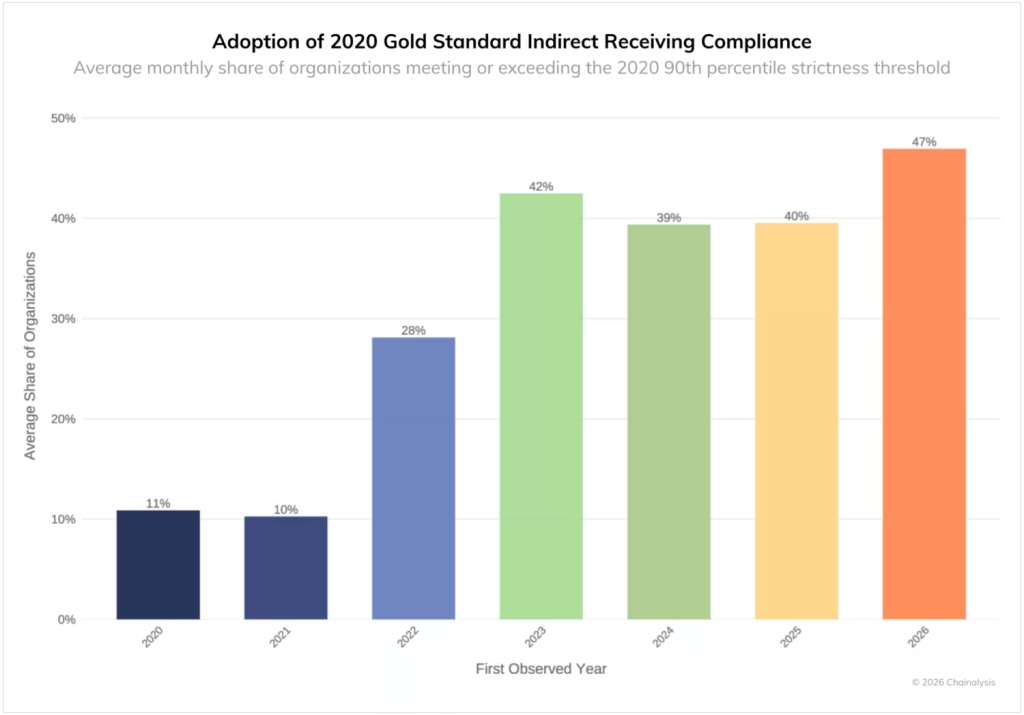
The Chainalysis analysis covers three key dimensions: alert severity, trigger sensitivity, and minimum dollar detection thresholds. In 2020, the crypto industry was still establishing basic norms and only a small fraction of firms reached the highest standards. From 2023 onward, the pace of adoption accelerated notably, and new market projects are launching operations with more aggressive monitoring frameworks from day one. “Today’s standard compliance configurations would have been considered industry-leading just five years ago,” the Chainalysis team noted in the report.
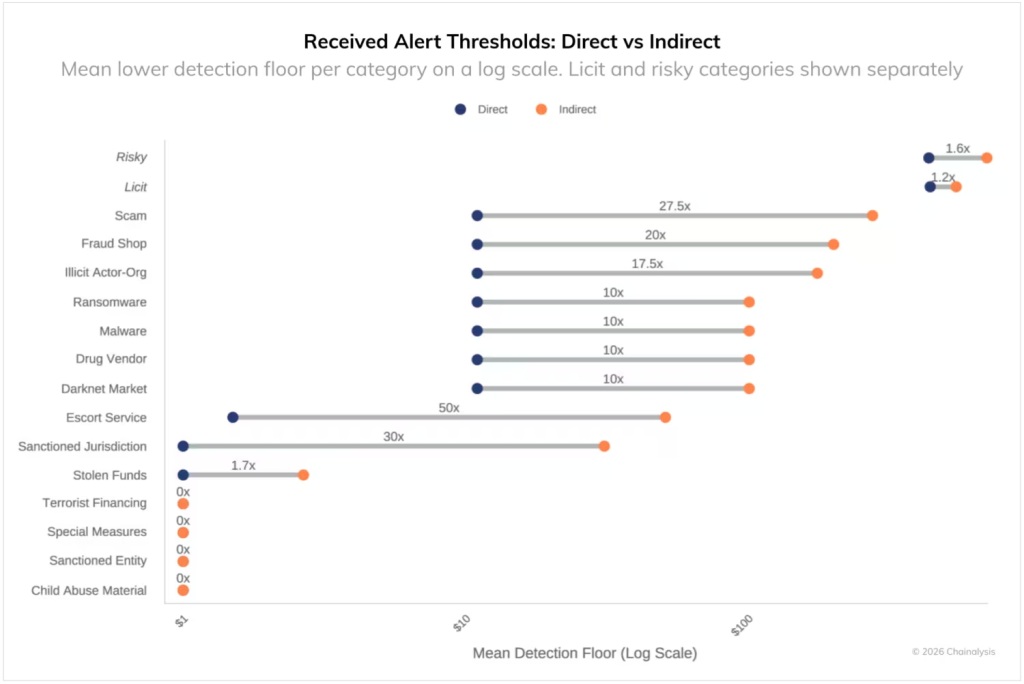
However, Chainalysis identified a significant divergence between direct monitoring — that is, when funds come immediately from a known illicit source — and indirect monitoring, where funds pass through intermediary addresses before reaching their destination. Traditional financial institutions apply lower activation thresholds for both types of exposure. Cryptocurrency exchanges, by contrast, set considerably higher thresholds, and the variation across categories is substantial: in segments such as ransomware, fraud shops, scams and darknet markets, indirect thresholds exceed their direct equivalents by 10 to 20 times.
“The industry gap between direct and indirect monitoring creates an opening that criminals can exploit. Crypto organizations that close this gap will strengthen their regulatory defenses and differentiate themselves as trusted counterparties,” the Chainalysis team warned. The report concludes that the crypto sector has professionalized its approach to direct exposure, but has yet to treat indirect risk with the same rigor.





