TL;DR:
The South Korean mutual funeral services company Bumo Sarang recorded unrealized losses worth $33 million from its risky investments associated with a Bitmine ETF. The regulatory situation of these hedge funds sparked alarms in the Asian market after the diversion of capital belonging to customer advances was confirmed.
韩国人是真正在以太坊上把棺材本都给亏没了…韩国一家名为“父母之爱”的殡葬公司,在最新发布的审计报告中披露,因为投资了2倍做多BMNR亏损近500亿韩元,买入了595亿只剩下了102亿…亏的钱是这家公司年营收的整整8倍,关键是这家公司的商业模式是每月预付,也就是还活着的人每个月给它缴纳一笔固定金… pic.twitter.com/KkKyIyklUA
— 陈剑Jason (@jason_chen998) May 20, 2026
The company’s investment was approximately $40 million (59.3 billion won) in the financial instrument T-REX 2X Long BMNR Daily Target ETF (BMNU). Market data indicates that this structured product is designed to double the daily price movements of Bitmine Immersion Technologies (NYSE: BMNR) shares. At the close of the 2025 annual fiscal year, the book value of this investment dropped to just $6.8 million, consolidating an unrealized loss of 49.3 billion won.
Leveraged exchange-traded funds tend to amplify both gains and losses symmetrically. The analyzed data indicates that daily volatility causes a constant erosion of the fund’s asset value, even if the underlying asset maintains a flat price over the long term. According to statements from a Bumo Sarang spokesperson, the firm considers this setback to be a short-term loss that is covered within its institutional financial cushion margin.
For its part, Bitmine holds a balance backed by 5.2 million ETH, valued at around $12.3 billion. Institutional purchase records reveal that the corporation came to buy more than 100,000 ETH weekly during its period of highest activity, stabilizing its recent operations with a final purchase of 26,659 ETH.
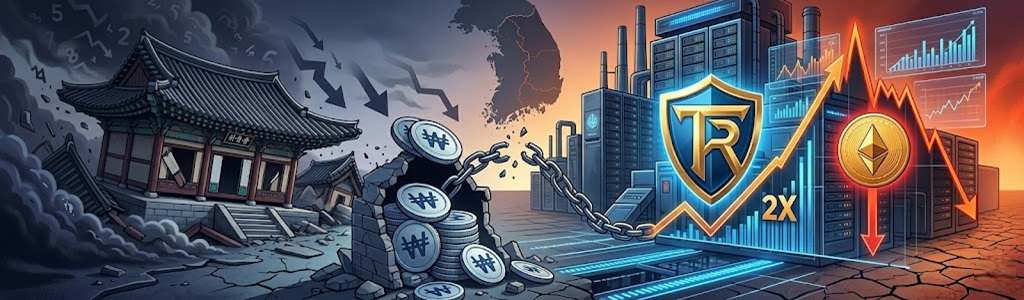
An exhaustive investigation conducted on 75 mutual funeral service companies determined that 32 of them do not possess sufficient assets to cover clients’ financial obligations. Local analysts describe this industrial juncture as the “Zombie Sangjo” crisis, as these entities operate with a structural deficit that could prevent the refund of funds in the event of mass contract cancellations.
Funeral service companies in South Korea are supervised by the Fair Trade Commission instead of the country’s traditional financial regulators.
This institutional segmentation exempts operators from meeting minimum capital adequacy requirements or strict solvency thresholds. Reports published by the Korea Economic Daily newspaper point out that current legislation only mandates keeping 50% of prepayments in instruments classified as safe.
The remaining percentage can be placed in equity assets or high-risk derivatives, affecting a global market valued at around 10 trillion won. Supervisory authorities also detected a recurring pattern of loans granted to majority shareholders for amounts that exceeded user deposits.
As a containment measure against this crisis, the South Korean parliament is evaluating a package of structural reforms. With data updated to May 2026, there are six legislative proposals undergoing parliamentary processing designed to restrict investment options for mutual funds and definitively prohibit the issuance of credits to the main shareholders of these firms.





