TL;DR:
The hacker responsible for the Kelp DAO exploit of $293 million managed to launder approximately $220 million in stolen funds in just six weeks, according to data from Arkham and onchain analysts. The wallet linked to the attacker holds just $1.7 million in traceable funds, drastically reducing the chances of recovering the non-frozen assets.
According to onchain analyst Specter, the laundering process was executed in two stages. First, the funds were transferred to Bitcoin through the Wasabi mixer to obscure their trail. They then returned to the Ethereum network and were processed through the Tornado Cash protocol. This sequence was designed to make the assets virtually impossible to trace.
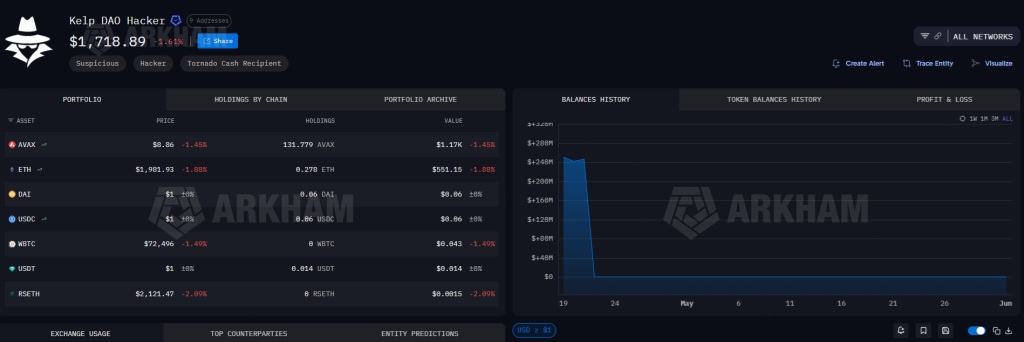
The original exploit occurred on April 18, when the attacker stole 116,500 rsETH tokens from Kelp DAO, bringing the total losses from hacks in April to $630 million. Three days later, the Arbitrum Security Council froze $71 million of those funds. A governance proposal and a U.S. court order had previously approved the transfer of those assets to a multisig wallet controlled by Aave as part of the recovery process. The next hearing on the ownership of the frozen funds is scheduled for this Friday in New York.
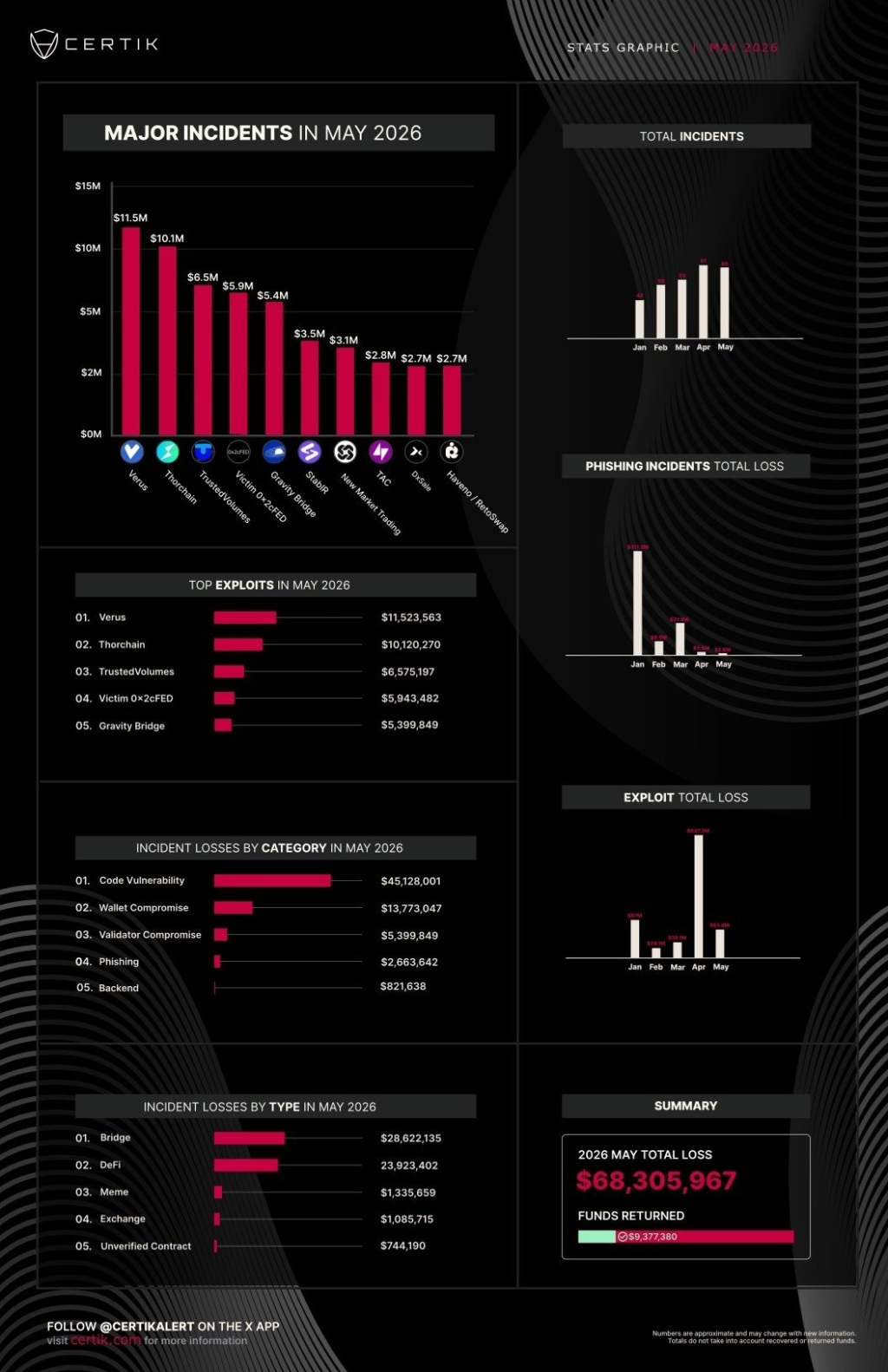
The attack generated consequences that spread across the entire DeFi ecosystem. Losses from exploits in cryptocurrencies dropped to $68.3 million in May, a reduction of nearly 90% compared to April, according to security platform CertiK. However, the Kelp DAO incident prompted several protocols to review the security of their oracle providers.
In the three weeks following the exploit, Solv Protocol and liquidity protocol Tydro migrated to Chainlink‘s cross-chain interoperability protocol (CCIP). Kelp DAO itself also migrated its rsETH token to Chainlink CCIP, moving away from the LayerZero-based bridge it attributed the exploited vulnerability to.
LayerZero, for its part, clarified that the exploit originated in a single point of failure in Kelp DAO’s implementation, which relied on a single LayerZero DVN as the sole verified route, despite warnings issued against that configuration.





