TLDR:
Tensions are rising between event-based financial markets and sports organizations. This Thursday, Kalshi confirmed that, for now, it does not intend to activate its college sports prediction market focused on the athlete transfer portal, even though it has already formally requested permission from U.S. regulatory bodies.
The controversy reached a boiling point after it was revealed that the company sought to certify contracts that would allow users to wager on whether star players would switch institutions.
This possibility drew an immediate and forceful response from the National Collegiate Athletic Association (NCAA). Its president, Charlie Baker, lashed out at the firm on social media, stating that the organization vehemently opposes any college sports prediction market that commodifies the personal decisions of young people.
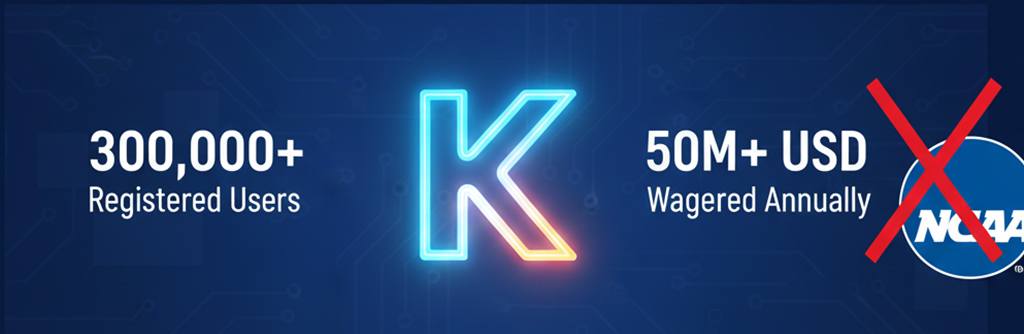
Baker argued that athletes already face alarming levels of harassment due to betting on field performance and that allowing forecasts on their transfers would add unsustainable pressure, threatening the integrity of recruitment processes. “Their decisions and their future should not be a gambling matter,” the executive stated.
For its part, a Kalshi spokesperson responded to the attacks, asserting that it is a mistake to label the platform as “unregulated.” The company pointed out that it operates as a designated contract market under the federal supervision of the Commodity Futures Trading Commission (CFTC).
According to the firm, the certification request is a routine process and does not always culminate in a public listing, citing previous examples such as contracts regarding the de-extinction of animal species that were never launched.
In summary, both Kalshi and its competitor Polymarket already offer a robust college sports prediction market centered on football and basketball game results.
However, the “transfer portal” appears to be a red line that the industry is not yet ready to cross due to the social and ethical pressure it entails. For now, the future of these wagers remains up in the air, subject to the evolution of the legal framework and consensus with sports leagues.





