TL;DR:
The token ROBO, launched by Fabric Protocol on February 27 as part of a network oriented toward robotics powered by Openmind, is being heavily questioned over the integrity of its initial distribution. On-chain analytics platform Bubblemaps published a report indicating that more than 7,000 wallets with nearly identical transaction patterns collectively claimed around 199 million tokens, equivalent to 40% of the total airdrop. At the launch price, that amount represented approximately $8 million.
According to the analysis, around 7,500 newly created wallets were funded with similar amounts of ETH approximately two months before the launch. From there, the funds moved through three layers of intermediary addresses before reaching the wallets that ultimately claimed the ROBO tokens. The uniformity in timing, funding sources and transaction flows led Bubblemaps to conclude that all those addresses would have been controlled by a single entity. At least seven different exchanges were used to fund the wallets involved.
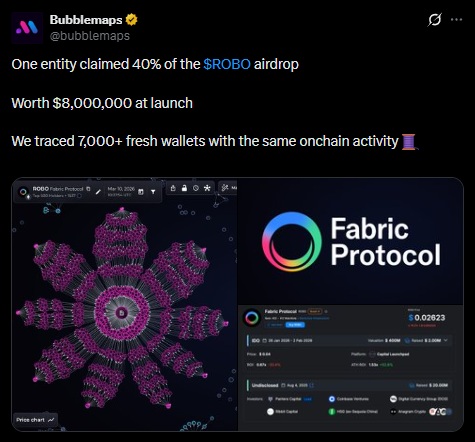
This type of behavior is characteristic of what are known as sybil attacks, in which a single actor deploys multiple addresses to capture a disproportionate share of tokens designed for broad distribution. The sophistication of the operation—with multiple layers of intermediaries and diversified funding—suggests deliberate planning aimed at circumventing the project’s eligibility filters.
Bubblemaps clarified that it found no evidence linking the activity to the teams behind ROBO, and described the team as “open and cooperative” throughout the investigation process. The findings were shared with the project prior to publication.
ROBO is trading at around $0.025 at the time of writing, up approximately 14% since its launch according to CoinMarketCap data. However, the chart reflects a volatile trajectory since the highs of early March. The concentration of tokens in a small group of wallets creates a latent risk of selling pressure if those holdings begin to be gradually offloaded onto the market.

The debate over the structural vulnerabilities of airdrop distribution models has been reopened. Sybil attacks remain one of the most persistent problems in the industry, and this episode makes clear the urgent need to develop more robust anti-sybil mechanisms to ensure that tokens actually reach the right hands.





