The dollar has been trading near its highest level since July 15, supported by elevated Treasury yields. The 10-year yield is hovering near 4.59%, while the 30-year sits above 5%.
Currency traders are weighing two opposing forces: ongoing military escalation in the Middle East and the possibility of a diplomatic solution.
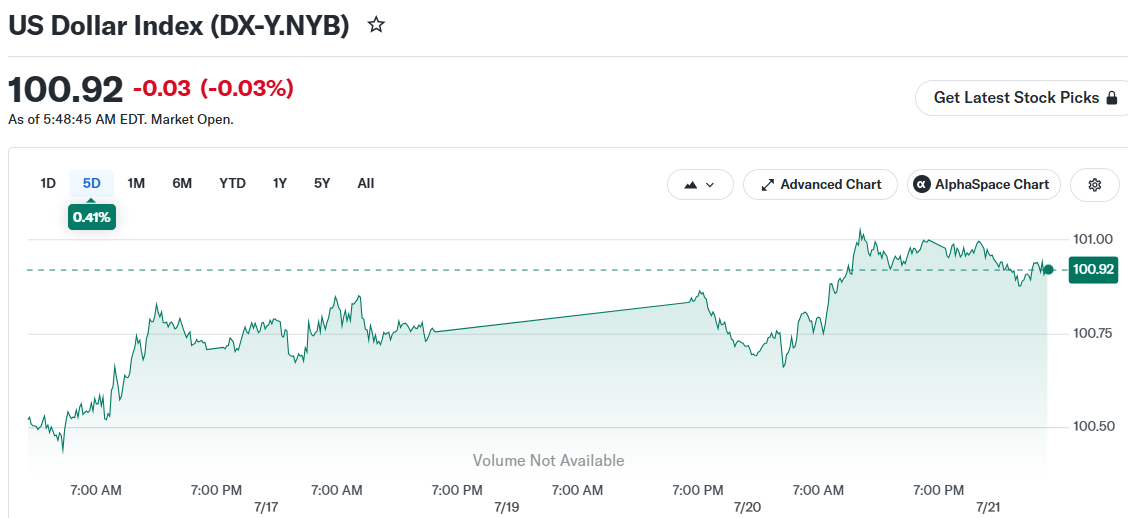
The U.S. military has carried out ten straight nights of strikes on Iranian command centers and maritime infrastructure, according to U.S. Central Command. Normally, that kind of escalation pushes investors into safe-haven assets like the dollar.
But a ceasefire proposal is still alive. A senior Iranian official told Reuters that Tehran received a 10-day ceasefire offer from mediators. That has kept traders from committing to large positions.
“The lack of clarity on where the conflict is headed has left the dollar in limbo,” said Jimmy Jean, chief economist at Desjardins, who added that a sustained dollar decline looks more like a 2027 story.
Yemen’s Iran-aligned Houthis announced a new naval blockade on Saudi Arabia, raising concerns about global oil supply routes. Brent crude has jumped nearly 21% this month, though it dipped 1.1% on Tuesday.
BREAKING: Yemen’s Houthis announce a "maritime embargo" against Saudi Arabia, effectively banning Saudi maritime traffic through the Bab al Mandeb Strait.
Saudi Arabia exports 4.5 million barrels of crude oil per day through this key waterway.
— The Kobeissi Letter (@KobeissiLetter) July 20, 2026
Oil market disruptions matter for currencies because energy-driven inflation could force central banks to keep interest rates higher for longer.
“Dollar risks remain skewed to the upside as markets continue to display a risky degree of complacency towards the military re-escalation,” said Francesco Pesole, FX strategist at ING.
The British pound rose 0.1% against the dollar to $1.3441, on track to snap a three-day losing streak.
Andy Burnham was sworn in as Britain’s new prime minister on Monday — the country’s seventh in a decade. He pledged to follow existing fiscal rules and appointed John Healey as finance minister.
City investors responded positively to the fiscal commitment, though questions remain about how Burnham plans to fund his election pledges without raising taxes on working people.
The euro edged up slightly to $1.1424 ahead of Thursday’s ECB policy decision. The ECB is widely expected to hold rates but is unlikely to signal any cuts while energy inflation risks remain elevated.
The Federal Reserve meets next week. Markets are currently pricing an 85% probability of rates being held steady, as policymakers wait to see how the Middle East conflict affects inflation.
The Canadian dollar steadied after hitting a one-month low, following the U.S. imposing a 50% tariff on a range of Canadian goods over trade disputes.
The post U.S. Dollar Index Near One-Week High as Iran Strikes Continue appeared first on CoinCentral.





