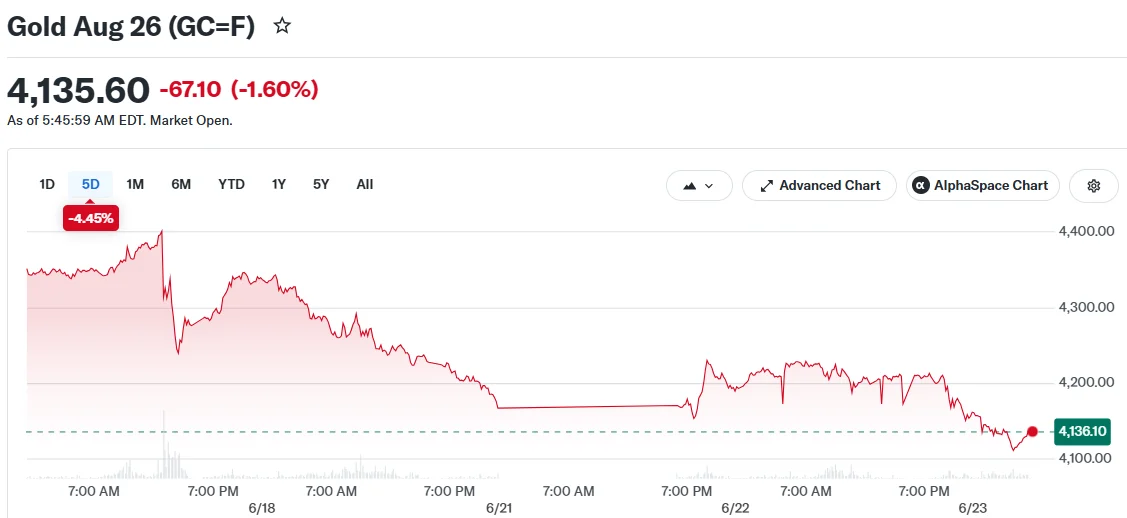
Precious metals experienced significant downward pressure on Tuesday, as bullion retreated under the weight of a resurgent U.S. dollar and mounting speculation that the Federal Reserve will tighten monetary policy before year-end.
Spot bullion declined 1.8% to settle at $4,117.61 per ounce. Futures contracts for U.S. delivery decreased 1.6% to $4,135.10. Trading in New York showed futures down 1.7% to $4,129.10 during morning sessions.
The Dollar Index remained positioned near the 13-month peak established in the previous week. An appreciating dollar elevates the cost of bullion for international purchasers, typically dampening global demand.
The precious metal had advanced 0.7% during Monday’s session, buoyed by encouraging developments in Washington-Tehran diplomatic efforts. However, that momentum evaporated as interest rate concerns dominated market sentiment.
The Federal Reserve’s recent policy meeting—the inaugural session led by newly appointed Chair Kevin Warsh—maintained the benchmark rate steady within the 3.50%–3.75% range. However, revised economic projections revealed increasing consensus among committee members favoring at least one rate adjustment before 2025 concludes.
Market-based derivatives now reflect approximately 90% probability of monetary tightening at the December policy gathering. Certain market participants anticipate multiple increases as the central bank maintains its inflation-fighting stance.
Elevated interest rates typically pressure gold valuations since the asset generates no yield. As rates climb, interest-bearing investments become comparatively more appealing.
Research analysts at Kotak Neo observed that although declining energy costs might provide underlying support for bullion, elevated U.S. borrowing costs represent a substantial obstacle for the metal.
Diplomatic engagement between American and Iranian officials maintained investor attention. Washington extended a 60-day exemption on certain Iranian petroleum export sanctions following preliminary negotiations in Switzerland. State Department representatives characterized the initial dialogue as productive.
The Iranian tensions earlier this year propelled oil prices substantially higher, intensifying inflationary pressures. This development amplified concerns that global central banks, particularly the Fed, might sustain restrictive monetary conditions for an extended period.
Bullion traditionally functions as protection against inflation and geopolitical turbulence. Nevertheless, market participants have recently prioritized monetary policy trajectory over conflict-related considerations.
The downturn extended beyond gold. Silver tumbled 4.3% to $62.29 per ounce. Platinum retreated 2.6% to $1,639.60 per ounce.
Copper likewise experienced losses. London Metal Exchange benchmark copper contracts slipped 1.2% to $13,486.33 per ton. U.S. copper futures descended 2.3% to $6.22 per pound.
Market observers are now focused on Thursday’s release of U.S. Personal Consumption Expenditures price data. The PCE metric represents the Federal Reserve’s favored inflation gauge. This report, combined with S&P PMI figures and statements from Fed policymakers, may influence market expectations heading into the December monetary policy decision.
The post Gold Prices Plunge Nearly 2% as Dollar Surges and December Rate Hike Looms appeared first on Blockonomi.





