TL;DR:
The KelpDAO exploit once again placed THORChain at the center of the debate over neutrality in decentralized protocols. Hundreds of millions of dollars were drained from a protocol using LayerZero’s 1-of-1 DVN configuration, and a portion of those funds flowed through THORChain as the attackers, allegedly linked to North Korea, swapped assets. The team’s response was identical to the one given during the $1.5 billion Bybit incident: the protocol does not censor, does not pause, and does not discriminate transactions.
Chad Barraford, a protocol developer, explained during the THORSday community space on April 23 that halting the protocol solves nothing. If stolen funds exist on-chain at the moment of a pause, the protocol can never be cleanly restarted. He also noted that chain analysis filters can be bypassed with just three wallet hops, and that SwapKit, which operates one of the most sophisticated filtering systems in the ecosystem, still failed to intercept the largest tainted transaction. The comparison made during the space was direct: no one demands that Uniswap or Ethereum block transactions linked to exploits.
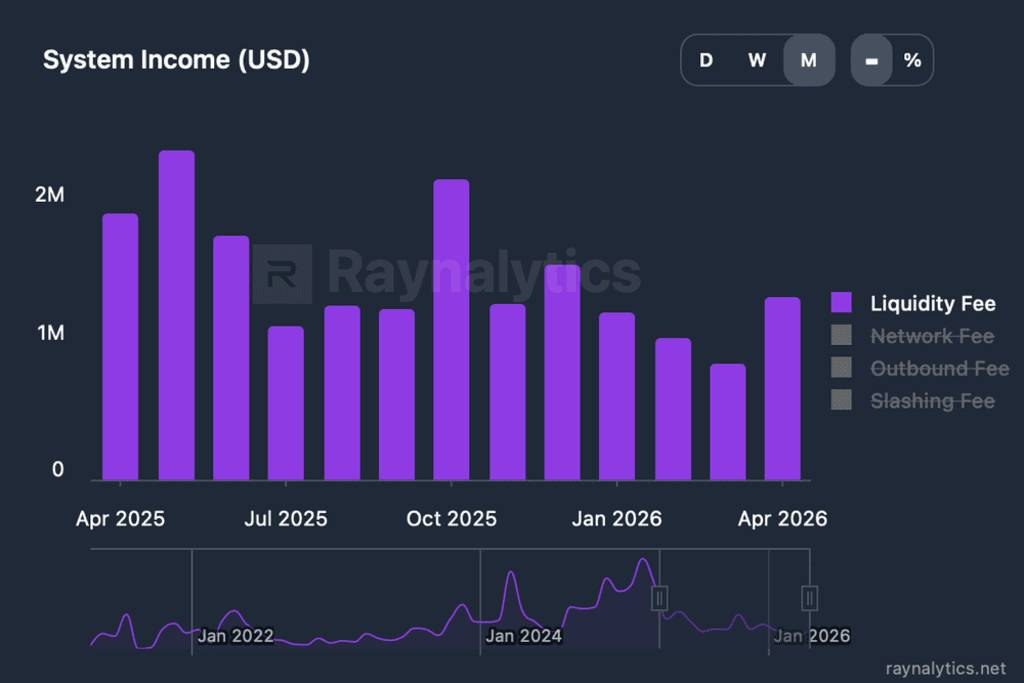
The team announced two structural changes to the fee model. The first is a tiered revenue-sharing system for integrators: wallets and aggregators that exceed monthly volume thresholds will receive a percentage of the fees that THORChain generates from that flow. In Barraford’s preliminary outline, $200,000 in revenue could represent a return of 10%, while $10 million could reach 50%.
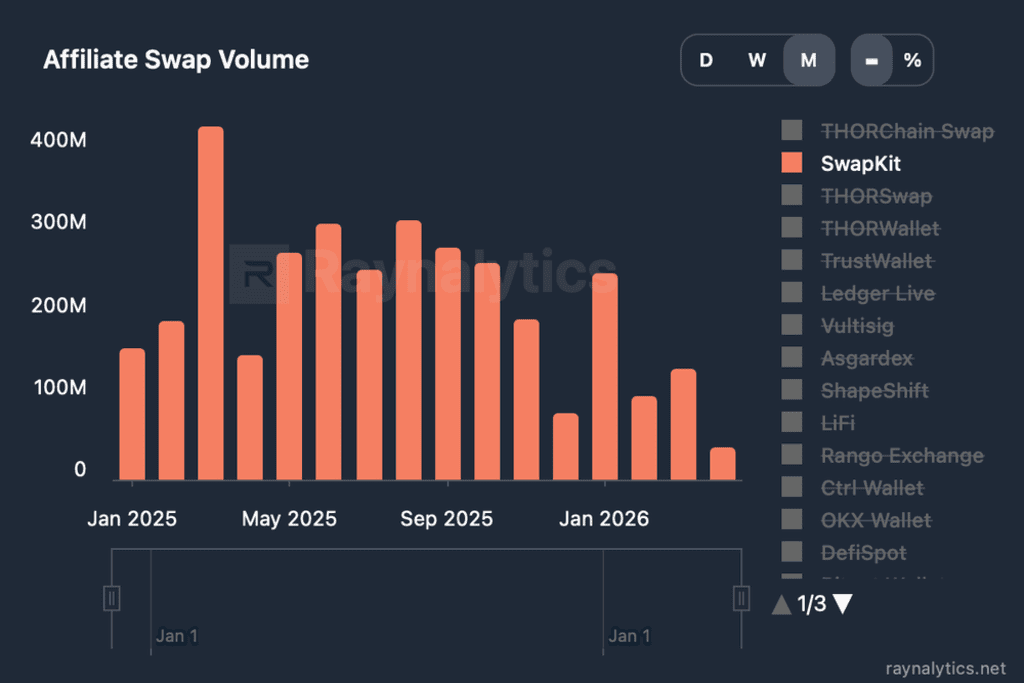
The second change is a dynamic fee algorithm targeted for version 3.18, which automatically adjusts the fee per pair and per affiliate based on observed volume. If volume drops after an upward adjustment, the protocol infers that another venue is operating more cheaply and corrects accordingly. Barraford acknowledged that events of the magnitude of the KelpDAO exploit can distort signals in the short term, but considered that margin of error acceptable in the early cycles.
Version 3.17, expected in the coming weeks, will offer differentiated base fees for stable-to-stable pairs, a market where THORChain accounts for just 10% of volume compared to 80% held by competitors such as Near. As for new integrations, Monero is under final review and could reach mainnet in approximately one week, followed by TAO and Polkadot, both with open pull requests and candidates for inclusion in the same version 3.18 cycle.





