TL;DR:
The value of tokenized real-world assets (RWAs) on public blockchains reached $23.6 billion in mid-2026, representing a 66% increase from the $14.1 billion recorded on January 1, according to data from DeFiLlama. The market experienced progressive expansion during the first quarter, driven primarily by tokenized funds backed by U.S. Treasury bills, bonds and money market funds.
Tokenized funds account for 44.5% of the total segment, with $10.5 billion in value. They are followed by tokenized gold and commodities at approximately $6.5 billion, and tokenized equities at nearly $4 billion. Niches such as private credit and yield-generating products round out the ecosystem with smaller shares.
According to a spokesperson for RWA.xyz, the sector’s current progress is no longer driven so much by tokenization as a concept, but by concrete improvements in distribution, access and utility. “The real breakthrough is that a handful of products have become significantly easier to access, distribute and use,” the platform’s representative noted.
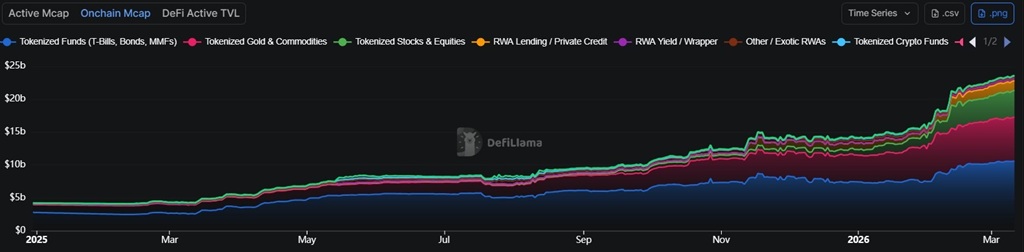
On Tuesday, tokenized equities surpassed $1 billion in total on-chain value, with platforms such as Ondo and xStocks recording the majority of activity. The tokenized U.S. Treasury bond market, meanwhile, exceeded $10 billion in market capitalization in February before climbing to $11.13 billion in March.
Ross Shemeliak, co-founder and chief operating officer of Stobox, pointed to the accumulated frustration of investors with traditional financial systems as one of the factors behind the growth. “Investors are tired of financial markets that close at 4 pm and require layers of intermediaries to move capital,” Shemeliak stated.
Institutional experimentation with tokenization contributed to validating the model over the past year. Major financial firms launched blockchain-based versions of U.S. Treasury instruments, investment funds and other real-world assets, endowing the sector with a credibility that had previously eluded it.





