TL;DR:
President Donald Trump called cryptocurrency “powerful” while launching Trump accounts, new tax-advantaged investment vehicles for children under 18, turning a family-savings rollout into another crypto-policy flashpoint. Asked whether Bitcoin could be included in those accounts, he did not answer directly. Instead, he said he is a “big crypto guy,” citing China, political momentum and the visible flow of money into Bitcoin and other digital assets. The moment blurred policy branding and crypto advocacy, because a children’s investment initiative unexpectedly became a venue for discussing digital asset legitimacy.
Trump said he became involved with crypto partly for political reasons after realizing many people support the sector. He also framed the technology as having “a lot of life,” a phrase that fits his broader pro-crypto posture during a period when lawmakers are still debating federal digital asset rules. The emphasis was not technical, but strategic. Crypto was presented as competitive infrastructure, especially against China, and as a political constituency powerful enough to matter inside Washington’s legislative timetable.
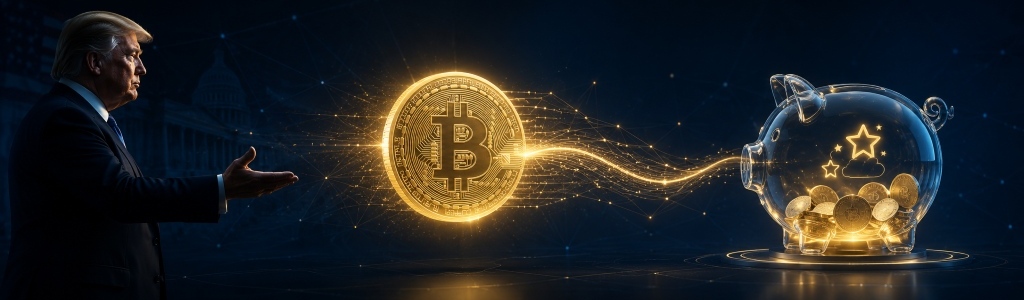
The remarks quickly collided with questions about his family’s crypto ventures, which have become a point of contention among lawmakers. A recent Office of Government Ethics financial disclosure report added urgency to debate over crypto-related conflicts of interest, as Congress weighs broader legislation to regulate the industry at the federal level. Negotiators from both parties have discussed ethics provisions that would limit how presidents, vice presidents, members of Congress and other federal officials can profit from digital assets while in office. The policy fight is now inseparable from personal exposure concerns.
Trump tried to distance himself from those family activities, saying he does not discuss them with his children and describing the presidency as a “much higher calling.” He said he is very much for crypto, but not because of a personal matter, adding that he lets his children do what they do. The response echoed similar comments he made last week, when he said he could know about the ventures but did not, and that nothing illegal or wrong had occurred. The unresolved question is whether distance is enough, because crypto legislation, political support and family-linked ventures now sit inside the same public conversation as election-cycle positioning continues to shape the regulatory debate around digital assets in Washington now.





