TL;DR:
After five years of inactivity, two historical wallets, known in the sector as “OGs,” have returned to the fray. At the beginning of the month and week, both deployed an ambitious Ethereum investment strategy. They transferred a total of 44,490 ETH to the Aave protocol, equivalent to $98.3 million in a coordinated maneuver.
The movement from these addresses was not a simple transfer; rather, it was a leverage operation through looped borrowing. Consequently, the owners used the deposited collateral to borrow 104 million USDT, immediately reinvesting it back into the market.
Thanks to this liquidity, the wallets purchased an additional 45,319 ETH at an average price of $2,295 per unit. In this way, they managed to double their exposure to the asset, sending a signal of confidence—or high risk—to the rest of the financial market.
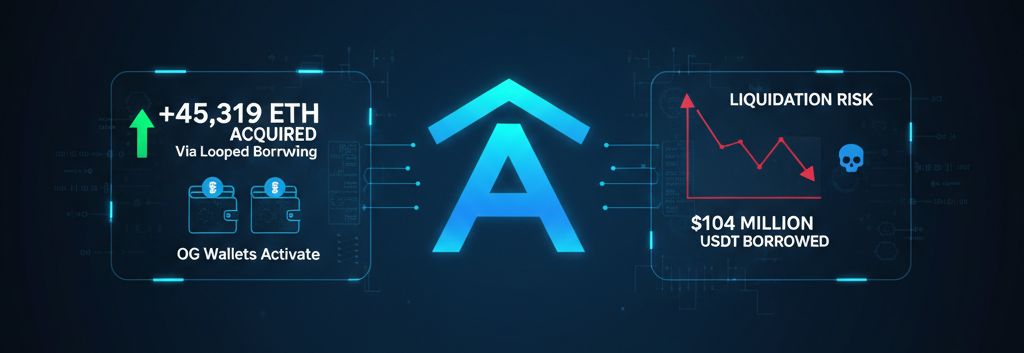
Undoubtedly, the massive purchase suggests optimism, but the technique used represents a latent danger, especially with the current volatility. If the price of Ethereum falls below Aave’s safety thresholds, this Ethereum investment strategy could face forced liquidations.
On the other hand, the reactivation of these addresses provided a boost to Aave’s revenue, which has reached $35 billion in total value locked (TVL) so far in 2026. These large positions generate substantial fees that benefit the holders of the platform’s governance token.
In summary, analysts are keeping a close watch on these on-chain movements, as buying pressure from these veterans often precedes changes in global trends. Meanwhile, the market is observing whether this massive leverage can sustain itself against Bitcoin’s fluctuations and the macroeconomic environment.





