The United States and Israel launched strikes on Iran on Saturday, killing Supreme Leader Ali Khamenei and triggering an immediate market response across oil, stocks, and crypto.
JUST IN:
Bitcoin reclaims $68,000 after Iran announces the death of Supreme Leader Khamenei. pic.twitter.com/JCY9As5Xj4
— Watcher.Guru (@WatcherGuru) March 1, 2026
Iran’s Islamic Revolutionary Guard Corps warned ships not to transit the Strait of Hormuz following the attacks. The Strait carries about 26% of global crude oil and 23% of liquefied natural gas.
Brent crude was trading around $73 a barrel on Friday, already up roughly 20% this year. Analysts now expect prices to climb higher when markets reopen Sunday evening.
Barclays said Brent could reach $100 a barrel as markets weigh a potential supply disruption. Capital Economics said even a contained conflict could push prices to around $80.
Iran produces approximately 3.3 to 3.5 million barrels per day, about 3% of global supply. Its main export terminal at Kharg Island handles around 90% of those exports, and explosions have been reported in the area.
All LNG exports from Qatar, roughly 20% of global LNG shipping, also pass through the Strait. There is no alternative route. A closure would force Asian buyers to compete with Europe for U.S. cargoes on the spot market.
Goldman Sachs estimates that losing one million barrels per day of Iranian exports for a year would raise prices by about $8 per barrel. Rystad Energy puts the price jump at $10 to $15 per barrel in a wider conflict.
Tanker stocks have already priced in much of this risk. Frontline is up 74% in 2026, DHT Holdings has gained 60%, and Ardmore Shipping has risen 55%. The S&P 500 is up just 0.5% over the same period.
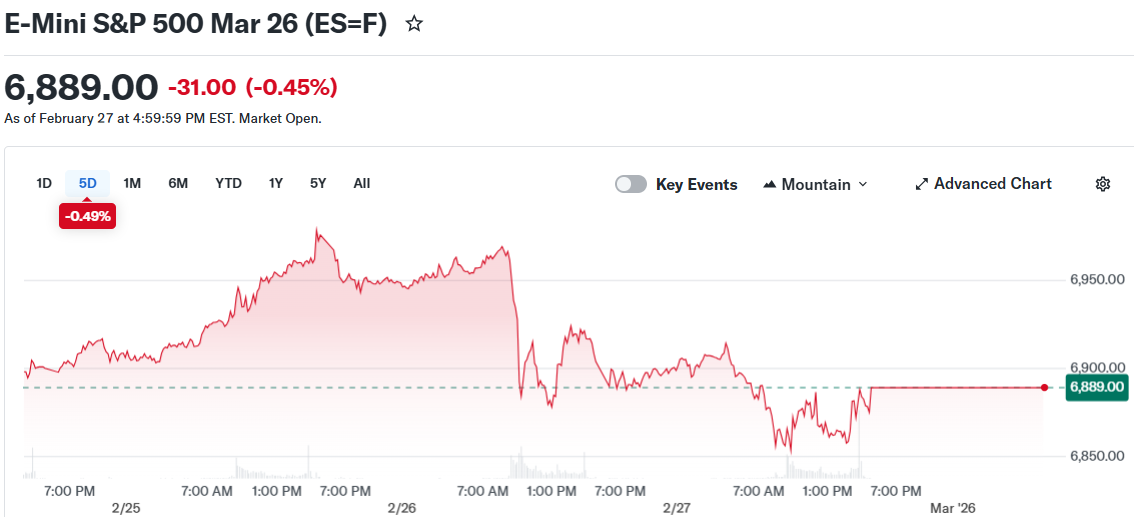
Frontline reported that it booked 92% of its first-quarter VLCC spot days at an average rate of $107,100 per day. Evercore analyst Jonathan Chappell raised his price target on the stock to $42 from $31.
During the first Gulf War in 1991, very large crude carrier rates spiked more than 40%. During the second Gulf War, they rose as much as 304%.
Bitcoin fell 2% on Saturday and has now lost more than a quarter of its value over the past two months. Analysts say it is no longer seen as a safe-haven asset.
Gold is up 22% in 2026 and drawing further demand. The Swiss franc is up 3% against the dollar this year. U.S. Treasury yields have been falling in recent weeks.
The VIX volatility index has risen by a third this year. Some oil majors and trading houses have already suspended crude shipments through the Strait of Hormuz.
The post Iran Shuts the World’s Most Important Oil Chokepoint – What That Means for Oil, Stocks and Bitcoin appeared first on CoinCentral.





