TL;DR:
U.S. authorities seized the domain of BG Wealth Sharing, an investment group identified as a Ponzi scheme that allegedly accumulated losses exceeding $150 million. The operation was carried out in the first days of May 2026. It was part of a joint action plan between Operation Level Up and the Scam Center Strike Force.
Onchain investigator ZachXBT revealed that actors linked to the group attempted to launder more than $92 million in cryptocurrencies between April 27 and May 4. His intervention, coordinated with Tether, Binance, OKX and the FBI, allowed authorities to freeze more than $41 million before the funds could move beyond their reach. According to ZachXBT, the crypto scheme has been operating since 2025 and the thousands of withdrawals identified suggest that losses far exceed that figure.
Days before the site was seized, BG Wealth Sharing’s alleged CEO, Stephen Beard, addressed users in a Saturday video to announce that its internal exchange, DSJ Exchange, was about to conduct an initial public offering.
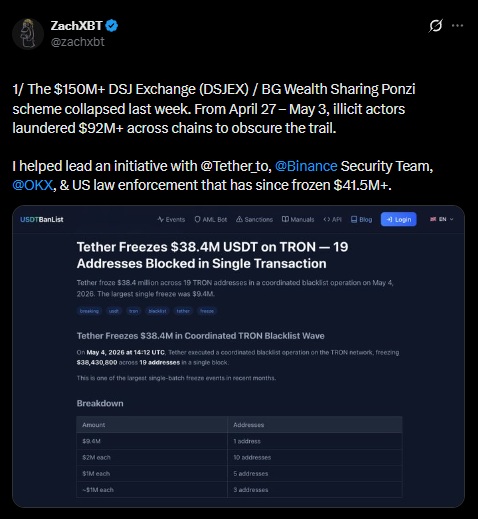
In that context, he informed users that a 12% tax on account balances was required as part of the regulatory process. By Sunday, multiple users on social media were already warning that a rug pull was underway. On Monday, the Washington State Department of Financial Institutions issued a formal warning, stating that any company requiring additional deposits to allow withdrawals is most likely operating an advance fee scheme.
BG Wealth Sharing promoted itself on social media promising trading guidance, referral commissions, tiered bonuses and a daily return of between 1.3% and 2.6%. Multiple regulators, including the Central Bank of Samoa, had issued warnings about the entity since 2025.

ZachXBT warned that this type of Chinese-origin investment fraud deliberately targets retail investors with no experience in the crypto industry. “Reading the comments from victims, many still seem to be in denial that they were scammed,” he wrote. According to the FBI, American citizens lost $21 billion to cybercrime last year, with cryptocurrency investment scams representing a significant portion of that total.





