TLRD:
Dfns, in partnership with Concordium, has announced a strategic innovation. This association aims to launch an identity-verified Web3 wallet, specifically designed to meet the demanding compliance requirements of the global financial sector.
This alliance combines Concordium’s technology—renowned for its privacy-preserving identity layer—with Dfns’ Wallet-as-a-Service (WaaS) platform.
Regarding the launch, Dfns CEO Clarisse Hagège stated that this union allows companies to deploy secure wallets without the need to build complex identity infrastructures from scratch. This represents a significant breakthrough for institutions seeking to operate with tokenized assets and stablecoins in a regulated manner.
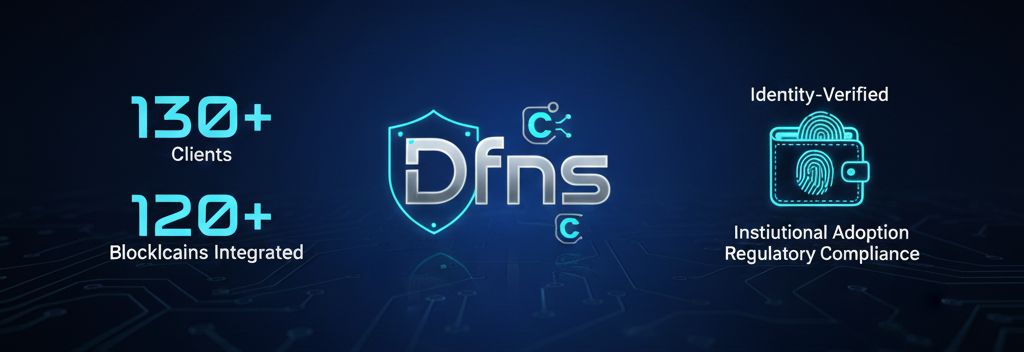
The adoption of decentralized technologies by major banks has historically been slowed by the difficulty of reconciling blockchain anonymity with KYC (Know Your Customer) regulations. This dilemma is solved by the new identity-verified Web3 wallet, as it allows each wallet to be verifiably linked to a real-world identity while consistently protecting the end-user’s privacy.
The launch of this innovation follows Dfns’ recent collaboration with IBM for the Digital Asset Haven project, reinforcing the company’s role as a standard-bearer in secure custody.
It is worth noting that Dfns already boasts a portfolio of over 130 high-profile clients, including industry giants such as Fidelity International, ABN Amro, and Circle (the issuer of USDC).
For his part, Boris Bohrer-Bilowitzki, CEO of Concordium, highlighted that this integration puts their identity layer directly into the hands of developers and companies seeking “compliance without complexity.”
In summary, with this identity-verified Web3 wallet, both companies expect to accelerate the migration of traditional financial services toward on-chain infrastructures, eliminating the risks associated with seed phrase management and technical complexity for institutional users.





