While the broader digital asset market struggles to find its footing in 2026, Tron (TRX) has emerged as a beacon of resilience. Currently trading at $0.32, TRX has secured a 13.5% Year-to-Date (YTD) increase. This performance is particularly striking when compared to the total crypto market cap, which has retracted by an average of 22% in the same period.
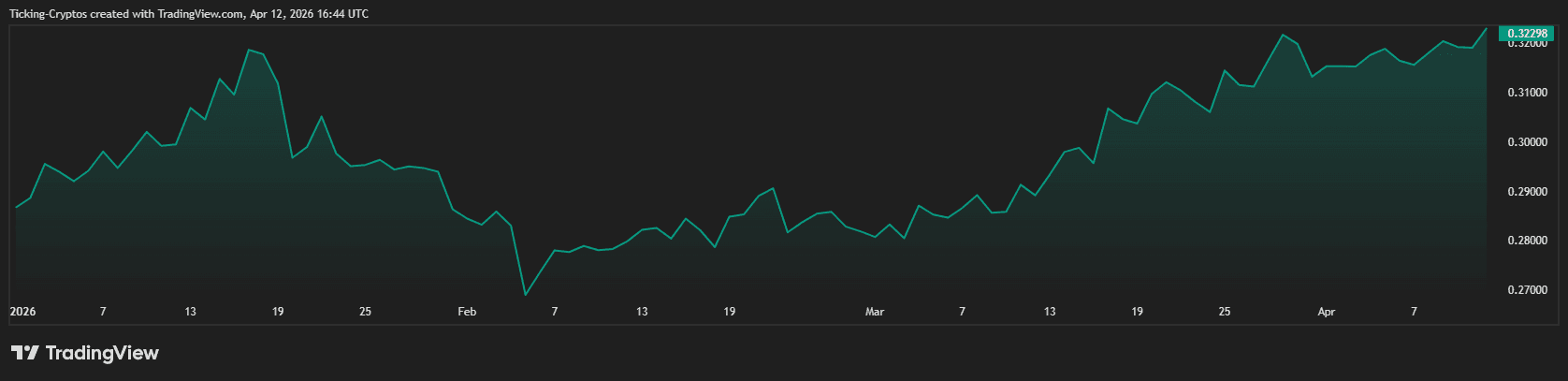
As investors look for stability during high-volatility cycles, the $TRX price has decoupled from the downward trend of $Bitcoin and major altcoins. This article analyzes the fundamental drivers behind Tron’s growth and its role as a portfolio stabilizer.
Tron is a high-performance blockchain platform focused on decentralizing the internet through high throughput and low-cost transactions. Originally launched as an "Ethereum competitor," Tron has carved out a massive niche in the stablecoin and payment settlement sectors.
The primary reason for Tron’s 13.5% YTD gain lies in its utility-driven demand. During market downturns, traders often rotate out of volatile speculative assets and into stablecoins. Because the Tron ecosystem is the primary highway for TRC-20 USDT transfers, the demand for TRX (to power these transactions) remains constant even when prices for other coins fall.
Furthermore, institutional adoption has seen a steady rise. Data from CoinMarketCap suggests that Tron’s deflationary mechanism—where a portion of TRX is burned daily to cover transaction costs—is putting upward pressure on the price as the circulating supply shrinks.
Volatility is often the biggest deterrent for traditional investors entering the crypto space. However, TRX has demonstrated a significantly lower beta compared to the rest of the market.





