U.S. President Donald Trump announced a strategic five-day pause on planned military strikes against Iranian energy infrastructure, citing "productive" conversations with Tehran. However, the optimism was short-lived as Iranian Parliament Speaker Mohammad Bagher Ghalibaf dismissed the reports as "fake news" designed to manipulate oil prices and financial indices.
Yes, despite the immediate denial from Tehran, the crypto market moved preemptively. Investors, desperate for a de-escalation signal in the Middle East, poured capital into risk-on assets. This resulted in a massive "short squeeze" that caught many bearish traders off-guard, especially as the narrative shifted from imminent war to potential diplomacy within hours.
In financial terms, a "peace premium" occurs when asset prices rise (and commodities like oil fall) based on the expectation of stability. Some accusations on X (formerly Twitter) suggest that these rumors were a coordinated effort to stabilize the S&P 500 and crash Crude Oil (WTI), which had been trading at extreme highs. They claimed the news was a tactical move to "escape the quagmire" the U.S. and Israel currently face.
The most significant move occurred in the digital asset space. The provided technical data shows a clear vertical move in the Bitcoin price that many are calling the "Trump Pump."
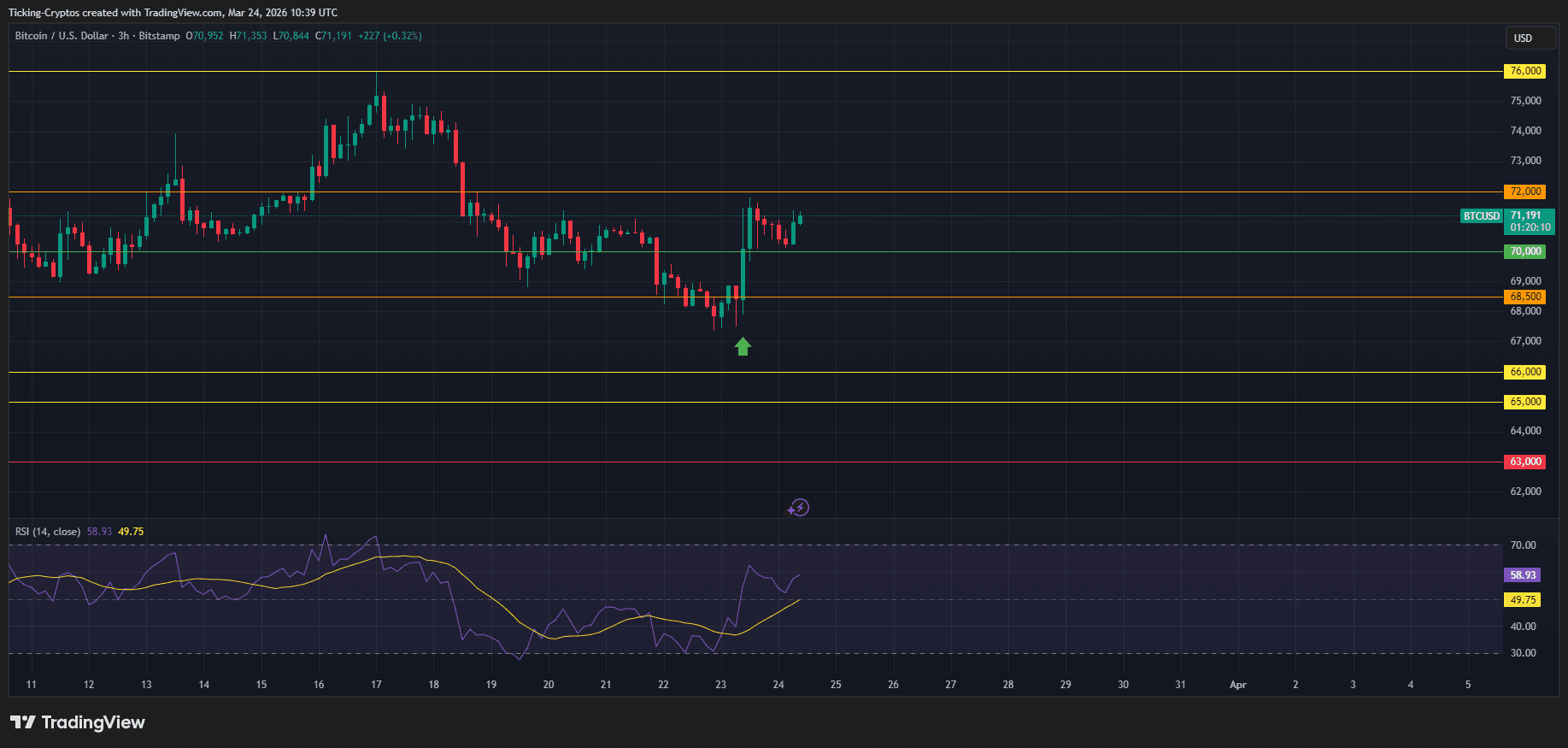
The Bitcoin surge acted as a primary catalyst for the broader crypto ecosystem. When $BTC moves with such high conviction, it creates a "rising tide" effect that uplifts altcoins:
While the crypto market enjoyed a green day, the "fake news" allegations from Iran introduce a high level of risk for the coming days. If the five-day pause expires without a verified diplomatic breakthrough, the market could face a "gap down" as the war premium returns to oil and volatility returns to crypto.





