The primary catalyst for the current crypto crash is the dramatic escalation of military actions in the Persian Gulf. Following a series of airstrikes on Iranian infrastructure, Iran has reportedly retaliated by targeting regional energy assets and threatening to block the Bab el-Mandeb Strait. This, combined with the existing closure of the Strait of Hormuz, threatens to sever nearly one-third of the world's oil supply.
For the crypto market, this creates a "double-whammy" effect:
Bitcoin (BTC) has faced intense selling pressure, dropping nearly 4% in a single day to trade around $65,550. This move was exacerbated by a massive $14.16 billion options expiry on Deribit, which forced mechanical liquidations as the price drifted away from the "max pain" level of $75,000.
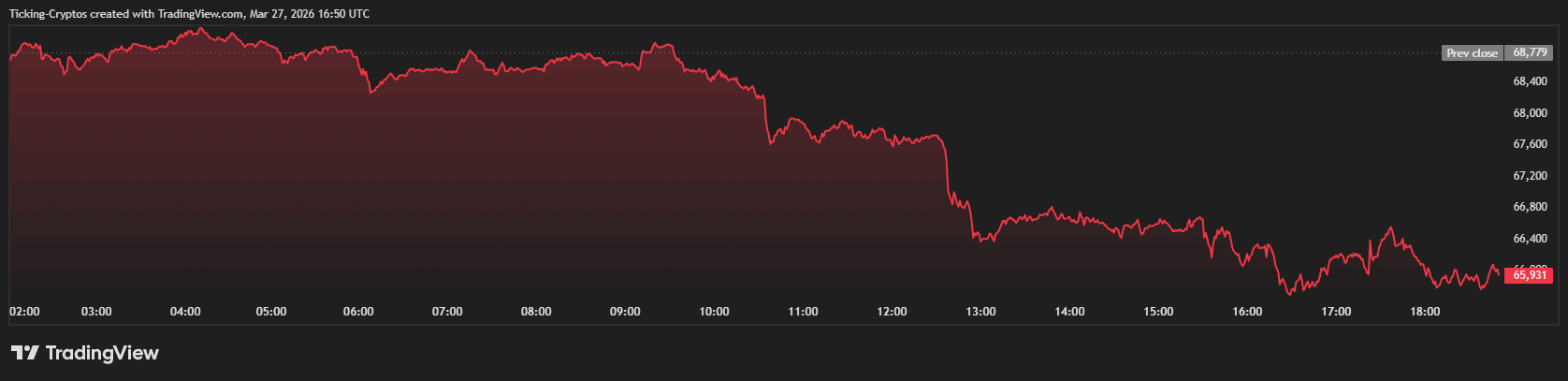
Technical analysts are now sounding the alarm. If Bitcoin fails to maintain a daily close above the $66,000 support zone, the market could see a further breakdown toward the $50,000 or even $46,000 range. The divergence between gold (up 1.3%) and Bitcoin (down 4%) suggests that, for now, the "digital gold" narrative is being tested by the harsh reality of geopolitical instability.
Prices look rough, but institutional money is telling a different story. Over the past four weeks, more than $2.3 billion has flowed into Bitcoin ETFs, according to crypto reports. While many retail traders are selling out of fear, larger players seem to be doing the opposite—quietly accumulating and positioning for a rebound once things settle down.
However, the short-term outlook remains volatile. According to reports from Bloomberg, the diplomatic dissonance between the US and Iran has "dismayed investors," and the lack of a clear path toward a ceasefire is keeping crypto prices in the red.





