
Candlestick patterns can reveal a lot about market sentiment and potential price movements. One pattern that often catches traders’ attention is the shooting star. Recognisable by its small body and long upper shadow, the shooting star trading pattern signals that buyers tried to push prices higher but sellers regained control, hinting at a possible reversal. This article will delve into what a shooting star pattern is, how to spot it on a chart, its associated trading strategies, and its distinctions from similar patterns.
A shooting star in trading is a bearish candlestick pattern that can signify a potential reversal of an uptrend. It consists of a single candlestick with the following characteristics:
The appearance of the setup suggests that the price opened near its low and rallied significantly during the trading session but ultimately closed near its opening price. This pattern indicates sellers regained control after a brief period of bullishness.
While the formation is considered more probable when it closes red, it’s possible to see a green shooting star. A green shooting star candlestick simply indicates that sellers weren’t able to push the price down quite as aggressively.
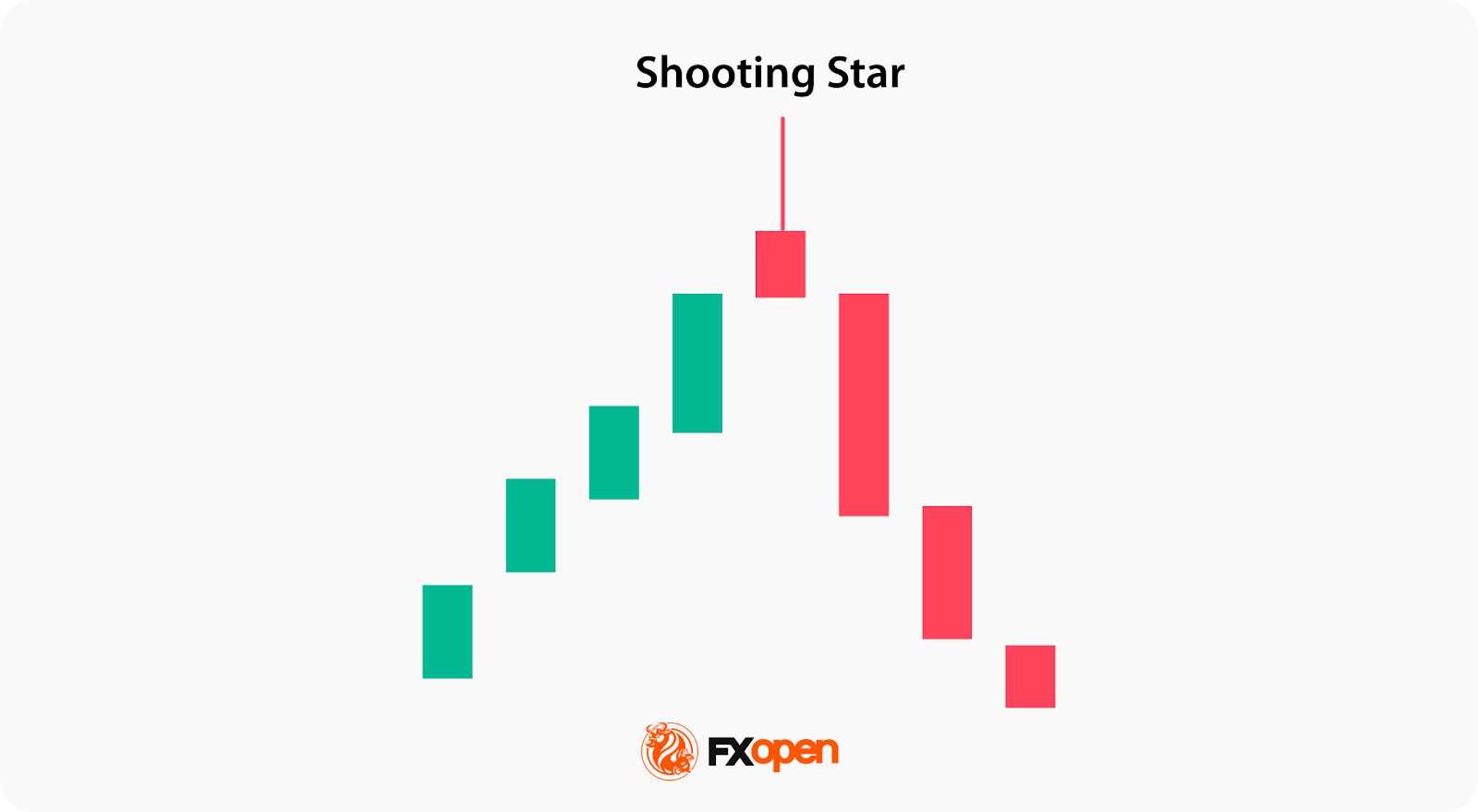
The shooting star trading strategy involves the following points:
Let's consider a live market example of a shooting star in the stock market to illustrate the concept. A trader analyses the Meta stock chart on the TickTrader platform by FXOpen and spots a shooting star stock pattern after an extended uptrend. They wait for confirmation, i.e. for the next bar to close lower. Upon confirmation, they decide to enter a short trade, setting their take-profit target at a significant support level and placing a stop loss above the formation’s high.
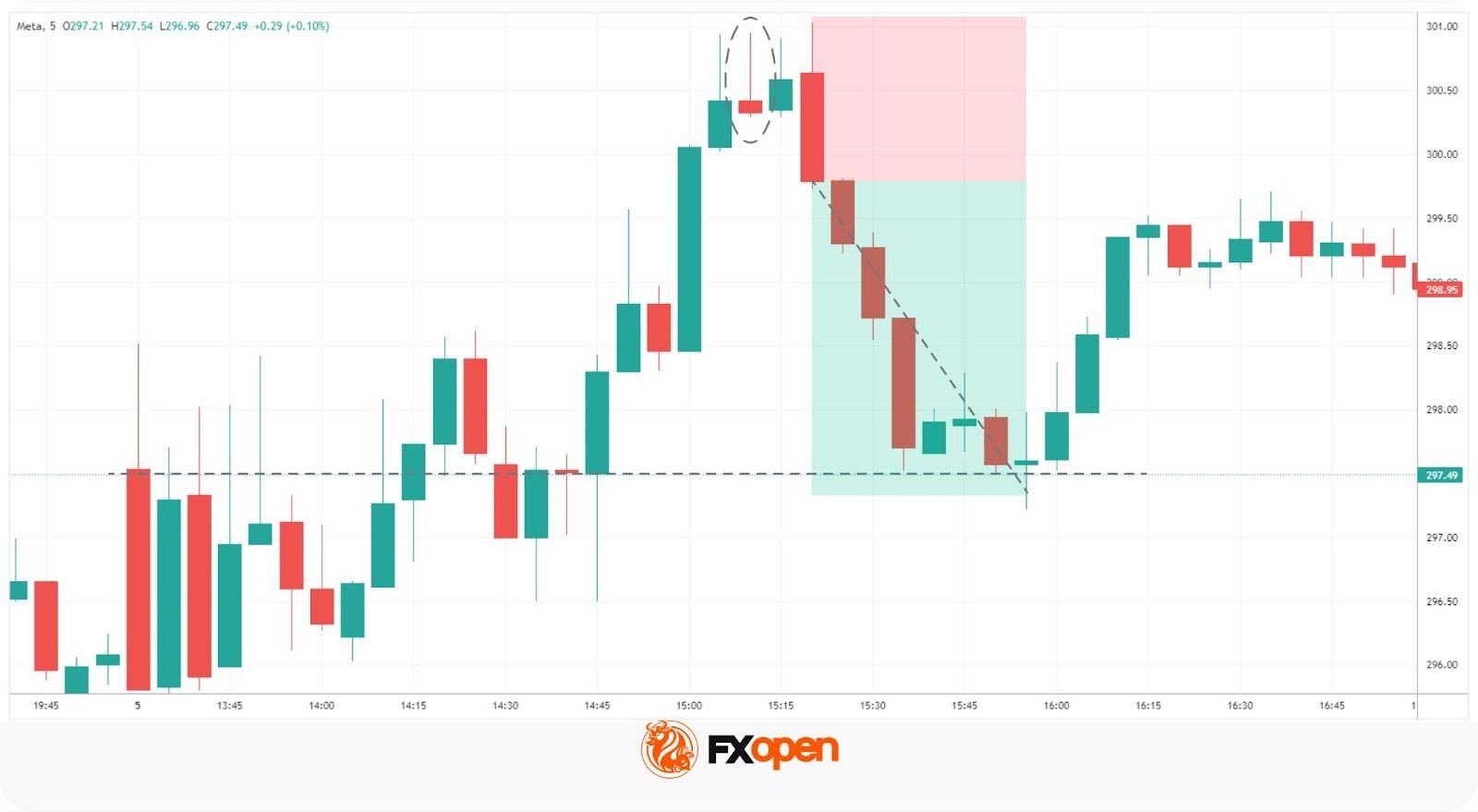
Confirming the shooting star pattern's reliability involves a multifaceted approach. Traders look beyond the candlestick itself, integrating various technical analysis tools to validate signals.
Confirmation methods include:
Let's compare the shooting star with other patterns with which it is often confused.
The shooting star and inverted hammer look similar – they have small bodies and long upper shadows. However, they differ in their implications. The former is a bearish reversal pattern found in uptrends, while the latter is a bullish reversal formation seen in downtrends.

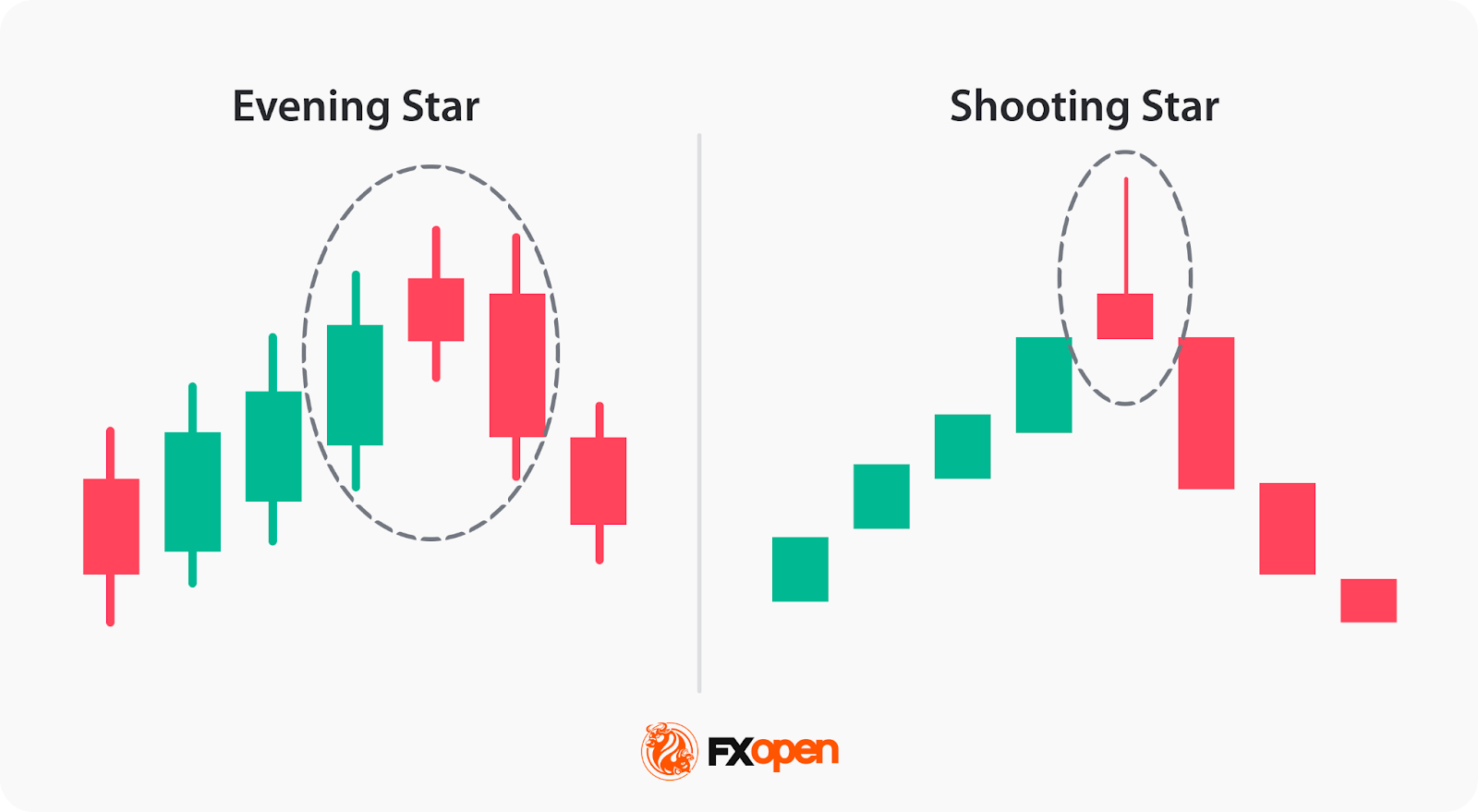
Both formations signal an uptrend reversal; however, the shooting star is a single-candle setup, whereas the evening star consists of three candles, including a large bullish candle, a small-bodied candle, and a large bearish candle.
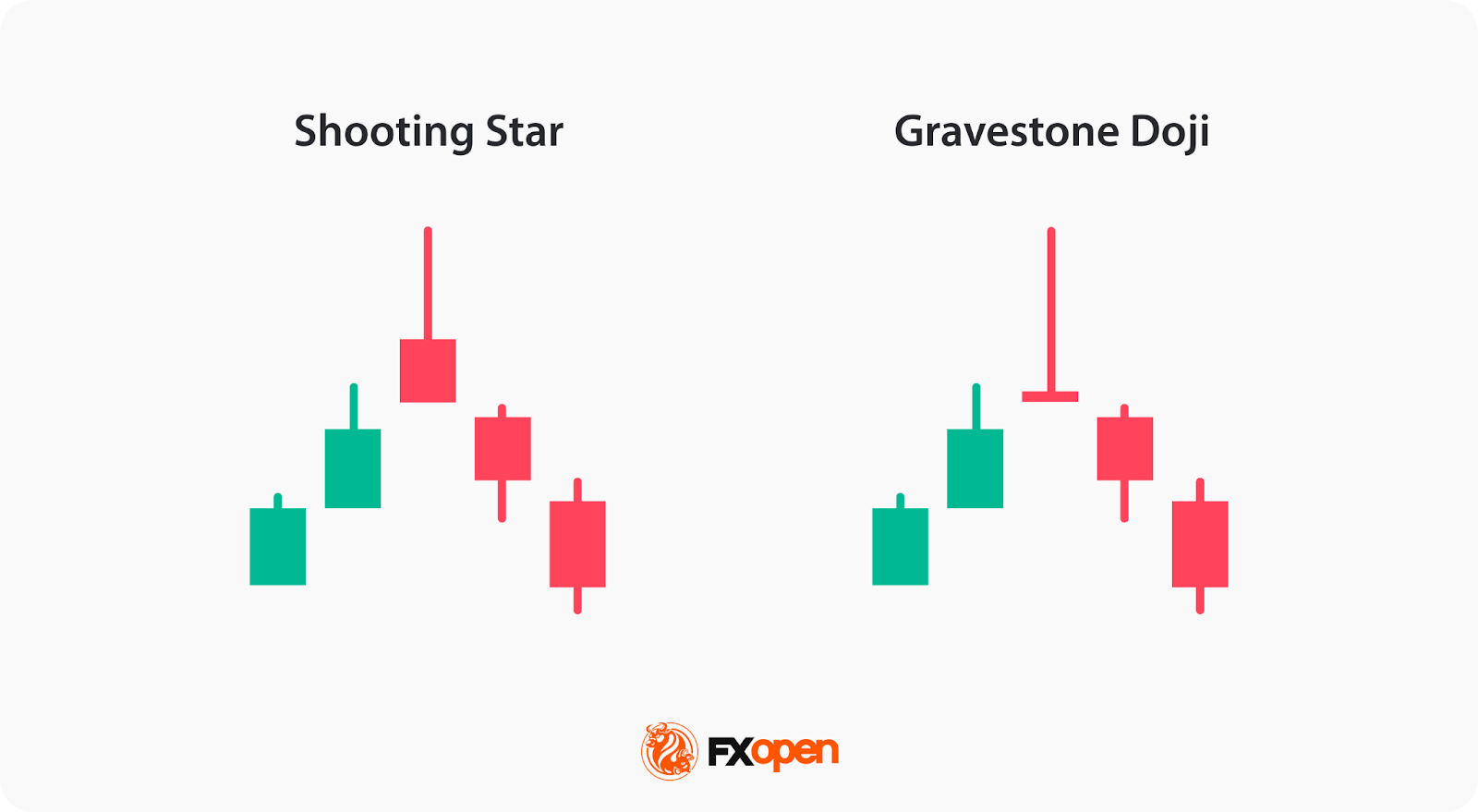
The shooting star and gravestone doji are both bearish reversal patterns. The shooting star features a small body at the lower end of the candlestick with a long upper shadow, signifying a failed rally.
In contrast, the gravestone doji has no or a tiny real body, as the open and close prices are identical or nearly identical, with a long upper shadow and no lower shadow. The gravestone doji suggests strong indecision in the market, with buyers initially driving prices up but ultimately failing to maintain that momentum, which often signals a sharp reversal.
The shooting star and hanging man also share similarities but differ in appearance and market positioning. The shooting star is a bearish pattern occurring after an uptrend, indicating a potential reversal as bears managed to pull the price down at the end of a trading session.
Conversely, the hanging man appears at the top of an uptrend as well but has a small body at the upper end and a long lower shadow, reflecting that sellers were able to push the price down significantly before buyers pulled it back up. The hanging man suggests that selling pressure is starting to outweigh buying interest.
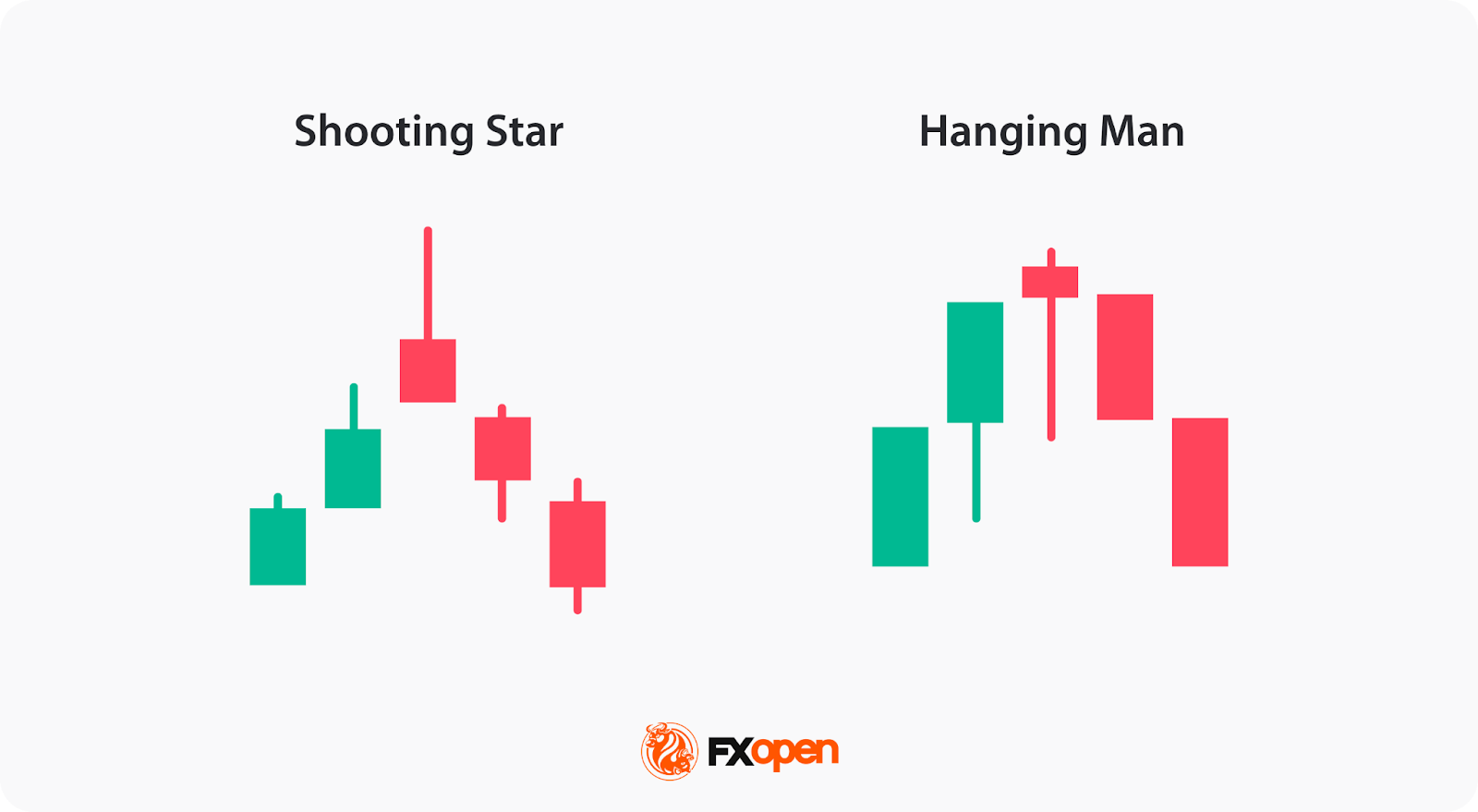
This formation offers traders valuable insights, but it comes with its own set of advantages and limitations. Understanding these may help traders use the pattern within their strategies.
Understanding candlestick patterns such as the shooting star is a fundamental part of technical analysis. Although this pattern can signal potential market reversals, traders typically use it alongside other technical indicators to confirm trading signals. Staying informed about market trends and continuously refining analytical skills may help traders in today’s fast-moving trading environment.
If you want to explore over 700 markets, you can consider opening an FXOpen account and trade with tight spreads from 0.0 pips and low commissions from $1.50.
Yes, candlestick patterns vary depending on the timeframe. A shooting star on a 1-minute chart provides short-term signals, while a shooting star on a daily chart may signal a longer-term reversal. However, the choice of timeframe goes hand in hand with your market strategy and goals.
Improving your candlestick pattern recognition skills requires practice and study. You can analyse historical charts, use trading simulators, read analytical materials like those at FXOpen, and engage with experienced traders to gain insights and practical experience.
Candlesticks visually represent price action and may help traders identify potential trend reversals, continuations, and key support and resistance levels. They are valuable tools for technical analysis.
The shooting star pattern is a bearish reversal candlestick that forms after an uptrend. It signals a potential shift in market sentiment, where buyers initially drive the price higher, but sellers take over, pushing the price back down near its opening level.
No, a bullish shooting star does not exist. It is a bearish pattern, indicating that an uptrend may be losing momentum and that a reversal to the downside could be imminent. A similar bullish formation is the inverted hammer.
A shooting star is not a doji. While both patterns can signal reversals, a doji has nearly identical opening and closing prices with no significant body, reflecting indecision, whereas a shooting star has a small body with a long upper shadow, indicating a failed rally.
Trading this candle involves looking for confirmation of the reversal, such as a bearish candle following the pattern. Traders often set stop-loss orders above the shooting star's high and take-profit levels near key support zones or previous lows.