FIBE — short for FinTech Berlin — is one of Europe's largest annual FinTech conferences. The 2026 edition brought together banks, brokers, startups, and investors under one roof to discuss the future of money, technology, and investing. If you're new to crypto, think of it as a massive trade show where Wall Street meets Silicon Valley — but in Berlin.
FIBE is not a crypto conference. It covers everything from digital banking to insurance tech. But in 2026, crypto had a clear and growing presence. Bitcoin, self-custody, and tokenization all had dedicated sessions and exhibitor booths. For beginners, this is a signal: crypto is no longer a fringe topic — it's becoming a normal part of the broader financial world.
One of the biggest moments of FIBE 2026 came from Yoni Assia, CEO of eToro — one of the world's most popular trading platforms. He took the stage to showcase major updates to Tori, eToro's AI companion for investors.
What's new with Tori? Three key features stood out:
For crypto beginners, this matters because it lowers the barrier to investing. You don't need to monitor markets 24/7 — an AI can do it for you.
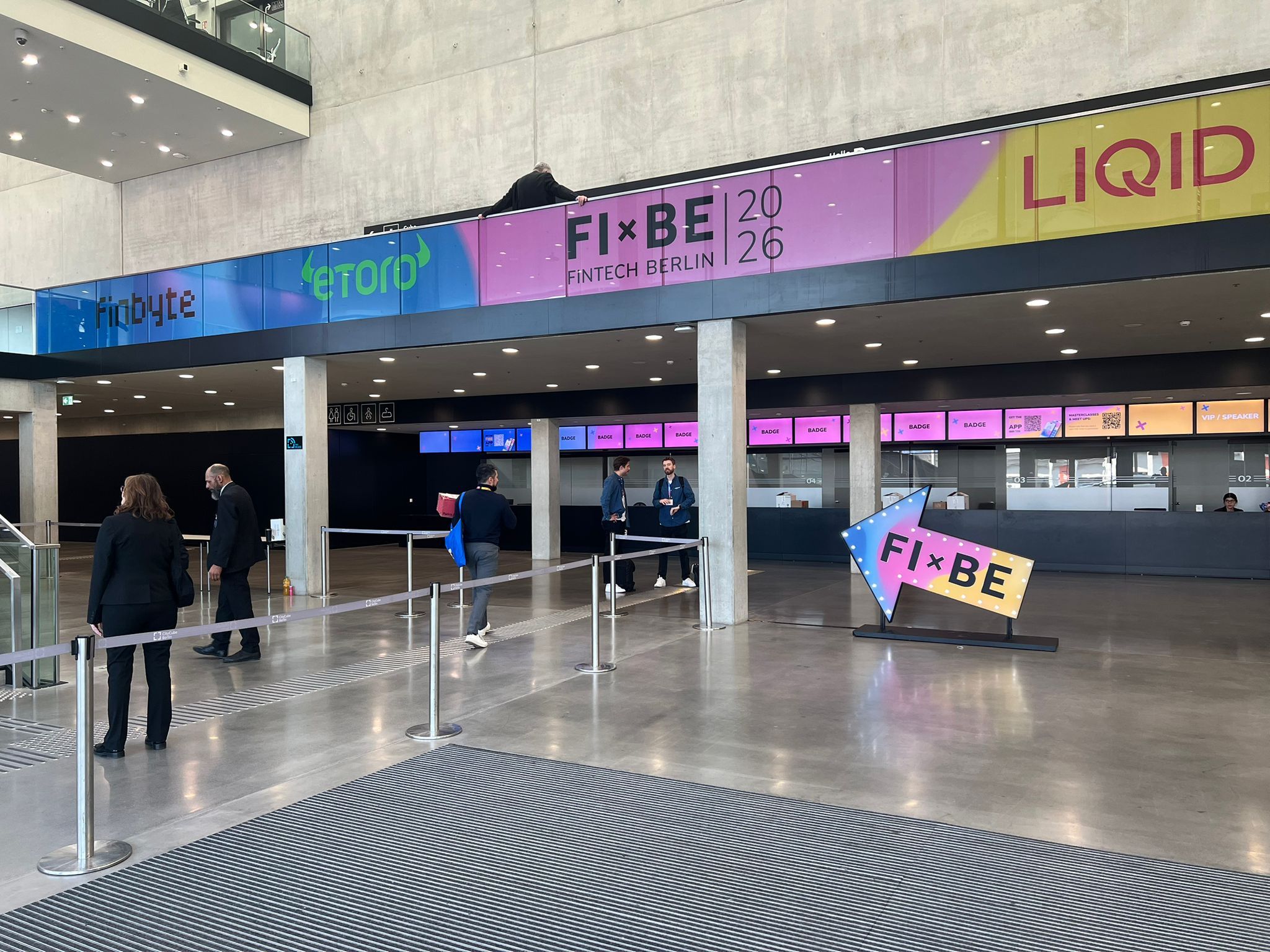
Another standout at FIBE 2026 was Relai, a Swiss company with a very clear message: Bitcoin only, and no third parties involved.
While most financial platforms offer dozens of assets and require you to trust a broker or a bank, Relai takes the opposite approach. Their philosophy is simple — you own your Bitcoin directly, through a concept called self-custody. That means no exchange holds your coins. No company can freeze your account. Just you and your Bitcoin.
Seeing a self-custody Bitcoin company at a conference dominated by banks and brokers is significant. It shows that even in traditional finance circles, the idea of owning your own assets is gaining traction.
Perhaps the most forward-looking discussion at FIBE 2026 happened on the Club Stage, where a new investment model was introduced: tokenized real-world assets (RWAs).
The concept? Take a physical asset — like an airplane engine or a rocket motor — and turn it into a digital token on a blockchain. Investors can then buy a fraction of that asset, hold it for a short period, and sell it when they want. High liquidity, real asset backing.
For beginners: imagine owning a small piece of a Boeing engine the same way you'd buy a share of stock. That's the idea behind RWA tokenization. It's still early, but the conversation is moving fast.
Here's what you should remember from FIBE Berlin 2026:
FIBE 2026 confirmed what many in the industry have been saying: crypto and blockchain are not replacing traditional finance — they're merging with it. Whether you're just getting started or already hold your first Bitcoin, events like FIBE are where the future is being decided.





