One of the largest non-fungible token or NFT platform is preparing for a massive business shift. OpenSea Product Marketing Lead Zack Brenner recently asked community members on X who wanted early access to perpetual contracts on the platform. He later replied with a direct "YES" when asked if Hyperliquid infrastructure would power the new service.
Can a traditional digital collectible marketplace successfully transform into a high-speed derivatives trading hub?
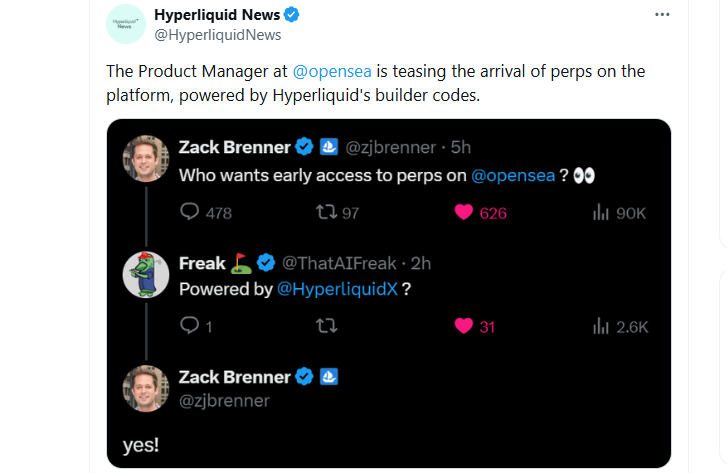
Source: X Official
This surprise announcement comes at a fascinating time for the digital asset industry. Collectible volumes have dropped significantly from their historic peaks seen throughout previous years.
This new OpenSea perpetual futures integration allows the company to diversify its business model while giving users fresh ways to trade.
The platform still has a massive and trusted name across the entire crypto space. Data from CoinGecko shows the venue currently ranks second, only after Blur, holding a 36.5% market share in the NFT marketplace rankings.
However, slower overall trading activity means the business needs new fee channels to keep growing over the long haul.
Integrating OpenSea perpetual futures allows users to trade with borrowed funds without dealing with any expiration deadlines. This type of trading creates huge daily volumes and brings in lots of platform cash through fee structures and forced closures.
Moving into a multi-asset setup helps the platform make more money from its current users while art sales are slow.
Let’s understand how this update could impact the market:
The Big Volume Surge: Launching OpenSea perpetual futures could immediately draw a massive wave of regular traders from the platform's current user base. Tapping into Hyperliquid's deep pool of orders could spark a giant jump in trading volume. This success would heavily boost the value and usage of the underlying HYPE token ecosystem.
The Slow Adoption Path: Users might react slowly to the new trading tab, keeping early numbers low during the beginning test phase. If collector interest stays flat, the marketplace will struggle to compete with established trading platforms like Blur, dYdX. The platform would then need to launch big reward campaigns to convince casual art collectors to try high-risk trading.
The Legal Stop Sign: Offering high-risk trading contracts will likely attract heavy attention from global financial regulators. Strict rules could force the team to block several major countries, severely limiting who can use the tool. This friction would hold back the platform's potential profit growth and delay the wider public rollout.
Hyperliquid is a fast blockchain built specifically for decentralized perpetual contracts. The OpenSea perpetual futures system plugs directly into this ready-made network instead of forcing the team to build a complex trading system from scratch.
This connection means that instead of jumping between different complicated apps, everyday traders get professional order matching and lightning-fast speeds.
The specialized setup allows a live, public order book to sit right inside the main website screen. This partnership gives users an instant analytical advantage while providing the network with an immediate pipeline of millions of web users.
The advanced trading arena is already filled with aggressive, deep-pocketed competitors. On-chain systems like GMX and dYdX fight constantly for market share alongside centralized giants like Binance and Bybit. Major web wallets like MetaMask and Phantom have also added native trading options directly into their apps for users.
Success for this project will depend entirely on offering low transaction fees and top-tier safety tools. If executed correctly, the marketplace could expand into setups where users use their digital art collections as collateral for trades. This ambitious move shows that the NFT platform wants to evolve far beyond simple art sales as the broader crypto industry grows up.
Note: This article is for information purposes only. All the information and facts are based on market present data. The article itself does not claim anything.





