Global markets are sending a confusing signal. Precious metals — traditionally considered safe haven assets during uncertainty — have suddenly dropped, while Bitcoin is moving in the opposite direction.
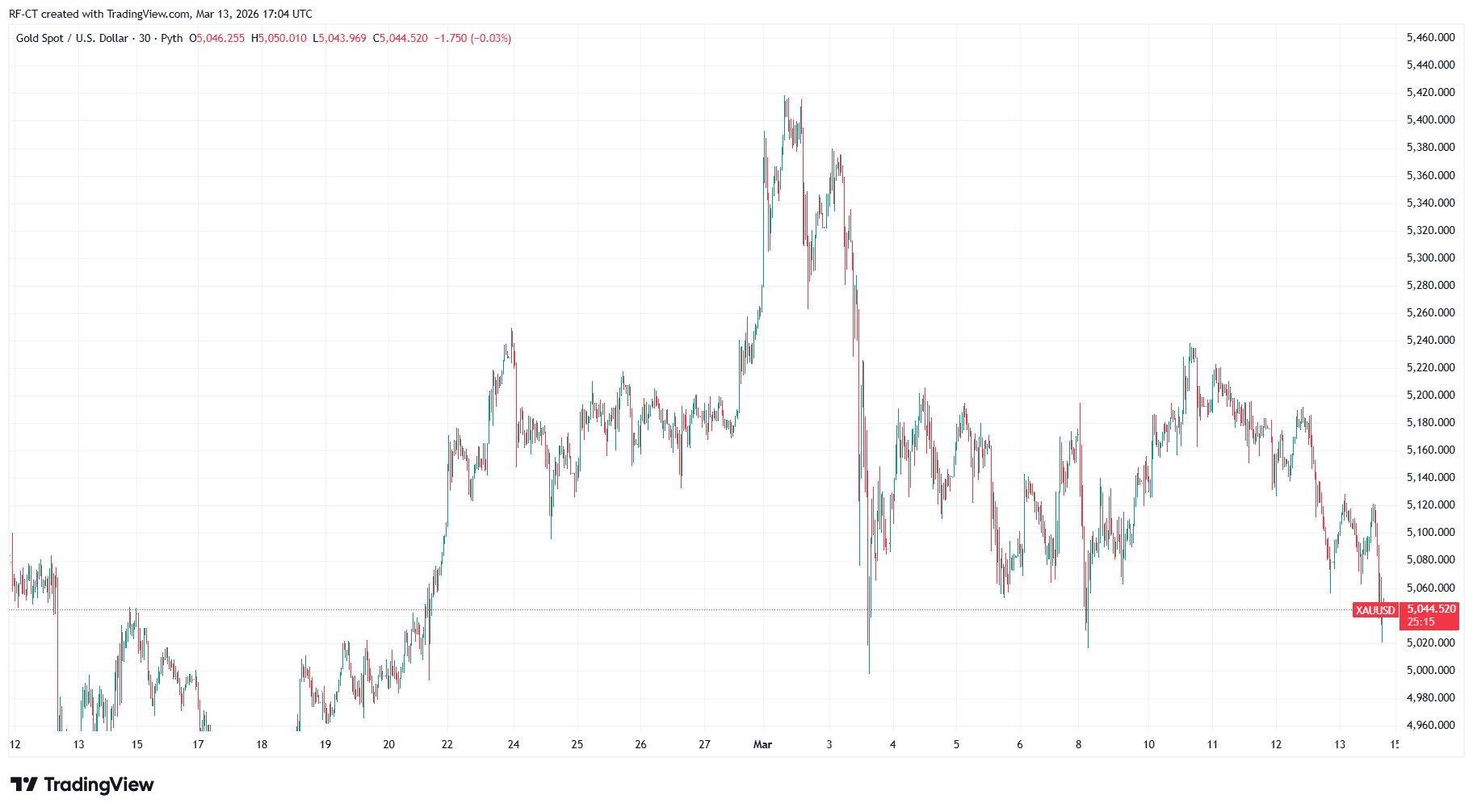
In the last few hours, silver fell sharply and gold also declined, wiping hundreds of billions of dollars from the metals market. At the same time, Bitcoin managed to reclaim the $73,000 level, even as geopolitical tensions and economic concerns dominate global headlines.
This unusual divergence is raising an important question: why are traditional safe havens falling while Bitcoin rises?

Gold and silver markets experienced a sharp drop within a short period of time. According to market trackers, roughly $1 trillion in market value was wiped from the precious metals sector in just a few hours as both metals moved lower simultaneously.
Silver dropped significantly, falling below key support levels while gold also declined more than 2% during the sell-off.
Normally, geopolitical tensions or economic uncertainty push investors toward safe haven assets such as gold and silver. However, the recent move suggests something different may be happening in global markets.
One possible explanation is liquidity stress. When investors face uncertainty or margin pressure, they sometimes sell profitable assets — including metals — to raise cash.
Another factor may be profit-taking after strong rallies. Precious metals have surged in recent months, and some traders could be locking in gains during heightened volatility.
At the same time, new economic data is raising concerns about global growth.
Canada’s economy unexpectedly lost 83,900 jobs in February, one of the sharpest monthly declines seen in years. The surprising drop has triggered fears that economic momentum in North America could be slowing.
Weak employment data can affect global markets because it signals reduced consumer spending and potential economic contraction. When investors begin to worry about economic slowdowns, volatility often increases across multiple asset classes.
This kind of uncertainty can trigger sudden capital movements between markets.
Another key factor influencing markets is rising geopolitical tension.
Recent developments in the Middle East have increased concerns about energy supply disruptions. The Strait of Hormuz, one of the world’s most important oil shipping routes, remains a critical point of risk for global energy markets.
Around 20% of global oil supply passes through the Strait of Hormuz, meaning any disruption could send oil prices sharply higher and increase inflation pressures worldwide.
Such geopolitical risks usually push investors toward safe assets — but the current market behavior suggests investors may be repositioning capital differently this time.
While metals fell, Bitcoin managed to reclaim the $73,000 level, showing resilience despite global uncertainty.
This raises an interesting possibility: Bitcoin may be starting to behave differently in the current macro environment.
For years, Bitcoin has been described as “digital gold.” During certain market events, investors view it as a hedge against monetary instability, inflation, or geopolitical shocks.
The recent move could reflect capital rotation, where investors move funds between asset classes depending on liquidity, volatility, and perceived opportunity.
In this case, some traders may see Bitcoin as offering higher upside potential compared with traditional safe havens.
The current market environment is unusual because several signals are happening at the same time:
Such a combination suggests investors are still trying to determine where the safest and most profitable place for capital may be.
Whether Bitcoin continues to rise while metals struggle remains uncertain, but one thing is clear: global markets are entering a period of unusual volatility and shifting narratives.





