Zcash ($ZEC) has emerged as the breakout star of the early May 2026 crypto market. While major assets like $Bitcoin faced resistance near $82,000, ZEC decoupled from the broader market to post gains exceeding 70% within seven days. This explosive move has pushed the privacy-centric token to levels not seen in years, reclaiming its position as a top-tier institutional asset.
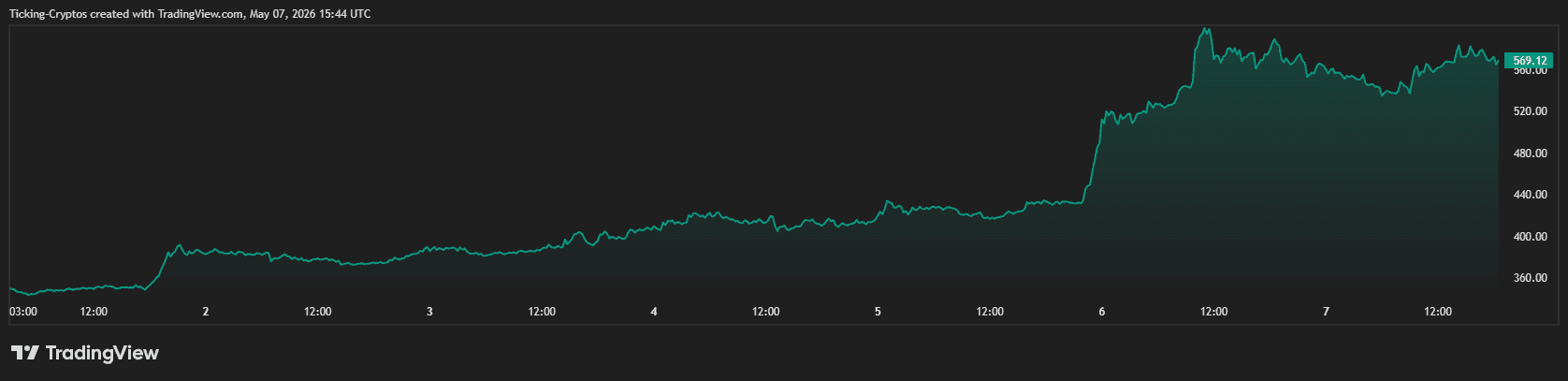
The primary driver behind the ZEC price surge is a high-profile endorsement and disclosure from Multicoin Capital. The hedge fund revealed a massive long position in Zcash, framing it as a vital hedge against global surveillance and wealth seizure. This institutional validation, combined with a severe short squeeze and a retail boost from a recent Robinhood listing, created a "perfect storm" for price appreciation.
On May 4, 2026, Tushar Jain, co-founder of Multicoin Capital, disclosed that the firm had been aggressively accumulating ZEC since February. In a widely circulated thesis, Jain argued that Zcash represents the "cleanest" bet on private, seizure-resistant money.
The technical breakout was amplified by market mechanics. Over $55 million in ZEC short positions were liquidated within 24 hours as the price moved past the $500 mark. Additionally, on-chain data confirms that nearly 30% of the ZEC circulating supply is currently locked in shielded pools, significantly reducing the liquid supply available for sale on exchanges.
Looking at the current ZEC/USD chart, the momentum remains historically high but is entering a consolidation phase.
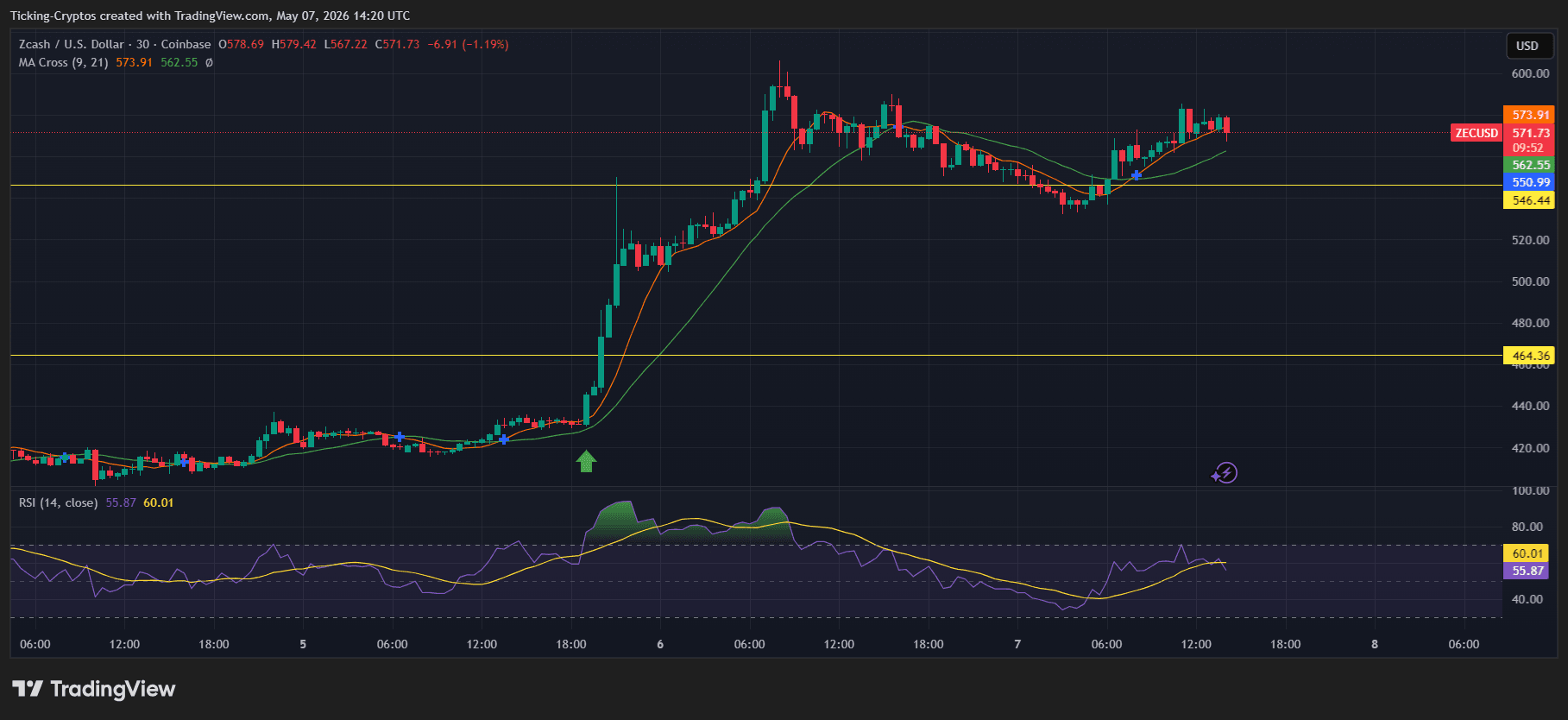
Based on the current price action:
The Relative Strength Index (RSI) is currently hovering around 55.87, suggesting that the asset has cooled down from "overbought" territory, providing room for a secondary leg up if buying pressure resumes.
The rally in ZEC has sparked a sector-wide interest in privacy protocols. Monero ($XMR) and Dash have also seen positive price action, suggesting a rotation of capital into "cypherpunk" assets. For investors looking to secure their assets, comparing hardware wallets is becoming an essential step as the focus on self-custody and privacy intensifies.





