
Crypto has been "the future of money" for over a decade. Yet paying for coffee with it still felt like a science project — until now.
The best crypto cards in 2026 finally close that gap. They plug straight into the Visa network, so you can spend stablecoins, staked ETH, or exchange balances at 150M+ merchants worldwide, often earning better cashback than your bank card pays.
The catch: the market has split. Some cards are self-custodial and DeFi-native. Others are custodial top-up cards built for global reach. Fees, cashback caps, and availability vary wildly, and the marketing pages won't tell you where the sharp edges are.
We tested and compared the best crypto cards available right now — EtherFi Cash, Kast, Gnosis Pay, Coinbase Card, and the Crypto.com Visa — so you can pick the one that actually fits how you hold and spend crypto. And if you're still weighing whether to spend or cash out, read our guide on how to turn Bitcoin into cash first.
A crypto card is a Visa or Mastercard funded by digital assets instead of a bank account. When you tap the card, your crypto (or stablecoin balance) is converted to fiat at the moment of purchase, and the merchant gets paid normally — they never know crypto was involved.
In 2026 the market has settled into two distinct camps:
Six factors separate a card you'll actually use from one that dies in a drawer after the first statement:
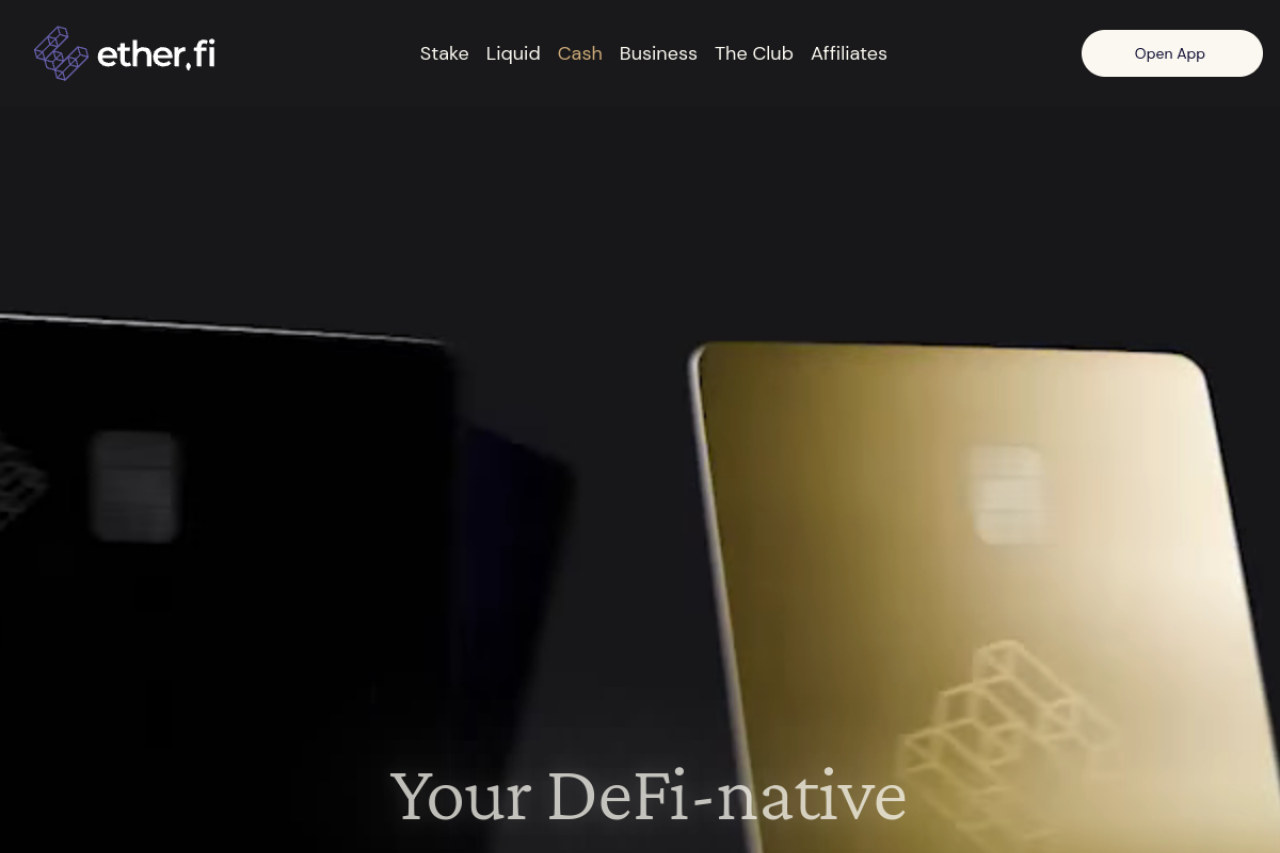
EtherFi Cash is what happens when a liquid restaking protocol builds a payment card. There's no exchange account and no deposit address owned by someone else — every user gets their own Safe smart-contract vault, and the card spends directly from it.
The killer feature is the credit mode. Instead of selling ETH (a taxable event in most jurisdictions), you can borrow against your vault and repay on your schedule. Prefer to keep it simple? "Pay Now" mode works like a debit card. Either way, staked assets in the vault keep earning restaking yield while backing your spending.
Cashback is up to 3% on USD spending (up to 2% on EUR), paid without an annual fee. Membership tiers — Core, Luxe, and Pinnacle — don't change the rate; they raise the monthly cashback-eligible spend cap from $2K up to $50K. USD purchases carry zero card fees, and foreign-currency spending costs about 1%.
Coverage is wide but not universal: 170+ countries including the EU, UK, UAE, and Hong Kong — but only around 20 US states, with heavyweights like NY, CA, TX, and FL currently excluded.
Key features:
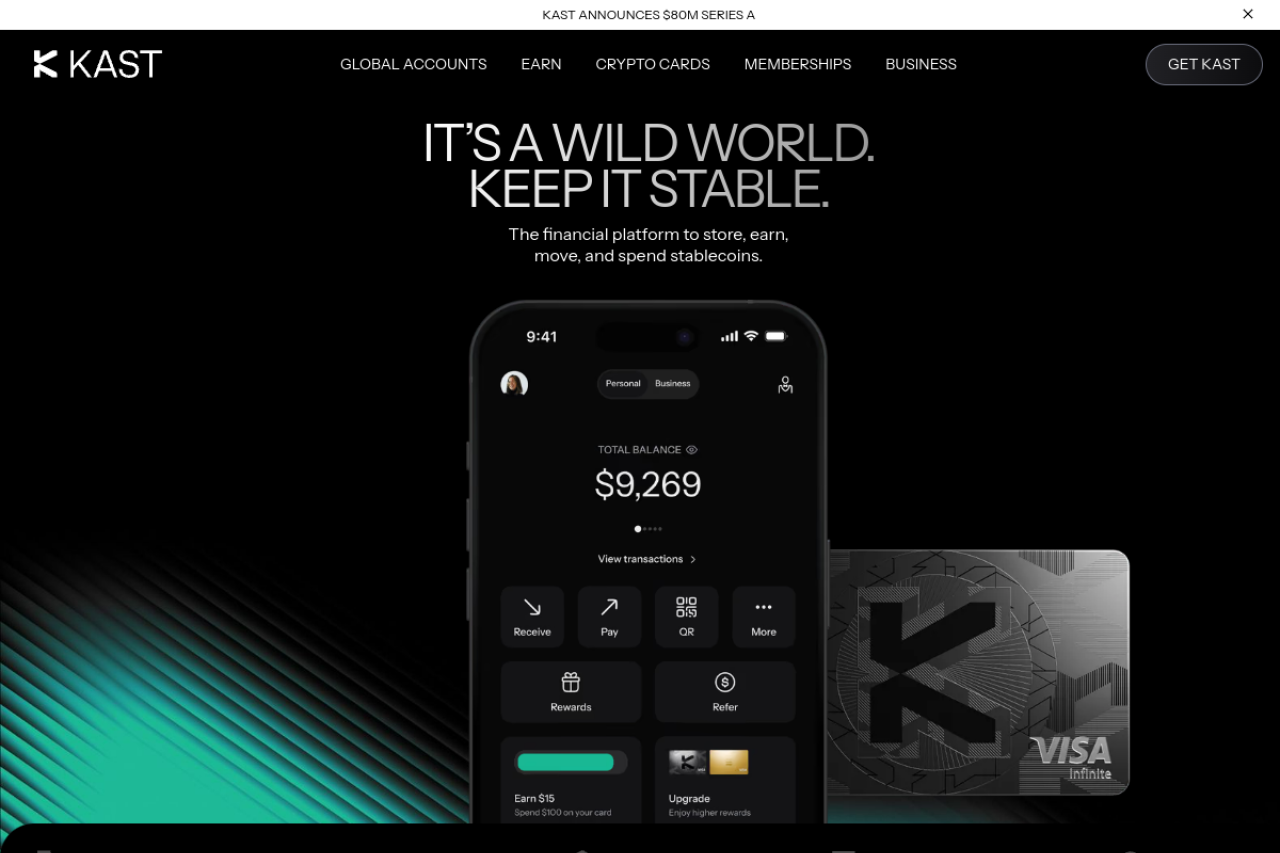
Kast made a deliberately boring choice that turns out to be its superpower: the card only spends stablecoins. Top up with USDC, USDT, or USDe across eight chains, converted 1:1 with no spread, and swipe anywhere Visa is accepted — 150M+ merchants across 170+ countries.
Its real moat is geography. Kast ships cards to Argentina, Nigeria, Vietnam, the Philippines, and other markets that Coinbase and Crypto.com decline, which makes it the de facto default for anyone earning in stablecoins outside the US/EU banking core.
The free Standard tier pays 1.5% cashback; Premium ($1,000/yr) pays 2%, and Private ($10,000/yr) pays 3% — with paid tiers stacking uncapped KAST Points on top and boosted rates on select merchant categories. Mind the small print: FX runs 0.5%–1.75%, ATM withdrawals cost $3 + 2%, and an inactivity fee kicks in after 12 idle months.
Key features:
Gnosis Pay was the first card to prove "self-custodial Visa" isn't an oxymoron. Your money lives in a Safe smart account on Gnosis Chain, payments settle on-chain, and no company ever takes custody of your funds. You even get your ENS name printed on the card.
Top up with EURe or GBPe (and USDCe depending on region) and spend at any Visa merchant — with effectively zero FX on EUR/GBP purchases, since you're spending the native e-money token. The first €200/month of ATM withdrawals is free.
Cashback is tied to holding GNO: from 1% (0.1 GNO) up to 4% (100 GNO), plus 1% extra for OG NFT holders. Weekly caps limit eligible spend at each tier, so treat it as a bonus rather than the headline. Note that new sign-ups now flow through partner apps — Zeal in the EU and Picnic in Brazil.
Key features:
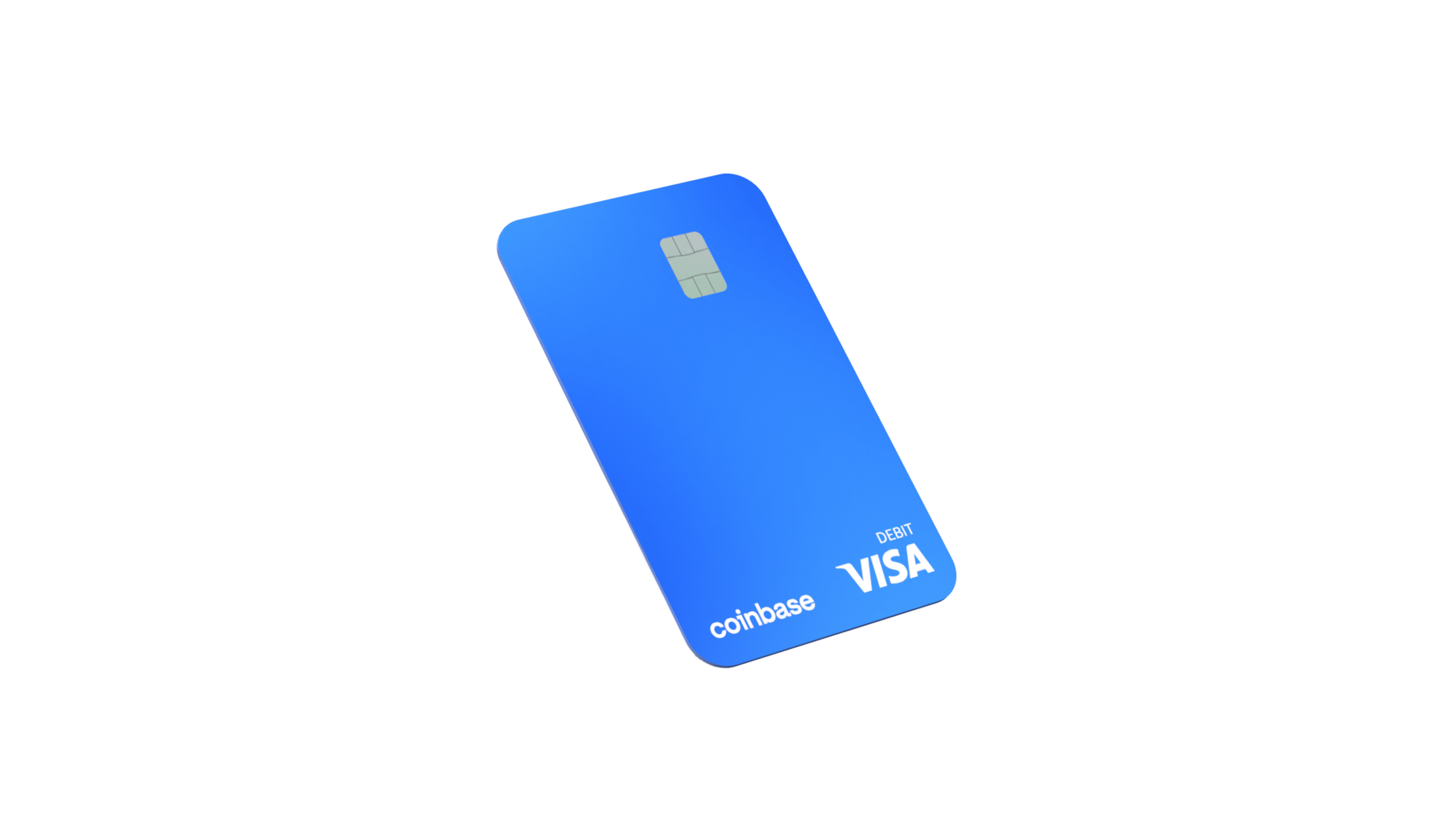
If your crypto already sits on Coinbase, this card requires close to zero effort: no new app, no vault deployment, no tier staking. Apply, add to Apple Pay, spend any asset in your Coinbase balance — the sale happens automatically at purchase time.
Rewards run up to 4% back in crypto, but the rate rotates depending on which reward asset you select, so read the current offer rather than assuming the ceiling. There's no annual fee and no card fee on domestic purchases; what you actually pay is Coinbase's conversion spread when a volatile asset is sold (stablecoin spending keeps this minimal), plus a 2.49% foreign transaction fee abroad.
That FX fee makes it a poor travel card — but as a US daily driver funded by USDC, it's the lowest-friction option on this list, with full availability across the country that EtherFi can't yet match.
Key features:

Crypto.com's tiered metal cards defined the category's first era, and the formula hasn't changed: stake CRO, unlock a tier, earn CRO cashback plus lifestyle perks no rival matches — Spotify and Netflix rebates, airport lounge access on higher tiers, and genuinely premium metal hardware.
The math is the catch. Headline rates reach 5%, but that requires staking six figures of CRO; the realistic Ruby/Indigo tiers ($400–$4K staked) pay 1–2%. And because rewards arrive in CRO, their real value moves with the token — cashback earned at 2% can be worth more or less by the time you sell.
Add a 3% FX fee on the lower tiers and the takeaway is clear: this is a perks card for people bought into the Crypto.com ecosystem, not a pure cashback play.
Key features:
Here's how the five stack up on the dimensions that decide the monthly math:
| Card | Type / Custody | Cashback | Annual fee | FX fee | Availability |
|---|---|---|---|---|---|
| EtherFi Cash | Credit/debit · Self-custodial | Up to 3% | $0 | ~1% | 170+ countries, ~20 US states |
| Kast | Debit · Custodial | 1.5%–3% + points | $0–$10,000 | 0.5%–1.75% | 170+ countries |
| Gnosis Pay | Debit · Self-custodial | 1%–5% in GNO | ~€30 one-time | 0% in EUR/GBP | EU, UK, Brazil |
| Coinbase Card | Debit · Custodial | Up to 4% (rotating) | $0 | 2.49% | US-wide |
| Crypto.com Visa | Prepaid · Custodial | 1%–5% in CRO | $0 + CRO stake | Up to 3% | Global (most regions) |
The honest answer: it depends on what you hold, where you live, and how much custody risk you'll accept.
Crypto cards stopped being a gimmick the moment self-custodial issuers cracked the Visa network. In 2026 the choice isn't whether a crypto card works — they all do — but which trade-off you want: custody vs convenience, cashback vs perks, global reach vs local depth.
EtherFi Cash takes the top spot because it refuses the oldest trade-off in the category: it gives you real cashback and credit-style spending without asking you to sell your assets or surrender your keys. Kast owns the stablecoin-global niche, Gnosis Pay owns European self-custody, and Coinbase and Crypto.com remain the strongest custodial defaults in their home turf.
Availability, fees, and reward programs change fast in this category — always confirm the current terms for your country on the issuer's site before ordering. Nothing here is financial advice; it's a map of the trade-offs.





