
In price action trading, mitigation blocks are a widely used concept for identifying areas where institutional orders may remain unfilled. These zones often act as temporary support or resistance, allowing traders to anticipate potential reversals. Understanding how mitigation blocks form, how they can be applied in strategy development, and what limitations they carry may support traders when developing their own approach. This article explores their definition, practical applications, and the challenges traders should keep in mind when incorporating them into their decision-making.
A mitigation block in forex trading refers to a specific order block on a chart that indicates where previous movements have stalled and reversed, marking it as a potential area for future market turns. This concept within the Smart Money framework is crucial for traders looking to manage their positions by taking advantage of strategic entry and exit points.
The idea behind these areas is rooted in the dynamics of supply and demand within forex. When a currency pair reaches a level where buyers or sellers have previously entered the market in force, causing a reversal, it suggests a potential repeat of such actions when the price returns to the area.
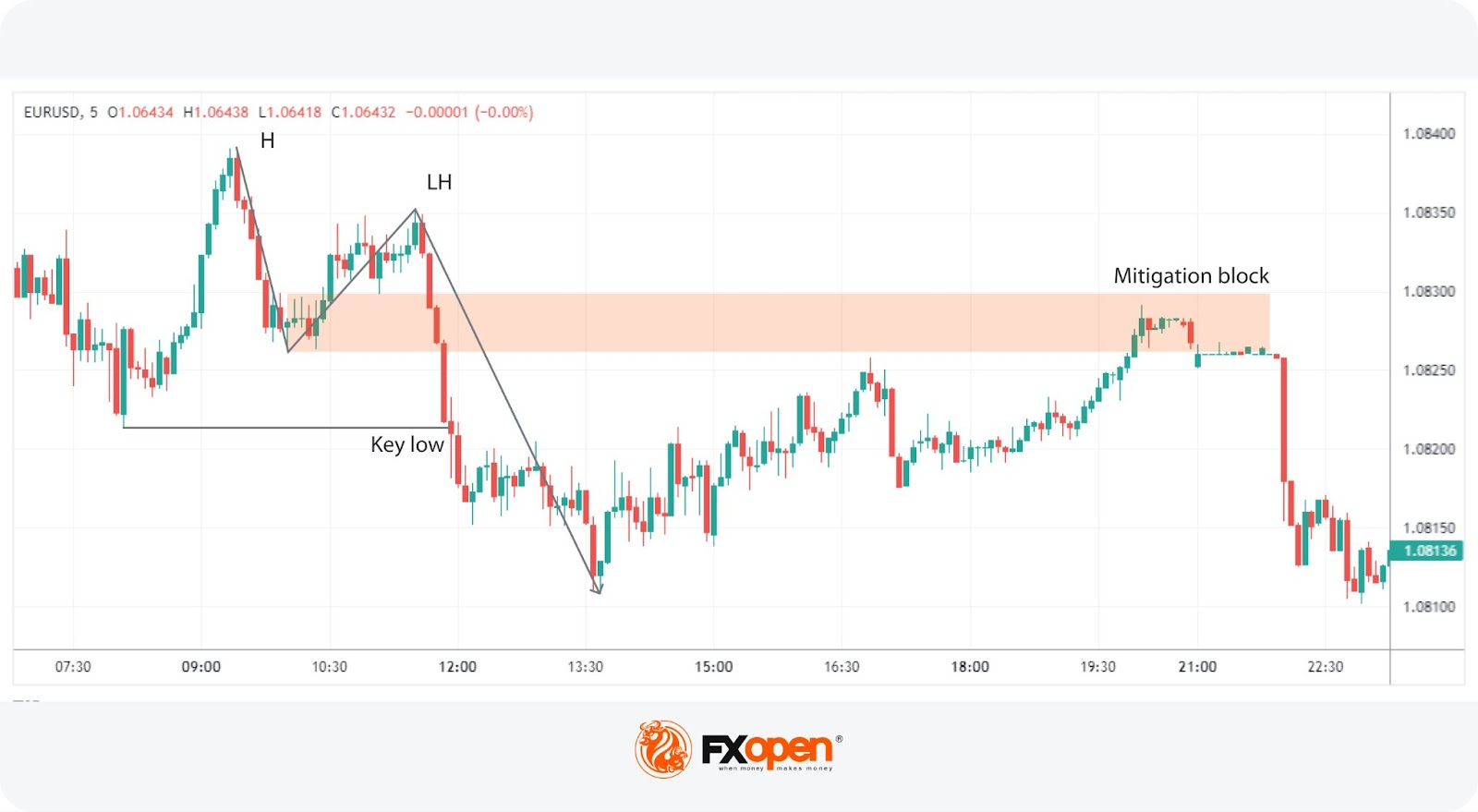
Mitigation blocks can be bullish or bearish, each with distinct characteristics:
To have a go at identifying your own blocks, you can head over to FXOpen’s TickTrader platform to access a world of currency pairs and over 1,200 charting tools.
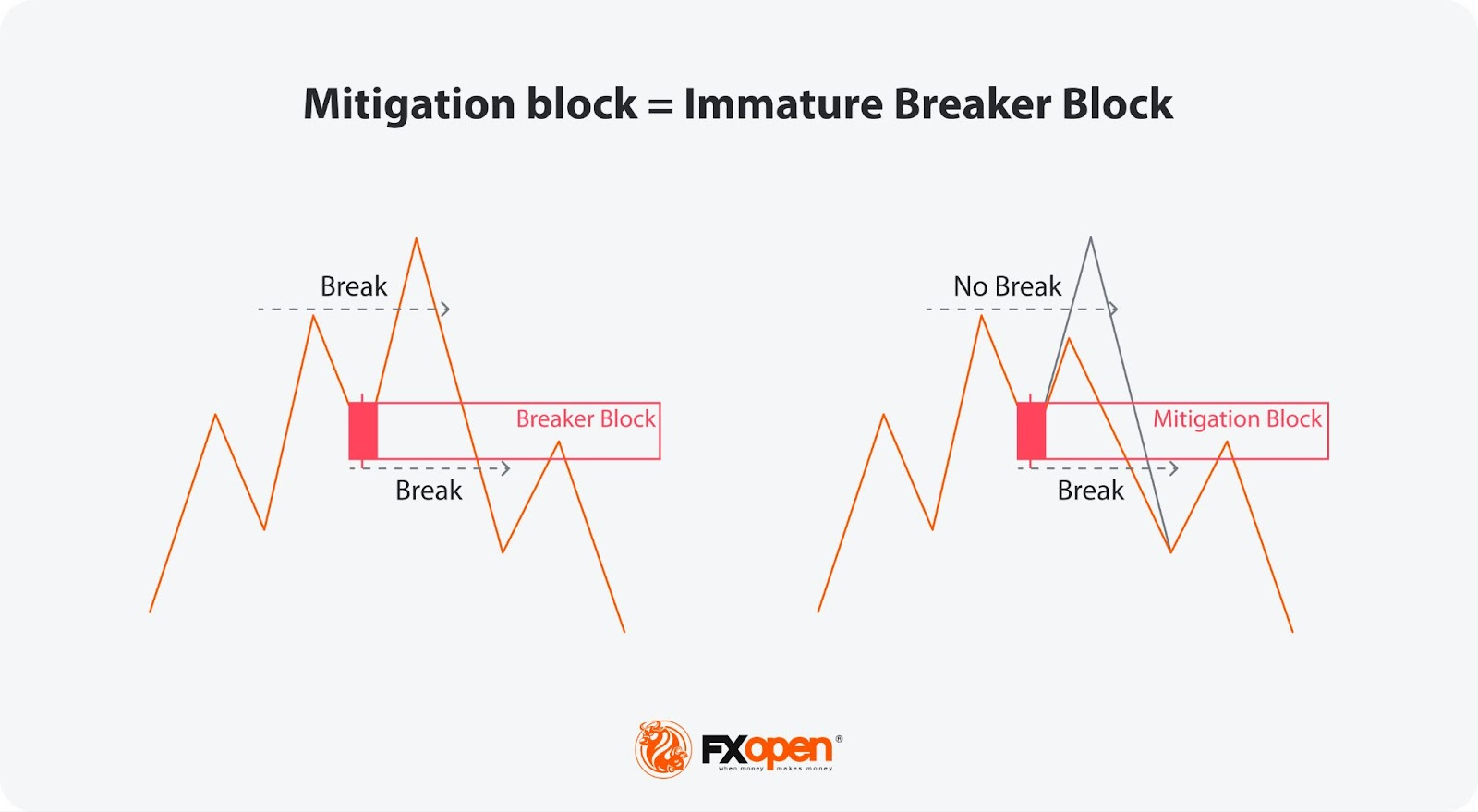
Mitigation and breaker blocks are both significant in identifying potential trend reversals in forex trading, but they have distinct characteristics that set them apart. A mitigation block forms after a failure swing, which occurs when the market attempts but fails to surpass a previous peak in an uptrend or a previous trough in a downtrend. The pattern indicates a loss of momentum and a potential reversal as the price fails to sustain its previous direction.
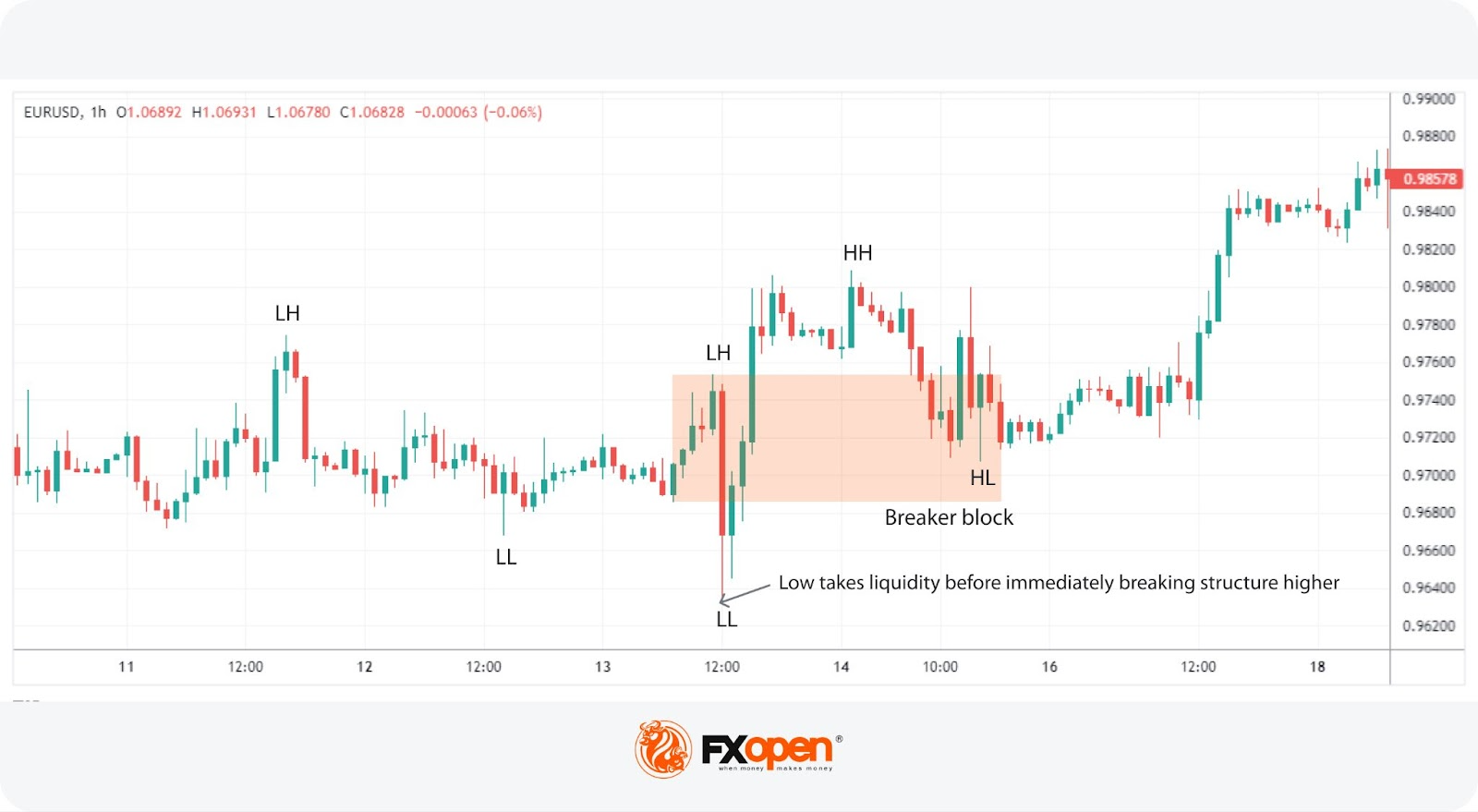
On the other hand, a breaker block is characterised by the formation of a new high or low before the market structure is broken, indicating that liquidity has been taken. This means that although the trend initially looked set to continue, it quickly reverses and breaks structure.
In effect, a breaker appears when the market takes liquidity beyond a swing point before reversing the trend. A mitigation appears when the price doesn’t move beyond the trend’s most recent high or low, instead plotting a lower high or higher low before reversing the trend.
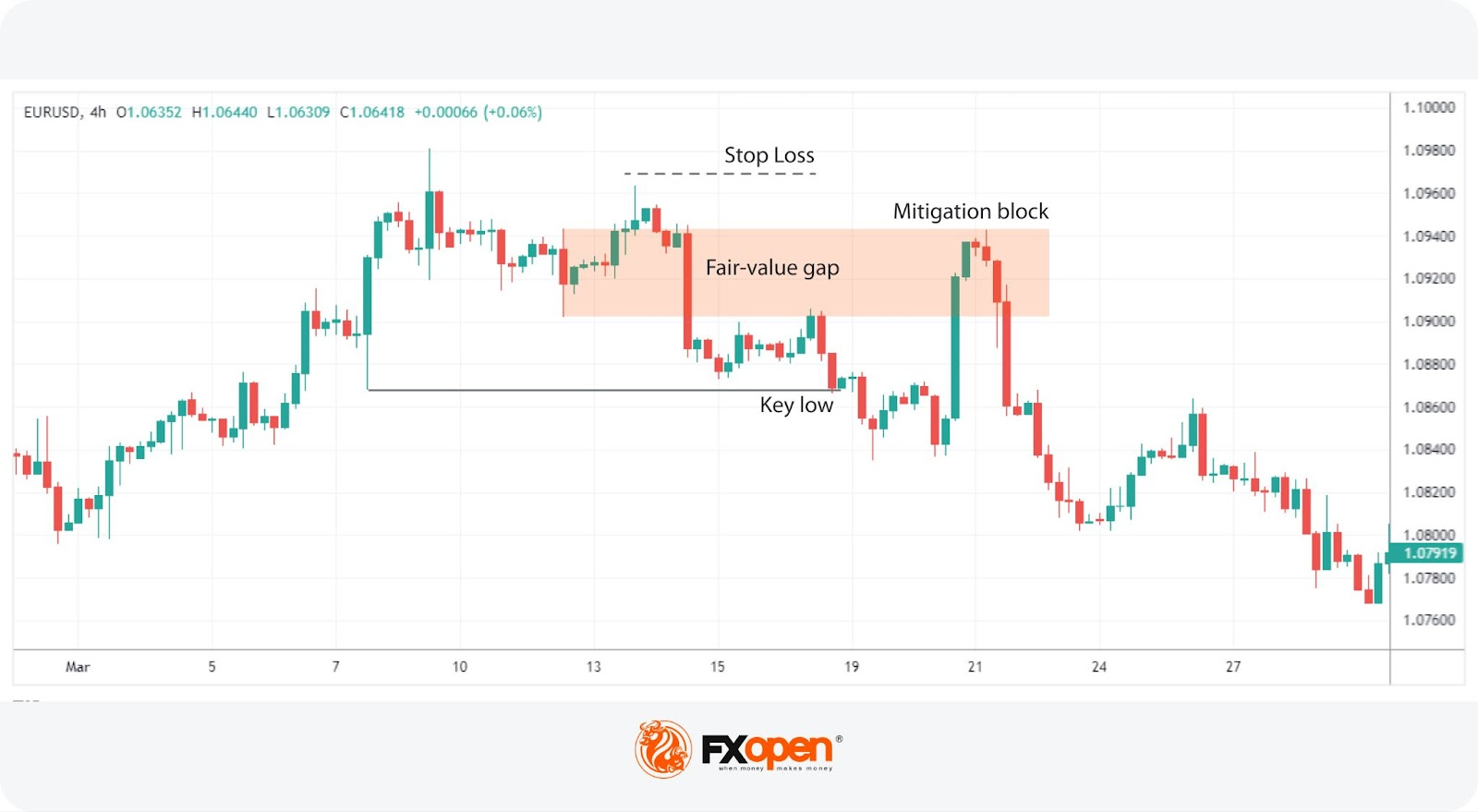
Areas of mitigation in trading can be essential tools for identifying potential trend reversals and entry points. When they align with a trader's analysis that anticipates a reversal at a certain level, it can serve as a robust confirmation for entry.
Traders can utilise these zones by placing a limit order within the area once it is considered valid. Validation occurs after a new peak or trough is established following the initial failure swing that forms the mitigation area.
If a liquidity void or fair-value gap is present, the trader may look for such a gap to be filled before their limit order is triggered, potentially offering a tighter entry. Stop losses might be placed beyond the failure swing or the most extreme point.
Furthermore, if a mitigation block is identified on a higher timeframe, traders can refine their entry by switching to a lower timeframe. This approach allows for a tighter entry point and potentially better risk management, as it offers more granular insight into the momentum around the area.
While these blocks are valuable for forex trading, they come with potential pitfalls and limitations that traders should know.
Mitigation blocks remain a valuable tool for traders seeking to understand institutional behaviour. By highlighting areas where unfilled orders may influence future price action, they can support traders in decision-making. However, like any market concept, mitigation blocks should not be viewed in isolation. Traders combine them with broader market structure analysis, liquidity concepts, and strict risk-control practices.
If you are looking to apply these concepts in a practical trading environment, opening an FXOpen account offers the opportunity to put theory into practice across dozens of currency pairs complemented by robust tools and insights.
A mitigation block in forex trading is an order block that identifies potential reversal points. It signals where a currency pair has previously stalled, indicating strong buying or selling pressure, suggesting a potential for similar reactions in future encounters with these levels.
Mitigation blocks are identified by analysing charts for areas where previous highs or lows were not surpassed, leading to a reversal. Traders look for a sequence of movements, including a swing high or low followed by a retracement that fails to exceed the previous swing.
While both indicate potential reversals, a breaker block forms when the price makes a new high or low before reversing, suggesting a temporary continuation of the trend. In contrast, a mitigation block forms without creating a new extreme, indicating a direct loss of momentum and an immediate potential for reversal.