
The ICT Silver Bullet strategy has gained significant attention among professional traders for its ability to identify specific price movements during specific market sessions. Unlike conventional approaches, this method focuses on fair value gaps, liquidity zones, and precise timing. In this article, we break down the core mechanics of the Silver Bullet strategy, discuss how it works in practice, and outline specific steps traders follow to incorporate it into their trading plan.
The ICT Silver Bullet trading strategy is a sophisticated trading methodology developed by Michael J. Huddleston, known as the Inner Circle Trader, or ICT. This strategy is designed to take advantage of specific price movements that align with certain times throughout certain sessions, specifically the London and New York sessions.
Central to the ICT Silver Bullet strategy are two concepts: liquidity and fair value gaps. Liquidity in this context refers to places within the market where there is significant trading activity, often indicated by previous highs and lows of a trading session or historical price points that attract significant interest from traders.
Fair value gaps are price areas that were either skipped over quickly during rapid price moves or areas where the price has not returned for a significant period, reflecting a disparity between perceived value and market price.
The idea behind the strategy is based on executing trades during specific one-hour windows known as Silver Bullet times. By focusing on these concepts and timings, traders can more accurately analyse market movements and align their trades with the influxes of smart money, potentially improving their results by catching swift moves towards liquidity points.
The Silver Bullet ICT strategy employs a detailed approach to trading that revolves around understanding market dynamics at critical times. Here are the main components that define this strategy:
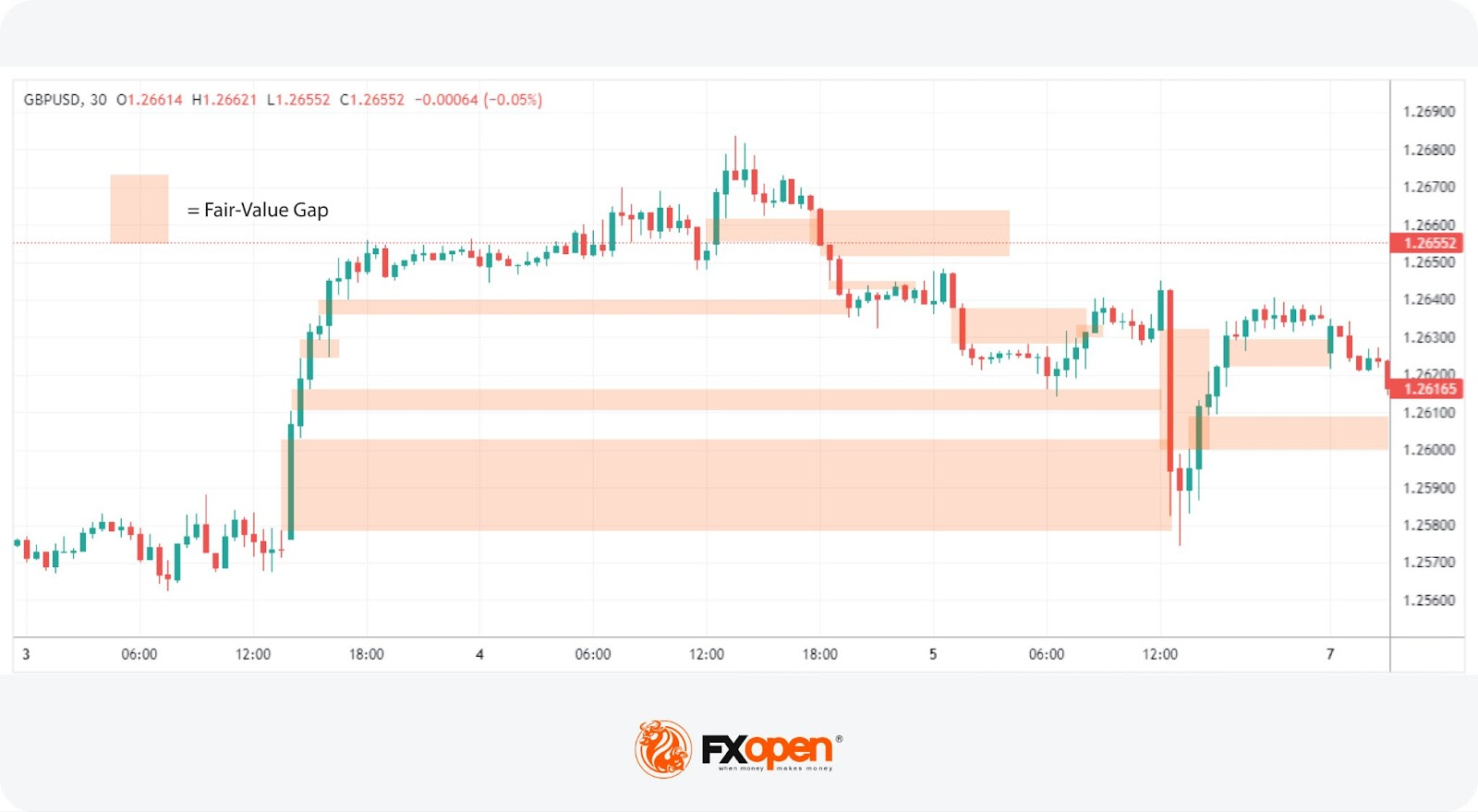
A fair value gap (FVG) occurs when the price quickly moves away from a level without significant trading occurring at that price, leaving a "gap" that is likely to be tested again when the price returns to this point. In the context of the ICT Silver Bullet strategy, these gaps are targeted because they represent potential inefficiencies in the market where the price may return to balance or fill the gap. Traders using this strategy watch these gaps closely as they often present clear entry points when approached again.
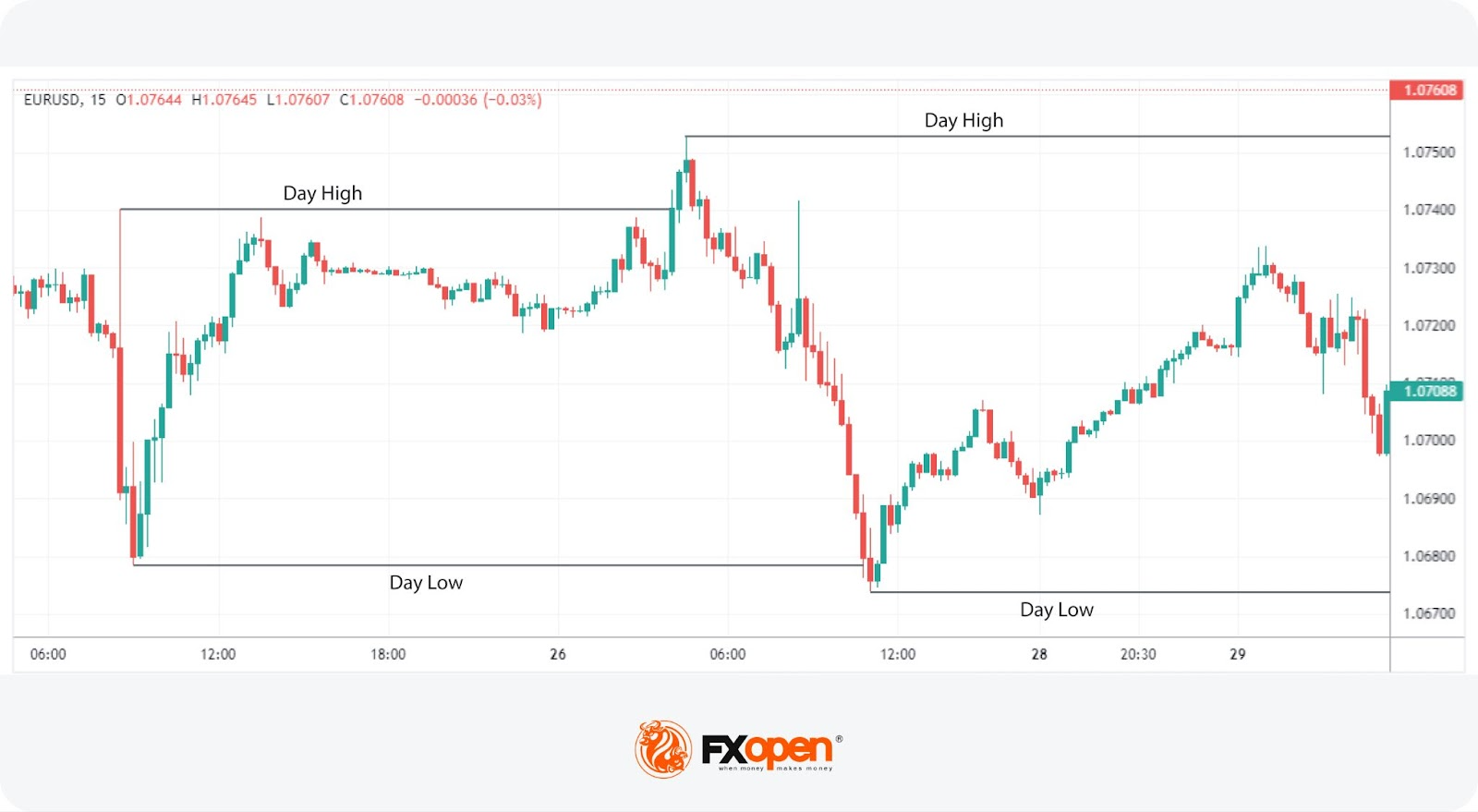
Liquidity targets are essentially areas where there is expected to be a significant volume of orders, which can lead to particular price movements when these levels are approached. These include:
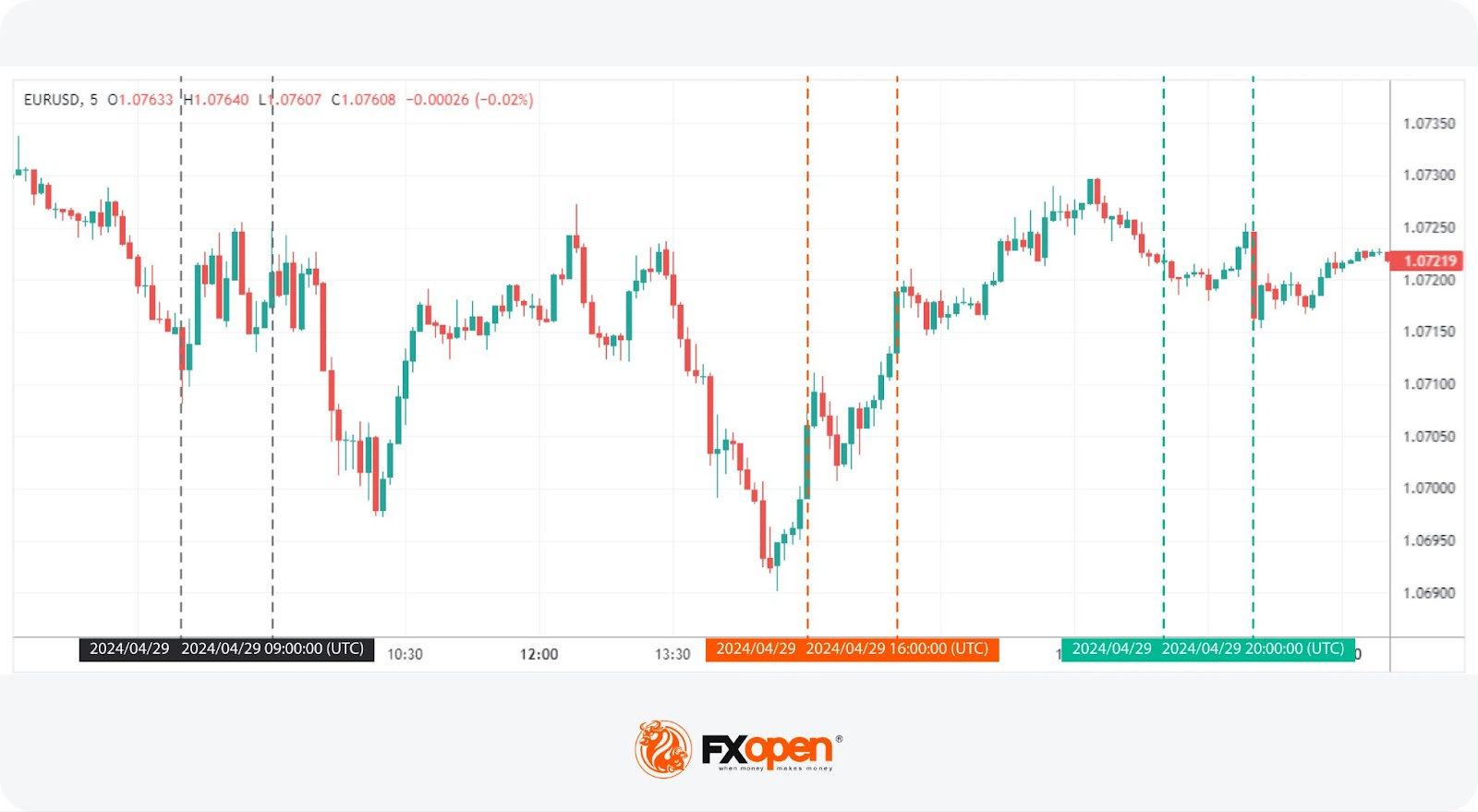
Unlike many strategies that align strictly with market opening times, the ICT Silver Bullet trading strategy utilises specific one-hour windows during the day when liquidity and volatility are expected to be high due to trader participation across the globe. These Silver Bullet hours are strategically chosen based on their potential to tap into significant market moves:
These time slots are selected based on historical data showing heightened trading activity and, therefore, increased probabilities to capture moves towards identified liquidity targets.
Traders utilising the ICT Silver Bullet strategy typically prepare by marking potential fair value gaps and liquidity targets before these key trading times. As these windows approach, they monitor price action closely for signs that the market is moving bullishly or bearishly toward these liquidity points, enabling them to search for an entry.
Note that because this is an intraday strategy, ICT says it’s better to use a 15-minute timeframe or lower. Most traders use the 1-minute to 5-minute for the Silver Bullet setup, though those inexperienced with the strategy may prefer the 5-minute.
Traders can experiment with session timing and entry setups directly on FXOpen’s TickTrader platform, where real-time charts and over 1,200 tools support comprehensive analysis.
Here’s a breakdown of the strategy:
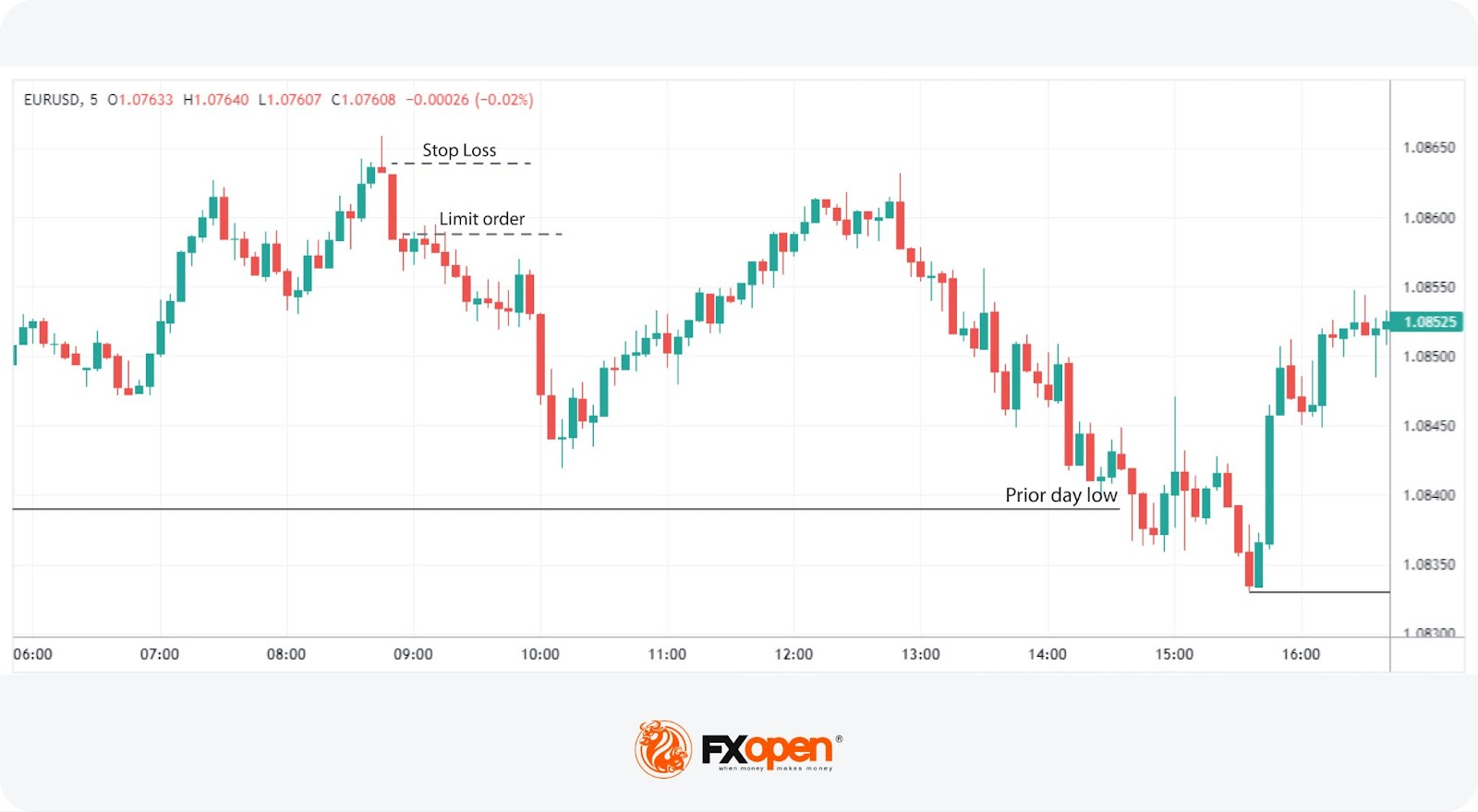
In the provided EUR/USD chart example, a detailed analysis of higher timeframes has established a bearish outlook. Consequently, the focus is on identifying sell trading setups while disregarding potential long setups.
During the 8:00 AM to 9:00 AM GMT window, there's a noticeable Fair Value Gap (FVG) that forms following a swift rejection from an upward move. This price action reflects a viable entry point for a short position. Traders could place a limit order at the bottom boundary of the candle that initiated the FVG, with a stop loss positioned just above the candle's high or the nearby swing point high, depending on their risk tolerance. The target for this trade is set at the previous day's low, which is reached and prompts a short-term reversal in price direction.
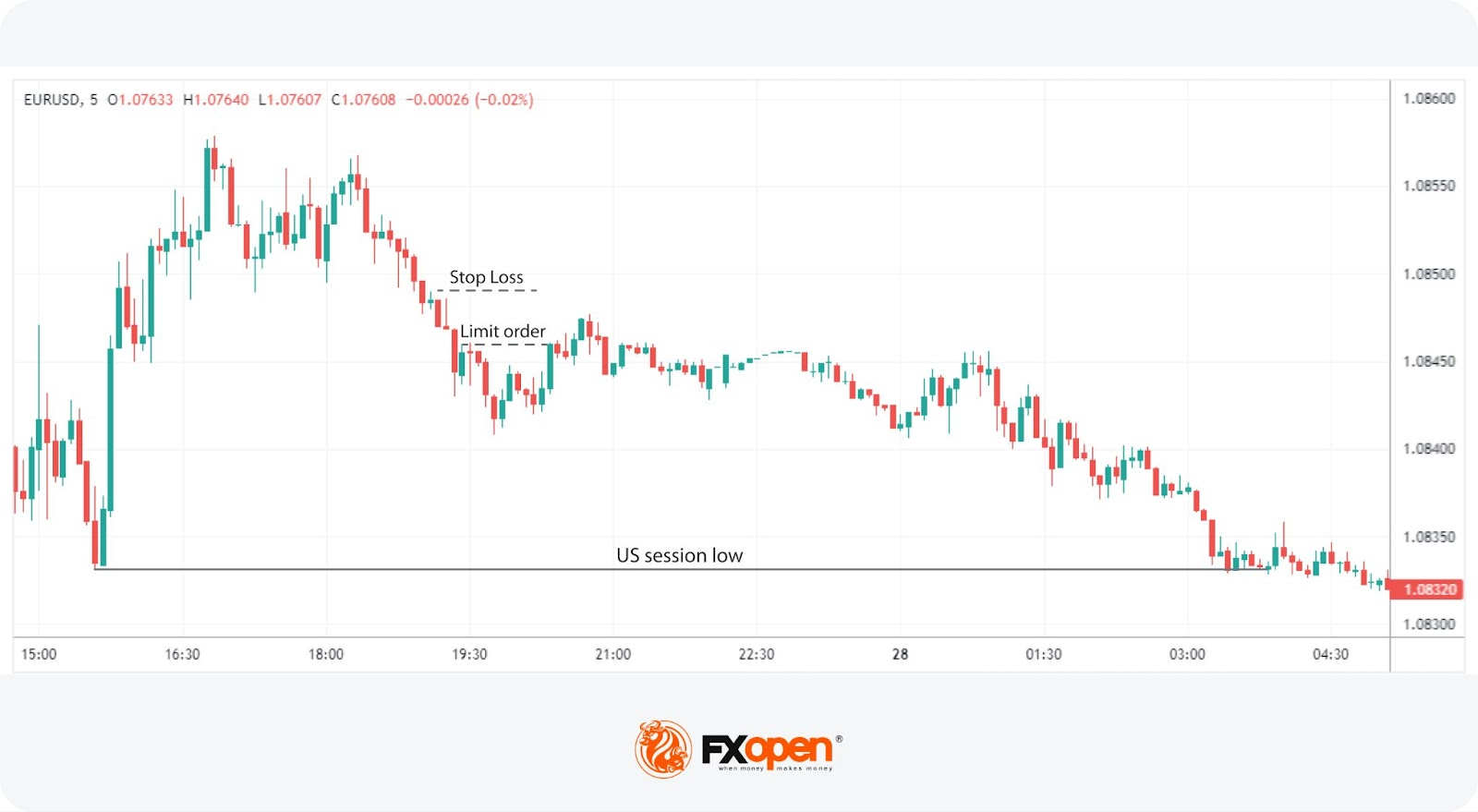
Later in the day, between 7:00 PM and 8:00 PM GMT, another FVG develops. Following the same principle, we can enter at the bottom of the FVG. Setting a stop loss above the swing high is considered more prudent than directly above the candle high, which in this case would likely lead to a stop-out due to the tightness of the entry. Since the previous day’s low has already been reached earlier, the next logical target is the low of the US session, aligning with the day's bearish momentum.
The ICT Silver Bullet strategy offers traders a way to combine liquidity concepts, fair value gaps, and session timing into a clear trading framework. While no strategy guarantees results, applying this method with patience and proper risk control may help refine trade entries and improve market analysis.
Those looking to apply these principles in a robust trading environment, may consider opening an FXOpen account and access over 700 markets, low commissions, and tight spreads.
The Silver Bullet strategy in trading is a specific, time-sensitive approach designed to capitalise on liquidity and fair value gaps that typically form during key periods of market volatility. Developed by Michael J. Huddleston, also known as ICT, it aims to take advantage of the movements that occur when the market reacts to these gaps during certain hours of the trading day.
The Silver Bullet strategy is executed during three distinct one-hour windows corresponding to heightened market activity periods. These are:
As an intraday trading strategy, the Silver Bullet targets quick, short-term trades within specific one-hour windows. The trades are typically intended to be closed by the end of the trading day, capitalising on rapid movements towards and away from liquidity points.