In today's Hyperliquid news, HYPE just touched a fresh all-time high, and two other storylines are pulling attention this weekend. A well-known crypto fund keeps sending HYPE to a major exchange, whale wallets are placing outsized bets in both directions on Hyperliquid, a testnet has quietly picked up new permission controls that regulated players could use, and a policy paper argues that always-on futures contracts help rather than hurt older markets. Here's what's happening and why it matters.
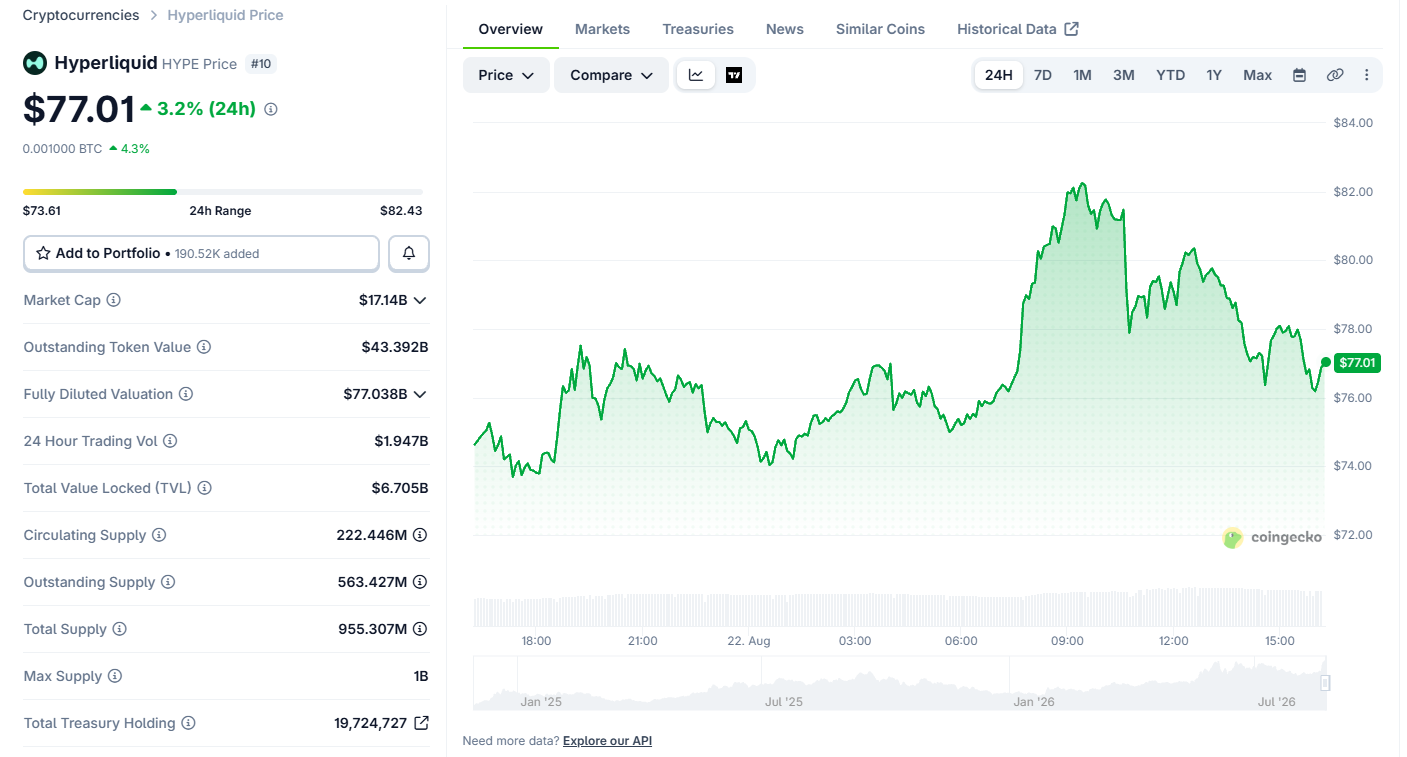
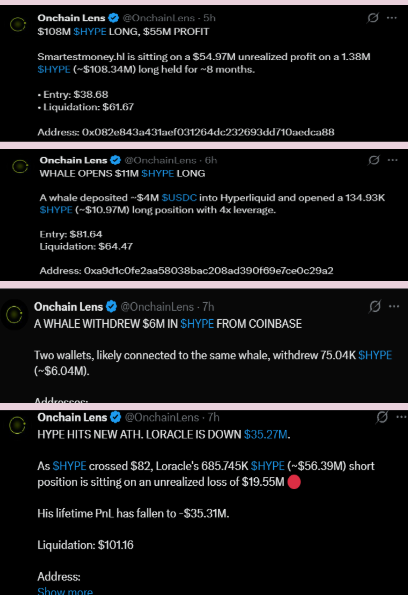
HYPE token price crossed above $82 today, a new record, and on-chain trackers lit up almost immediately. One address holding a 1.38 million-coin long position worth roughly $108 million is now sitting on close to $55 million in unrealized gains after holding for about eight months.
Separately, a fresh whale deposited nearly $4 million in stablecoins and opened a 4x-leveraged long worth about $11 million. On the other side of the ledger, two linked wallets pulled roughly $6 million off Coinbase, a move some traders read as a bullish signal.
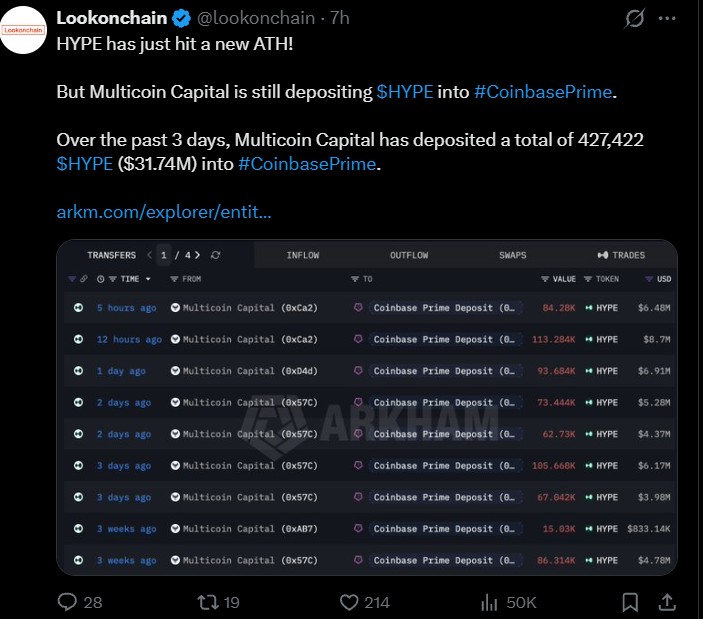
Multicoin Capital has sent 427,422 coins, worth about $31.74 million, to Coinbase Prime over the past three days, according to on-chain data. The most recent transfer, 197,560 coins worth roughly $14.54 million, landed on the Coinbase exchange within the last nine hours. Deposits to a centralized exchange often precede a sale, but nothing here confirms Multicoin has actually sold anything yet — it's a signal to watch, not a done deal.
Lookonchain
A trader known on-chain as Loracle is deep underwater on a bearish bet. The 685,744-coin short position, worth close to $56 million, has racked up roughly $19.55 million in fresh unrealized losses today alone, pushing lifetime losses on the position past $35 million. If the price climbs to around 101.15–101.16, the position gets forcibly closed. Given how fast the rally has moved this week, that level no longer looks far away.
| Activity | Amount / Level | Key Detail |
| New all-time high | Above $82 | Fresh record price |
| Fund deposits | 427,422 tokens / $31.74M | Sent to Coinbase Prime over 3 days |
| Short position at risk | 685,744 tokens / ~$56M | Liquidation near $101.16 |
| Large long position | 1.38M tokens / ~$108M | About $55M unrealized profit |
| New whale long | 134,930 tokens / ~$11M | Opened with 4x leverage |
| Exchange withdrawal | 75,040 tokens / ~$6M | Pulled by two linked wallets |
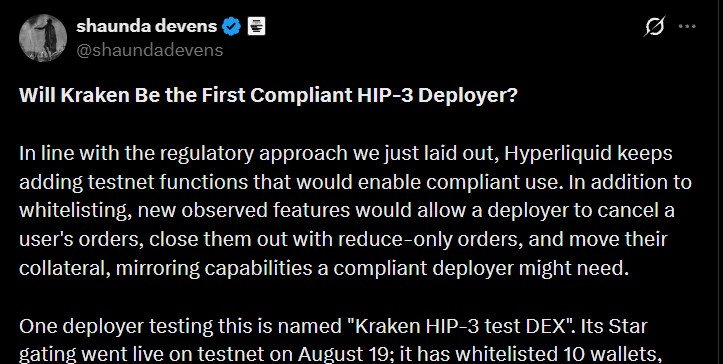
Away from the price action, developers have quietly added a set of permission features to the Hyperliquid testnet. Analyst Shaunda Devens of Blockworks flagged wallet whitelisting alongside tools that let a deployer cancel a user's open orders, force a reduce-only close, and move collateral — capabilities that look built for regulated operators rather than everyday retail deployers.
One deployer, labeled "Kraken HIP-3 test DEX," has been putting those tools through their paces since August 19, whitelisting ten wallets and exercising three of the five available controls, while also registering something called a Kraken Exchange Validator.
Because the underlying network lets anyone launch a deployment under any name, the label alone doesn't prove the exchange itself is behind it. Still, combined with the exchange's parent company recently expanding tokenized stock offerings on the same network, analysts see enough circumstantial evidence to suspect a genuine test is underway.
X Post
| Date | Development |
| August 19, 2026 | "Kraken HIP-3 test DEX" gating went live on testnet |
| August 19–21 | Ten wallets reportedly whitelisted |
| August 21 | Liquidation and collateral-transfer tools highlighted |
| August 21 | Policy research on perpetual futures published |
| August 22 | Token touched a new all-time high above $82 |
Permissioned controls like whitelisting and forced position management are the kind of guardrails that compliance teams at regulated exchanges typically require before touching a product. If a major exchange really is testing these features, it would suggest on-chain derivatives venues are inching closer to meeting the bar traditional finance sets, which could open the door to far larger pools of institutional capital.
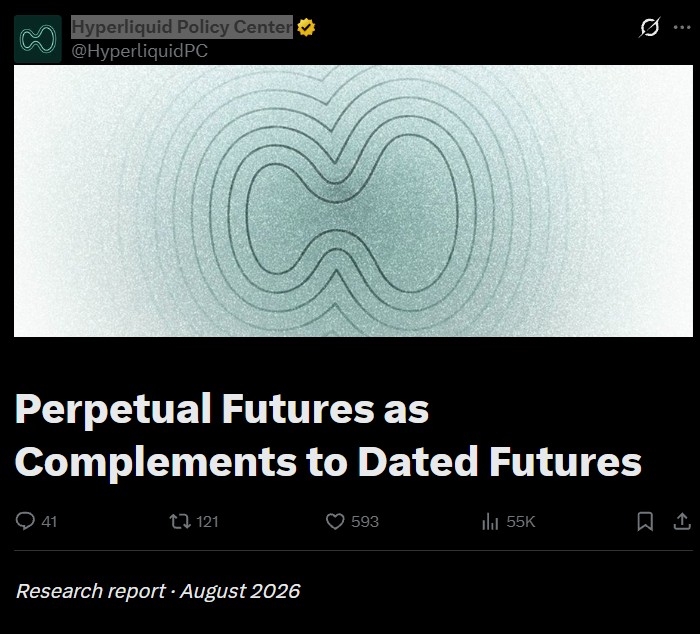
A separate report released this week by Hyperliquid news policy research arm looked at 205 weekends of bitcoin trading and 19 weekends of on-chain crude-oil contracts. Its conclusion: contracts that never expire tend to support, rather than undercut, the traditional dated futures markets they reference.
Holders avoid rollover costs that come with fixed-maturity futures — the report cites a swing from roughly $950,000 to about $110,000 on a $10 million position depending on the day rolled. Trade sizes can also be far smaller: median off-hours oil trades ran near $1,300, about a hundredth the size of typical benchmark trades.
During a March weekend when crude repriced sharply while traditional markets sat closed, a hedger using the always-on contract could have cut a roughly $1.58 million loss to about $62,000. The researchers found no statistically significant harm to incumbent markets — spreads on the benchmark oil contract were actually a touch tighter after the newer market launched.
Three threads are worth tracking: whether the rally pushes the short seller toward that $101 liquidation level, whether the fund's exchange deposits turn into confirmed sales, and whether the "Kraken" test deployment gets acknowledged officially. Any of the three could move sentiment quickly.
YMYL Disclaimer: This article is for informational purposes only and does not constitute financial, investment, or trading advice. Cryptocurrency markets are highly volatile and risky. Always do your own research and consult a licensed financial advisor before making investment decisions.





