Inside the buyback-and-burn engine that turns Rain protocol activity into value for a Nasdaq-listed treasury.
In 2024, prediction markets stopped being a niche. Traders moved hundreds of millions of dollars forecasting a single US election on public platforms. Forecasting quietly became a real financial category.
That shift raised a sharper question for investors. When someone places a forecast on a prediction market, where does that activity actually go?
Does the volume stay locked inside the app? Or can it reach the balance sheet of a listed company?
By 2026 the category had matured well past that election. Prediction markets are now discussed in the same breath as mainstream trading venues, and the infrastructure underneath them is drawing institutional attention.
Enlivex (Nasdaq: ENLV) is built around one clear answer to the where-does-it-go question.
The company describes itself as a quality longevity company powered by a prediction markets treasury.
In plain terms, it holds a prediction markets token as its reserve asset, and that token is wired directly to protocol usage.
According to Enlivex, it is the first and only listed stock offering investors this kind of exposure to prediction markets.
This post walks through the mechanism, step by step. No hype. Just the plumbing.
Here is the whole idea in five lines.
That is the thesis. Everything below is the detail behind it.
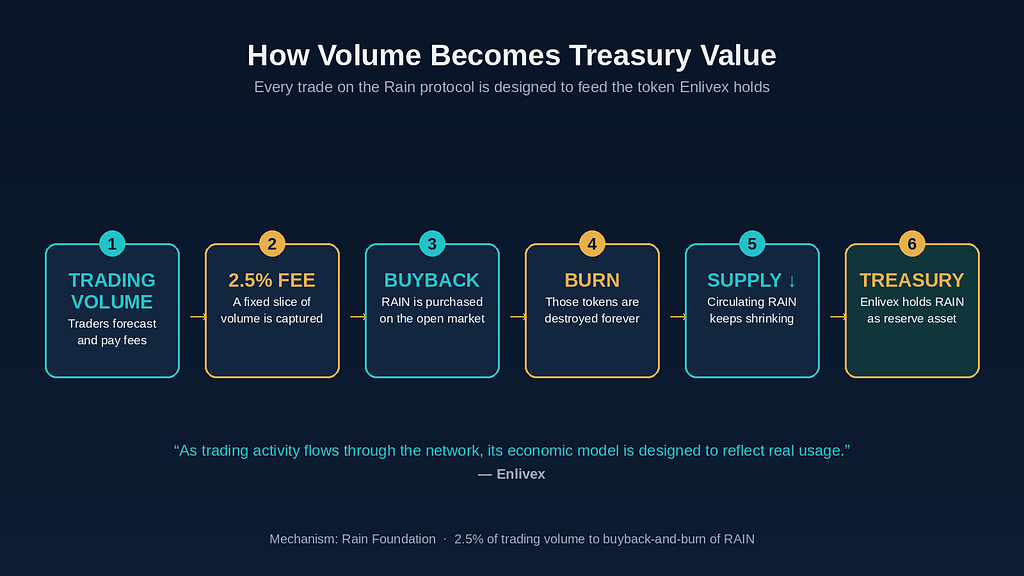
As trading activity flows through the network, its economic model is designed to reflect real usage.
— Enlivex
Most corporate treasuries sit in cash, Treasury bills, or money market funds. A digital asset treasury swaps part of that for a crypto reserve.
MicroStrategy pioneered the idea with Bitcoin. A wave of listed companies followed, and the digital asset treasury has become one of the more talked-about corporate finance trends of the decade.
Enlivex sits inside that trend, but with a twist. When an analyst lists companies using crypto as a reserve asset, Enlivex now shows up as a concrete Nasdaq example, often cited next to the larger Bitcoin treasuries.
Its reserve asset is RAIN, the token of the Rain protocol, a decentralized prediction markets infrastructure built on Arbitrum.
Not a single trading app. An infrastructure layer that other builders can plug into.
The company runs two engines under one Nasdaq ticker.
They are not two separate stories. They are one integrated structure that meshes healthspan with wealthspan.
The treasury enables Enlivex to advance quality longevity science while gaining exposure to the prediction markets ecosystem.
This is the core of the model, and it is refreshingly literal.
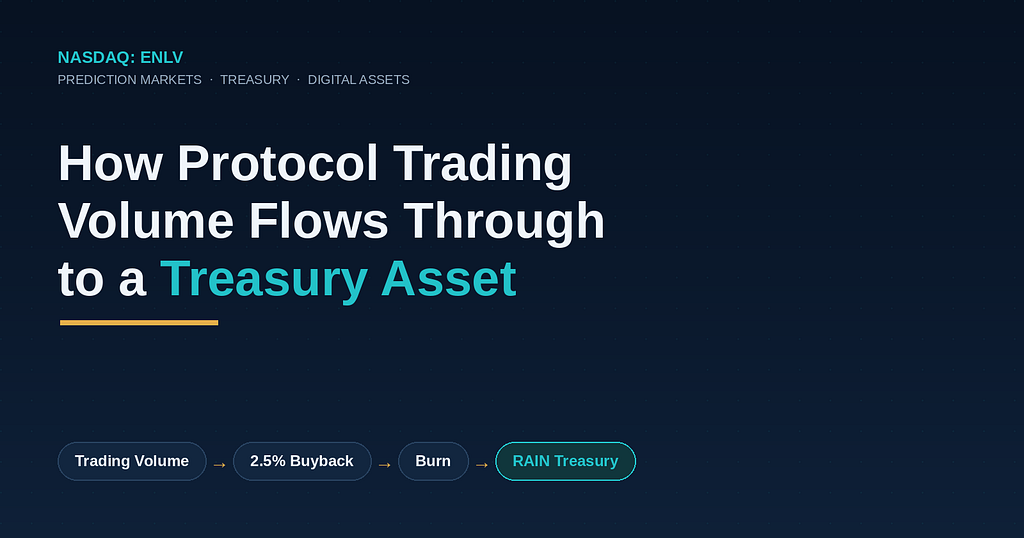
According to the Rain Foundation, every market on the protocol carries a fee on its trading volume, and 2.5% of that volume is used to buy back RAIN and burn it.
The more people forecast, the more fees the protocol collects. The more fees, the more RAIN is bought off the open market and destroyed.
Follow the chain.
Think of it like a share buyback, but automatic and on-chain. A company repurchasing its own stock returns value to holders by reducing the share count.
Rain does something similar with code. The trigger is not a boardroom vote. It is usage.
This is why Enlivex frames its exposure as tied to protocol activity, not sentiment alone. Value is designed to track real trading, not vibes.
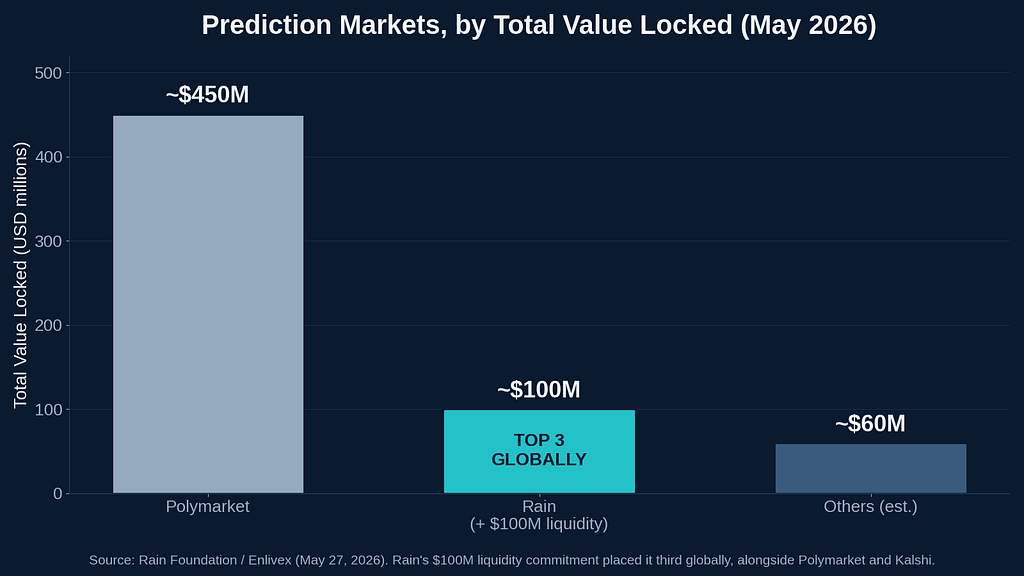
A mechanism is only as good as its inputs. So here are the numbers, each with a named source, because a claim without a source is only an opinion.
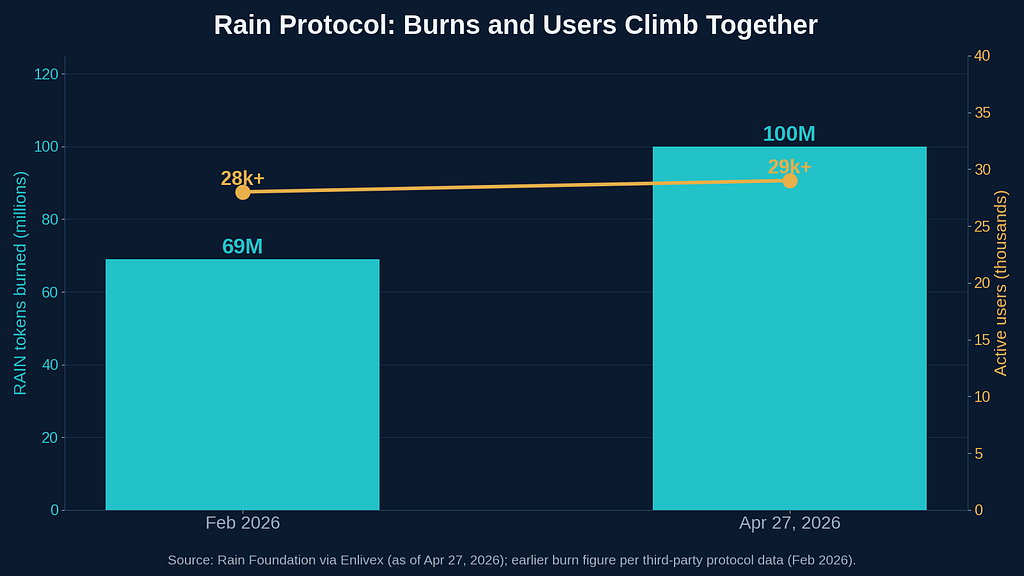
The holder base has grown alongside the burns. Third-party trackers have reported RAIN holders climbing well past 170,000 wallets during 2026, a wider footprint than the protocol’s size might first suggest.
Prediction market volume tends to spike around big moments. Elections, sports finals, major macro data.
A World Cup year is a natural tailwind for the whole category. More volume is expected to mean more fees flowing into the burn, though outcomes depend on real activity rather than any promise.
Here is the part that risk-averse investors tend to care about most.
Buying a governance token directly means using an exchange, a wallet, and self-custody. That is a lot of surface area for things to go wrong. Lost keys. Exchange failures. No clear reporting.
Enlivex offers the same exposure through a listed equity. That adds several layers most tokens simply do not have.
And the clinical pipeline sits underneath all of it. Allocetra™ gives the structure a biological floor that a stand-alone token cannot offer.
Public-market access to prediction market infrastructure, without the wallet.
The treasury is not a concept on a slide. It is a live position.
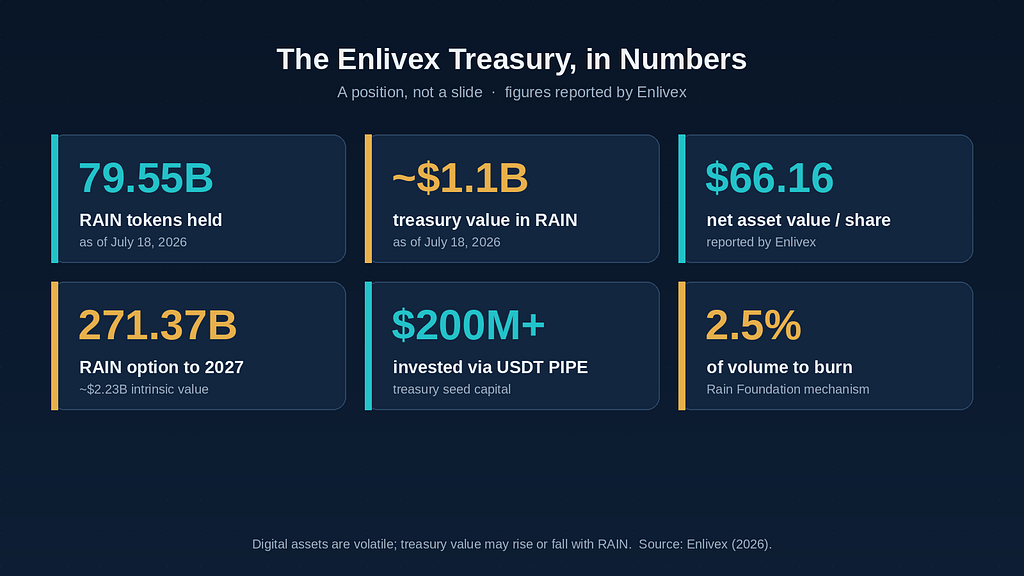
Those figures move with the market, and digital assets are volatile. Enlivex is clear that treasury value may rise or fall with the price of RAIN.
The structural point is different. The treasury is designed so that protocol usage, and not price movement alone, feeds long-term value. Usage is the input the model is built to reward.
On the clinical side, according to Enlivex, Phase II data for Allocetra™ showed a 72% reduction in pain and a 109% improvement in function across a program of more than 250 treated patients.
Enlivex sizes the age-related knee osteoarthritis opportunity at roughly $314 billion.
A few signals are worth tracking if this model interests you.
The bigger idea is simple. For years, crypto tokens and real usage were loosely connected at best.
Prices often moved on narrative, not activity. This model tries to hard-wire the two together. Trade flows in at one end.
Fees are skimmed and turned into buybacks. Supply comes out at the other end. A treasury on a public exchange sits at the end of the pipe, catching whatever the volume leaves behind.
That is a genuinely new shape for a corporate balance sheet. Whether it compounds is up to the volume. And for the first time, you can watch that volume in real time and read it straight through to a Nasdaq ticker.
Explore the model directly: the Enlivex prediction markets treasury, the live ENLV and RAIN market dashboard, and the investor resources.
How Protocol Trading Volume Flows Through to a Treasury Asset was originally published in Coinmonks on Medium, where people are continuing the conversation by highlighting and responding to this story.





