Precious metals experienced a modest rebound on Wednesday following their sharpest single-session retreat in nearly four weeks. Spot gold advanced 0.1% to reach $4,339.20 per ounce during early market hours, though gold futures declined 0.6% to settle at $4,392.42.
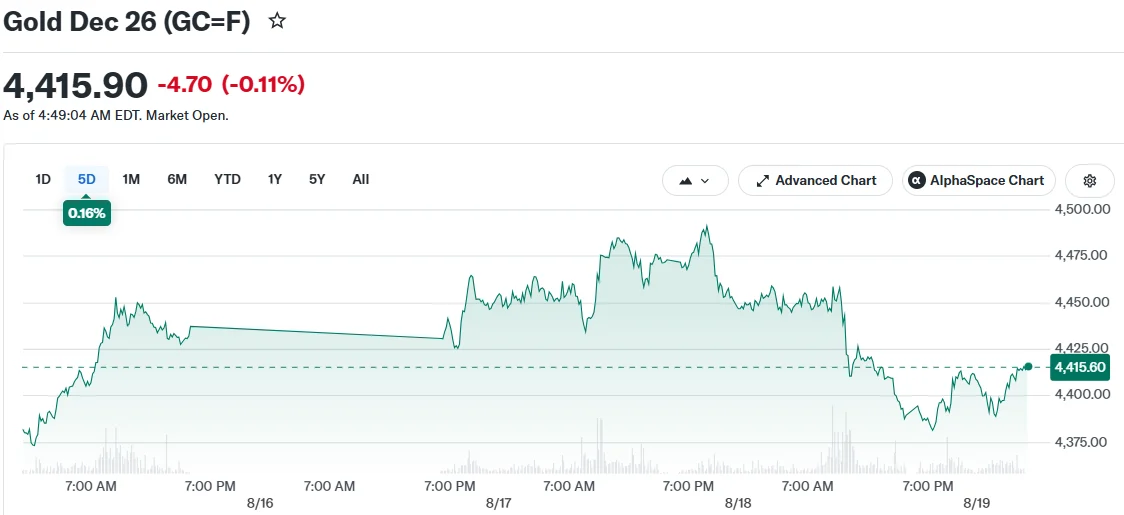
The marginal uptick occurred as the U.S. dollar weakened modestly and Treasury yields retreated from recent peaks. Silver declined 1.0% to $62.69 per ounce, while platinum slipped to $1,716.02.
Gold has faced headwinds maintaining upward momentum as government bond yields continue their ascent. The 30-year U.S. Treasury yield reached its most elevated level in nearly twenty years on Tuesday, while 10-year yields remained anchored near their highest points since the beginning of 2025.
Rising bond yields diminish gold’s appeal to investors. As fixed-income securities offer improved returns, and given that gold generates no yield, capital tends to flow away from precious metals toward interest-bearing instruments.
Oil prices have surged higher amid the persistent Strait of Hormuz crisis. Approximately 20% of the world’s oil and natural gas shipments transit through this critical chokepoint.
Elevated energy costs can fuel inflationary pressures. This dynamic may compel the Federal Reserve to maintain restrictive interest rate policies for an extended period, creating additional headwinds for gold prices.
President Donald Trump stated Tuesday that no negotiations with Iran were currently taking place. A memorandum of understanding between Washington and Tehran, signed in June, has lapsed without any framework for extension.
Vessels have persisted in efforts to navigate the strait, with several disabling satellite tracking systems to evade monitoring.
Market participants are closely monitoring the Federal Reserve’s July policy meeting minutes, scheduled for release Wednesday afternoon. The document may shed light on how central bank officials assessed inflation dynamics and the probable trajectory for borrowing costs.
Attention will subsequently turn to Fed Chair Kevin Warsh’s upcoming address at the Jackson Hole economic symposium next week.
Data from the CME FedWatch tool indicates traders have reduced expectations for rate increases following recent U.S. economic releases. Markets currently assign a 67% probability to the Fed maintaining its current policy stance.
Soojin Kim at MUFG noted that gold’s prospects remain limited by the escalating U.S.-Iran confrontation. Inflation stemming from energy price increases could strengthen the case for prolonged Fed tightening, capping gold’s potential gains.
Tony Sycamore, an analyst at IG, observed that gold’s overnight retreat to approximately $4,334 demonstrated the metal’s vulnerability to the dual pressures of elevated energy prices and rising government bond yields.
From a technical perspective, Sycamore indicated that bullion must breach resistance near $4,430 to restore bullish momentum. A successful break above that threshold would bring the 200-day moving average around $4,507 into focus.
Gold had recently recovered above the $4,000 per ounce threshold on robust central bank demand, especially from China. This rally now confronts renewed challenges from the broader macroeconomic landscape.
The upcoming critical market events are Wednesday’s Fed minutes release and Warsh’s Jackson Hole speech scheduled for next week.
The post Gold Prices Struggle as Treasury Yields Surge and Hormuz Crisis Escalates appeared first on Blockonomi.





