Crypto prices are caught in a familiar trap: every time the Middle East situation looks like it's calming down, a fresh headline flips the script. The latest twist landed today. Iran says it closed the Strait of Hormuz again over Israel's strikes in Lebanon, while US Vice President Vance says there is "no evidence" the strait is closed.
That direct contradiction — one side declaring a shutdown, the other flatly denying it — captures exactly why crypto prices have been whipsawing. Markets hate uncertainty, and right now there's an abundance of it. This is the same waterway that has been at the center of a months-long crisis, and traders have learned that each "closure" or "reopening" headline can swing risk assets in minutes.
The backdrop matters. Just days ago, the situation looked like it was de-escalating. Trump announced on Sunday that the US and Iran had reached a deal, the memorandum of understanding was read to reporters on Wednesday, and both presidents signed it that day. Optimism was building that the worst was over.
Then the ceasefire wobbled. Israel and Hezbollah exchanged fire despite the ceasefire, possibly prompting the Hormuz Strait closure. Iran's response was to once again declare the strait shut — but as has happened repeatedly through this crisis, Washington disputes that any real closure is in effect.
There's a near-term catalyst to watch closely: technical-level talks to implement the US–Iran deal are scheduled for June 21 in Bürgenstock, Switzerland, with Pakistani and Qatari mediators participating. That's tomorrow — meaning the situation could shift again within hours.
Despite the noise, crypto prices have so far held up better than you might expect. Here's where the major coins stand as of June 20, 2026:
The total crypto market cap sits around $2.18 trillion, well off its highs but stabilizing. Notably, prices are green on the day even amid the closure claim — a sign markets may be treating today's Iran headline with skepticism, much like the US response suggests they should.
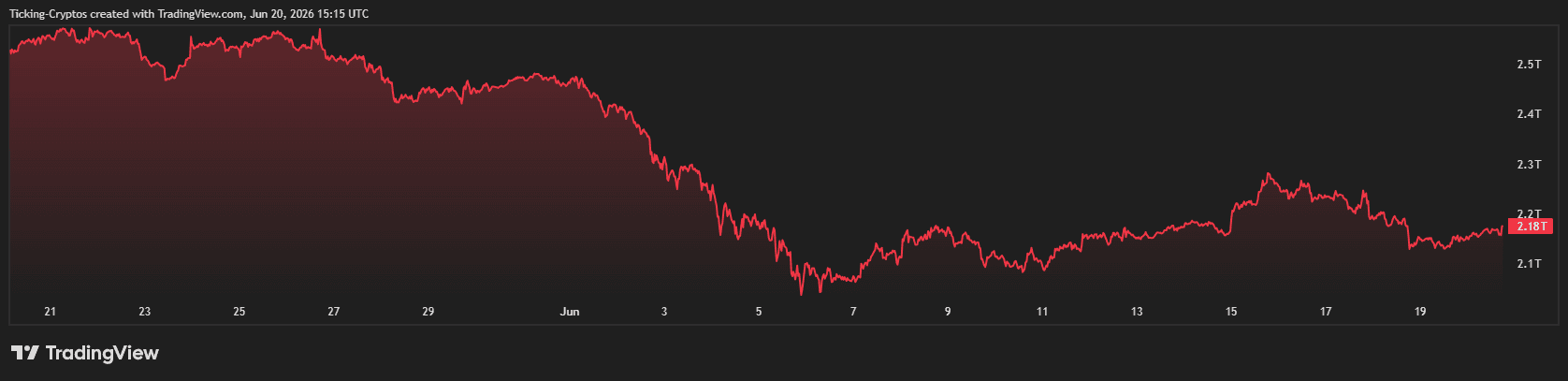
For readers wondering how a Middle East shipping lane affects Bitcoin, the link runs through oil and risk sentiment. The Strait of Hormuz normally carries around one-fifth of the world's oil and LNG. A genuine closure spikes energy prices, which feeds inflation, which in turn pushes back expectations for interest-rate cuts — a chain reaction that tends to hurt risk assets like crypto.
The transmission works like this:
This is why crypto has been so reactive to every Hormuz headline. Bitcoin in this cycle has behaved less like a geopolitical safe haven and more like a high-beta risk asset — selling off on fear and rallying on relief, much like tech stocks.
Given the conflicting reports, two clear scenarios are on the table:
If the closure proves real (or the ceasefire breaks down):
If it's another false alarm (as the US suggests):
The fact that prices are holding green today hints the market is leaning toward the second scenario — but that can change the instant a headline confirms or denies the closure.
In a yo-yo environment like this, the headlines are the market. Key signals to monitor:





