TL;DR:
The market for tokenized real-world assets (RWA) is reaching an inflection point. According to data published by 1inch, the average size of swap transactions on RWA tokens nearly doubled compared to March, rising from approximately $2,000 to around $3,800 per transaction. The increase represents a 91% jump and occurred simultaneously with a contraction in total volume and number of trades, shaping a more selective market profile with greater capital per operation.
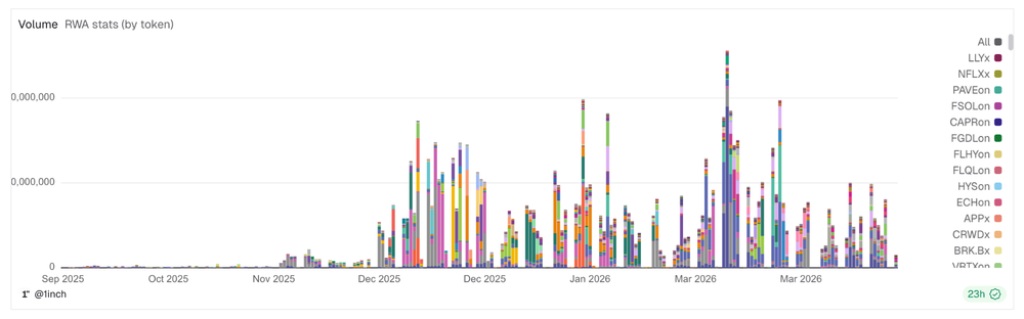
The first quarter of 2026 was dominated by bursts of intense activity. In March alone, 1inch processed approximately 578,000 transactions with an aggregate volume of $1.15 billion. The highest peak was recorded on March 10, when daily volume reached $128 million and transactions exceeded 200,000, driven primarily by QQQon, which recorded nearly $95 million in a single day.
According to 1inch data, April marked a shift in pattern. Volume fell to $575 million and transactions declined to around 152,000, but users who remained active traded with greater conviction. The number of active tokens remained virtually unchanged, ruling out a loss of coverage or interest in the category as the cause of the pullback.
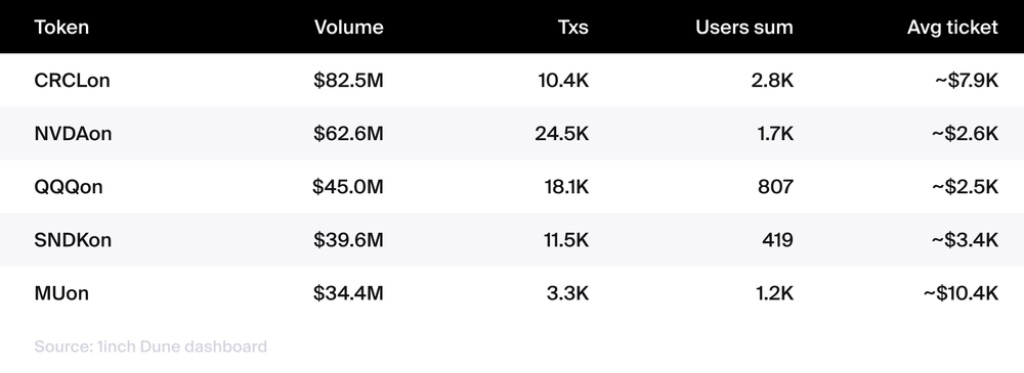
Among the RWA assets with the highest volume over the past 30 days are CRCLon, NVDAon, QQQon, SNDKon and MUon. The presence of assets linked to the semiconductor sector, such as SNDKon, AMDon, MRVLon and INTCon, alongside broad-market ETFs like SPYon, suggests that demand is shifting toward more diversified sectoral exposure within traditional markets.
One of the most relevant indicators is the decline in concentration. In the prior period, the five leading RWA tokens accounted for 62% of total volume. Over the past 30 days, that figure fell to 50%, pointing to a more balanced distribution of activity across a larger set of tokenized instruments.
1inch suggests that the market is transitioning from a discovery phase to a consolidation phase, with larger trade sizes, reduced dependence on individual assets, and dynamics that increasingly resemble structured access to traditional financial sectors through the blockchain.





