Gold prices dropped on Thursday as concerns over rising oil prices pushed investors to reconsider how soon the Federal Reserve might cut — or even raise — interest rates.
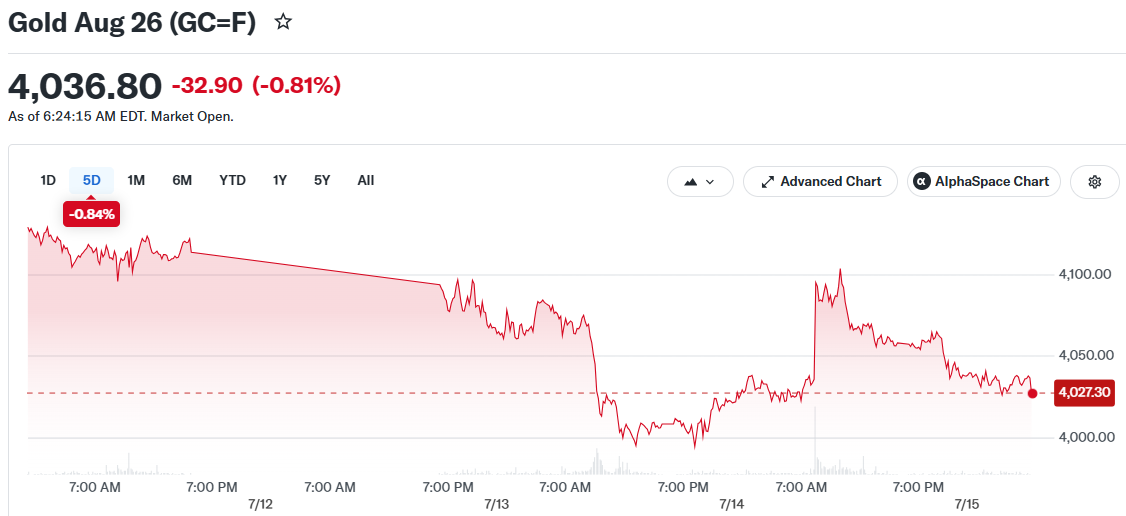
At around 4:41 AM ET, gold spot prices fell 0.63% to $4,027.31 an ounce. Gold futures dropped 0.89% to $4,033.35.
Silver slipped 0.70% to $58.30 an ounce. Platinum edged up slightly, rising 0.34% to $1,638.20.
Gold had jumped more than 2% on Tuesday after the June Consumer Price Index report showed prices fell for the first time since 2020.
That softer inflation reading led investors to pull back bets on near-term Fed rate increases. Treasury yields and the U.S. dollar both dropped on the news.
But that optimism didn’t last long. By Thursday, attention had shifted back to oil markets and what higher energy costs could mean for inflation.
Oil prices rose for a third straight session after President Donald Trump maintained a naval blockade around Iranian ports and warned of further military escalation.
The ongoing U.S.-Iran tensions have stoked fears about global energy supply. Analysts at MUFG noted that “renewed U.S.-Iran tensions and higher oil prices continue to pose upside risks to inflation.”
Fed Chair Kevin Warsh reiterated that further policy tightening remains on the table if price pressures don’t ease.
Fed officials broadly welcomed the recent inflation slowdown but said they need more evidence before feeling confident inflation is heading back to their 2% target.
Higher interest rates are generally bad for gold. The metal pays no yield, so when bond returns rise, it becomes less attractive to investors.
ANZ analysts said gold could stay rangebound in the near term, as expectations for at least one rate hike this year cap the upside.
They added that buying interest could return on deeper pullbacks, pointing to supportive longer-term fundamentals for the metal.
Markets are now pricing roughly a 58% probability of a September rate hike, according to CME FedWatch data. That’s down from around 76% before Tuesday’s CPI report.
Investors are watching U.S. producer price data due later Thursday for more clues on where inflation is heading.
Lower gasoline prices helped ease pressure in June’s CPI reading, but any rebound in energy costs could change that picture quickly.
For now, gold is caught between two forces — cooling inflation data on one side and oil-driven inflation fears on the other.
The post Gold’s Big Rally Is Already Over — Here’s Why Oil Is to Blame appeared first on CoinCentral.





