TL;DR
XRP pulls back after spot ETFs record first day of net outflows, interrupting a prolonged period of positive flows. The shift added short-term pressure to price action while leaving the broader demand structure largely intact.
U.S. spot XRP exchange-traded funds recorded net outflows of about $40.8 million, marking their first negative session since launching in November. The reversal followed 36 consecutive days of inflows, a period that positioned XRP ETFs among the most active crypto-linked products outside Bitcoin and Ether.
According to SoSoValue data, most of the withdrawals stemmed from a $47.25 million redemption at 21Shares’ TOXR fund. This was partially offset by inflows into other vehicles, including $2.32 million into Canary’s XRPC and $1.69 million into Grayscale’s GXRP. Even after the outflows, total assets held across spot XRP ETFs remain near $1.53 billion, equivalent to around 1.16% of XRP’s total market capitalization.
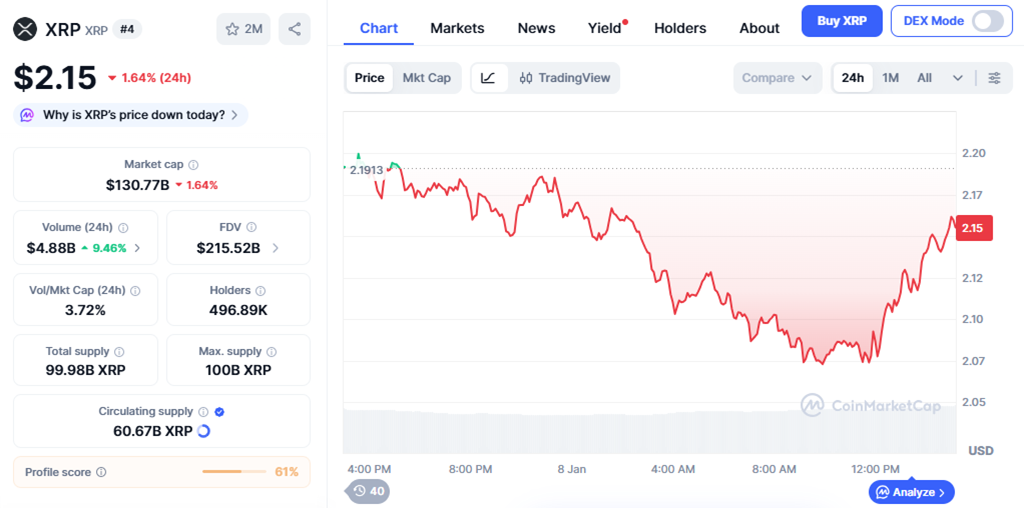
Price reaction stayed measured. XRP briefly traded below $2.10 before stabilizing and now changes hands at $2.15. The token shows a 1.64% decline over the last 24 hours, while its market capitalization stands at $130.77 billion. The limited downside suggests that ETF-related selling did not trigger widespread liquidation.
The pullback in XRP ETFs aligned with broader shifts across crypto investment products. Spot Bitcoin ETFs saw nearly $486 million in outflows in a single session, led by large redemptions from Fidelity and BlackRock funds. Spot Ether ETFs also turned negative, posting about $99 million in net outflows after several positive sessions earlier in the year.
Despite these movements, underlying market indicators remain constructive. On-chain data shows XRP exchange balances at relatively low levels, signaling continued movement toward self-custody by long-term holders. In parallel, improved regulatory clarity in the U.S. around XRP-related products has reduced uncertainty for asset managers and institutional participants.
The first outflow day for spot XRP ETFs appears to reflect short-term rebalancing rather than a structural shift.





